How Many Thoughts Do You Have a Day?
Have you ever thought about how many thoughts you think a day?
“According to the research of Dr. Fred Luskin of Stanford University, a human being has approximately 60,000 thoughts per day—and 90% of these are repetitive!”
I do feel that at least for me many of those thoughts are monkey thoughts, jumping from one place to the next and sometimes in quick succession. 🙂 It’s amazing how quickly my thoughts can run.
In the last week I have had two people send me articles that had reminded them of being th(i)nkful. By the way, I love that. Thanks. It is great fodder for more blog posts. The topic of our brain and how it works is especially interesting to me. I love how our Creator made it so that if you concentrate on one thing, there may be benefits that you didn’t even think of.
For example Dr. Earl Henslin, author of This is Your Brain on Joy, claims that the emotions of joy and anxiety travel the same pathway in the brain. If being th(i)nkful is the primary thought, it pushes out anxiety thoughts.
So How Do You Spend Your 60 000?
What if you could hook up a wire to your brain and all your thoughts would register on a computer monitor? Wow! What if an app categorized the thoughts? What would the printout of your thoughts look like? 
I find that convicting and inspiring at the same time!
I love that the brain is not set forever, like drying concrete, but the Lord gives me the opportunity every moment to reprogram, overwrite, and reshape my thought patterns. I know that through His grace-enabled discipline – choosing the next right thought – that I can wrap my mind and heart around ideas that are pleasing to Him and follow the eight guidelines from Philippians 4:8. But I must choose what I think, and not let the monkeys of fear, worry, bitterness, discontentment, and envy run wild.
Now it is not so easy to control what you think about. It is actually super hard. Not impossible, but a fight. It marks the difference between a person who is a slave and a person who chooses to think.
Retraining the Mind
Romans 12:2 says to not be conformed to this world, but “be transformed by the renewal of your mind, that by testing you may discern what is the will of God, what is good and acceptable and perfect.” Pretty cool, heh?
Doing the will of the Father is extremely important – it is the test of whether you are a true believer (Matthew 12:50)! Normal human thinking struggles to figure out God’s will. You have to renew your thinking – reboot and restart your thinking patterns – to figure out His will.
Here’s a huge way to renew your mind – retrain it to start giving thanks in all circumstances. Paul wrote that doing so is the will of God (I Thessalonians 5:18). It is good, acceptable, and perfect.
A Th(i)nkful Journal
In order to give thanks, you have to think thanks in all circumstances. I know this to be true, but even I struggle to put this into practice.
It has helped me to get into a daily pattern of jotting down my th(i)nkful items in a little notebook before I go to sleep. My son Nicolas and his wife Julia got me started on that practice on my birthday over a year ago and that habit has stuck. It takes a few minutes before I turn the light off, but it helps to push out anxious thoughts and helps me focus on th(i)nkful items.
Example of Being Th(i)nkful
Let me close with a recent and powerful example of being th(i)nkful. Stephanie Wesco, whose husband was shot and killed in Cameroon on October 30, 2018, just 12 days after they arrived in Cameroon as missionaries, wrote these words:
“Even in the midst of all that has happened these last several days, I see so many ways the Lord has guided, protected, blessed, and strengthened us all. Precious memories with my husband are something I’m so thankful for. The eight sweet children the Lord gave us together here on earth are my greatest treasure in the world now.
I’m so thankful for the military escort we were given out of the danger zone. The kindness of the soldiers to my children… One of the men was giving Emmy chocolate, which is her favorite. 😊 My heart broke as we passed the place where Charles was shot, but I know the Lord was our protection and shield as we left our home. I’m so thankful for that safety in passing through that area.
I’m so so thankful for our co-workers, the Sinclair family. This whole tragedy has welded us together as a group, and I fully believe the Lord still has plans for us, even though right now life feels so uncertain in so many ways. I’m so thankful for everyone who is praying and supporting our family in ways I don’t even know about. The body of Christ has taken in new meaning for me. The Lord keeps reminding me though His word and everyone’s words of encouragement that he hasn’t forsaken us. He is always good, always.
 I moved there when I was four years old. I have so many fond memories of that little town, two and a half hours north of Oslo. That is where I learned to speak Norwegian. That is where I began to attend the primary school known as Fagerlund Skole. I had the most amazing teacher, Fru Mørland.
 No big deal really, it is just the laundry detergent that she used. The look of the box stuck with me.
 Everything can be an absolute mess all around you, but when you let yourself get pulled into that moment and the beauty in such a small thing … you can breathe. In such moments, I am always reminded that God gives opportunity for us to stop and appreciate Him and everything He’s given us ALL THE TIME … it’s up to us to take those opportunities, catch those little breathers, be amazed at the world around us, and be thankful for what we have.
  in the wrong order. We tend to look first at our circumstances and try to interpret God’s love and care, which seems missing.
 The strength of being th(i)nkful can only come from trust in a sovereign Creator and God that is good and worthy.
 that men spontaneously praise whatever they value, so they spontaneously urge us to join them in praising it…I think we delight to praise what we enjoy because the praise not merely expresses but completes the enjoyment; it is its appointed consummation. It is not out of compliment that lovers keep on telling one another how beautiful they are; the delight is incomplete till it is expressed.” C.S. Lewis
 The gratitude is unfinished if it finds its end only in your thoughts.
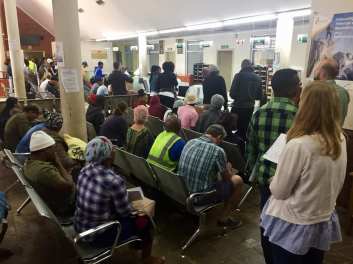 I love it. I know that is God’s grace. People are praying for us and we feel it. Thank you if you are one of them. 🙂 I am surprised at how much I love it here. The years we spent up in Johannesburg are coming in handy as there are familiar things mixed in with the new. So th(i)nkful!
 how Lancelot willingly volunteered to run the gauntlet? There were blades, spikes, swords, bludgeons, paddles, and heavy balls whirling about him at different speeds, and from different directions.
 around 10 pm and we arrive in Amanzimtoti, South Africa, on Thursday morning, Lord willing. These past few months we have been so busy preparing and packing … and today we go.
 Giving flowers at the end of a concert, or a conductor pointing his finger to orchestra members in gratitude, are gestures of someone giving credit to another. Speeches given by award recipients typically deflect praise and thanks to parents and friends. Christian coaches and quarterbacks throw their thanks to teammates and to Jesus Christ.

 The second category is known as Development – helping the needy by working with them to improve their general living conditions, developing their skills, giving them a hand up and not a hand out. Think of Israel leaving part of the harvest for widows like Ruth in Deuteronomy 24:19-22.
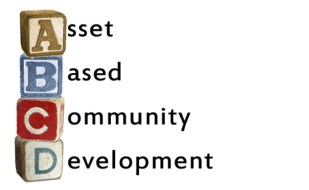 Asset-Based Community Development – is helping a struggling community improve itself by sitting down with residents and inquiring about what they already have.😊 When Moses resisted getting involved with God’s plan, God asked him, “What is that in your hand?” (Exodus 4:2). That’s where we begin. We look at what is, not at what is missing.
 This approach promotes a philosophy of thankfulness and a “can do” spirit. In other words, a community looks to its own members to identify what assets are already present around them.

 This is a visual of what happens when we constantly complain.
 Jane Gibb, a dear co-worker of mine, shared with me how she was struggling with some stress at a particular time. She decided to engage thinking thanks about that situation, and as she cultivated the thought pattern of looking for things to give thanks for in her situation and started writing things down, the stress lessened. She benefited. She was putting God’s Word into practice by renewing her mind.


 th(i)nkful