Opportunity for Wisdom
She lied! There was actually no doubt about the action. It was a blatant, outright falsehood. How could Sam forgive her? The damage to his trust, to their relationship, had been done. Why did he need to tell her the truth anymore? Why not betray her trust as she had done his? That seemed fair.

As Sam met with his friend and shared about his pain and anger, the friend pointed him to Ephesians 4:32. “Be kind to one another, tenderhearted, forgiving one another, as God in Christ forgave you.” The contrast was glaring. Sam’s friend suggested that the response to the hurt be kindness in return. What??
In Scripture, we often see the irony of opposites. Tozer once wrote about these opposites. “[A Christian] empties himself in order to be full, admits he is wrong so he can be declared right, goes down in order to get up, is strongest when he is weakest, richest when he is poorest, and happiest when he feels worst. He dies so he can live, forsakes in order to have, gives away so he can keep, sees the invisible, hears the inaudible and knows that which passeth knowledge.”
Now, when we have been mistreated, abused, and sinned against, it is correct to confront in love and to speak truth to the offender. But you also need to forgive, not because they deserve to be forgiven, but because God through Christ, has forgiven you. We don’t forgive because we don’t really appreciate the depths to which we ourselves have been forgiven.
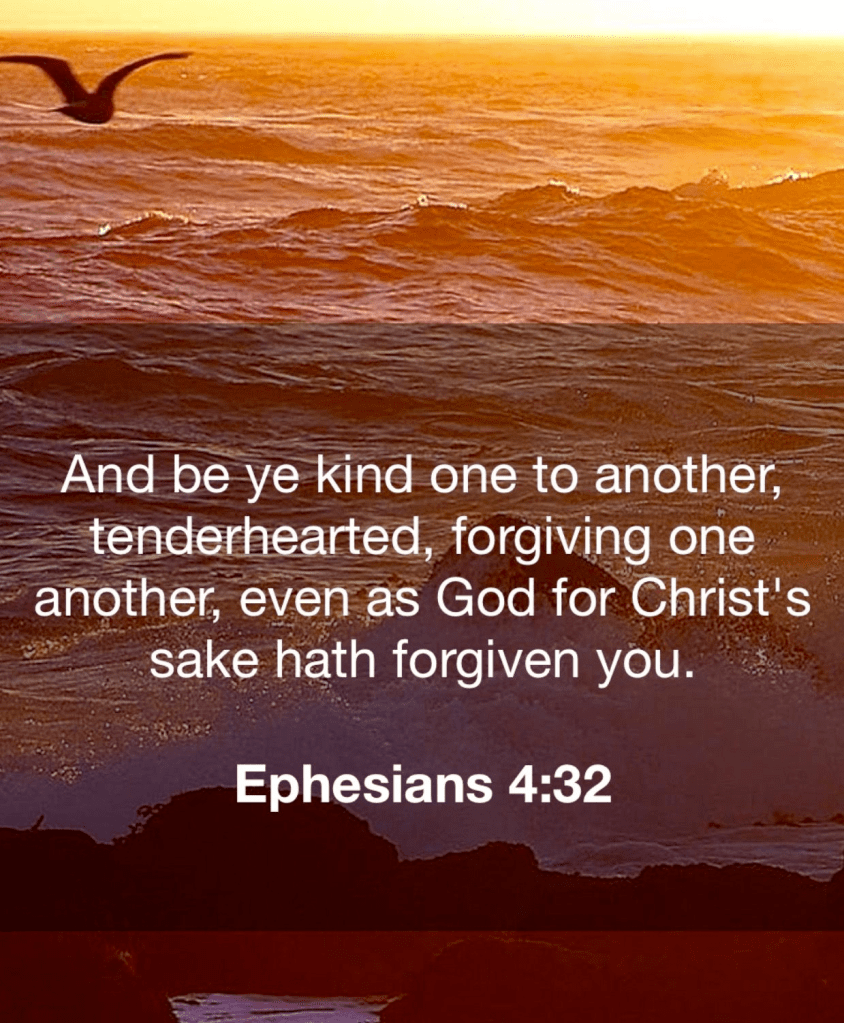
Forgiveness Linked to Being Th(i)nkful
When a person is working through what it means to forgive and not harbor bitterness, there’s a battle within. It feels wrong that the offender doesn’t get what they deserve. And then there is an ‘aha’ moment when we realize that we don’t forgive an offender because they deserve to be forgiven. We forgive because we are so enormously thankful for how God forgave us through Jesus. Forgiveness begins with thankfulness. How thankful we are that we didn’t get what we deserved!!
Think about this admonition.
“Bless those who persecute you; bless and do not curse them. Rejoice with those who rejoice, weep with those who weep. Live in harmony with one another. Do not be haughty, but associate with the lowly. Never be wise in your own sight. Repay no one evil for evil, but give thought to do what is honorable in the sight of all. If possible, so far as it depends on you, live peaceably with all. Beloved, never avenge yourselves, but leave it to the wrath of God, for it is written, ‘Vengeance is mine, I will repay, says the Lord.’ To the contrary, ‘if your enemy is hungry, feed him; if he is thirsty, give him something to drink; for by so doing you will heap burning coals on his head.’ Do not be overcome by evil, but overcome evil with good.”
Romans 12:14-21
As we think thanks about God’s forgiving us for the millions of evil thoughts, motives, actions and words we have had through our lifetime, and continue pondering the new foundation of the Word, the Spirit and a clean conscience He has given us to stand on, we can release the stone of unforgiveness towards the one who has maltreated us. It may take time. It may need to be worked through with a counselor. But as we think thanks on how God has forgiven us, it gives us a motive to forgive, too.
Releasing Them Releases Us
We don’t forgive others just because we have been forgiven. We also forgive because harboring bitterness and waiting to take revenge is a toxin that poisons us, not them; a cage that imprisons us, not them. Harboring unforgiveness and bitterness has mental, emotional, and biological consequences for us.
There is a release and renewed vigor when we choose to forgive. There is a wonderful freedom that comes from forgiving a person that has hurt us, even if that person has since died. God has created us and He knows that forgiving is what will eventually bring deep healing. The irony is that people often hug their prison cage and sip at their poison. God forgives us so that we can release others and thereby release ourselves. The Lord will deal with the wicked and the unrepentant.
Sure, the optimal scenario is when the offender comes and seeks forgiveness. Until then, we give “accorded forgiveness” based on our own resources as those who are thankful that we have been forgiven much. But when an offender seeks forgiveness, then we enthusiastically give our “completed forgiveness.” Forgiving doesn’t mean forgetting, but it is one big decision followed by a thousand small decisions not to bring the matter up again by way of revenge. Forgetting is weakness. Forgiving is strength.
To forgive is to imitate the God who forgave us and continues to forgive us even when we fail to ask. We are so very thankful for His steadfast love and faithfulness, and our forgiving others begins with that thankfulness.

“We don’t forgive because we don’t really appreciate the depths to which we ourselves have been forgiven.”
David Brown









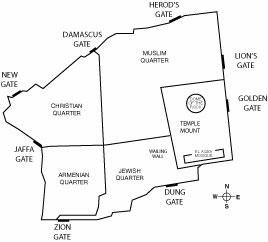

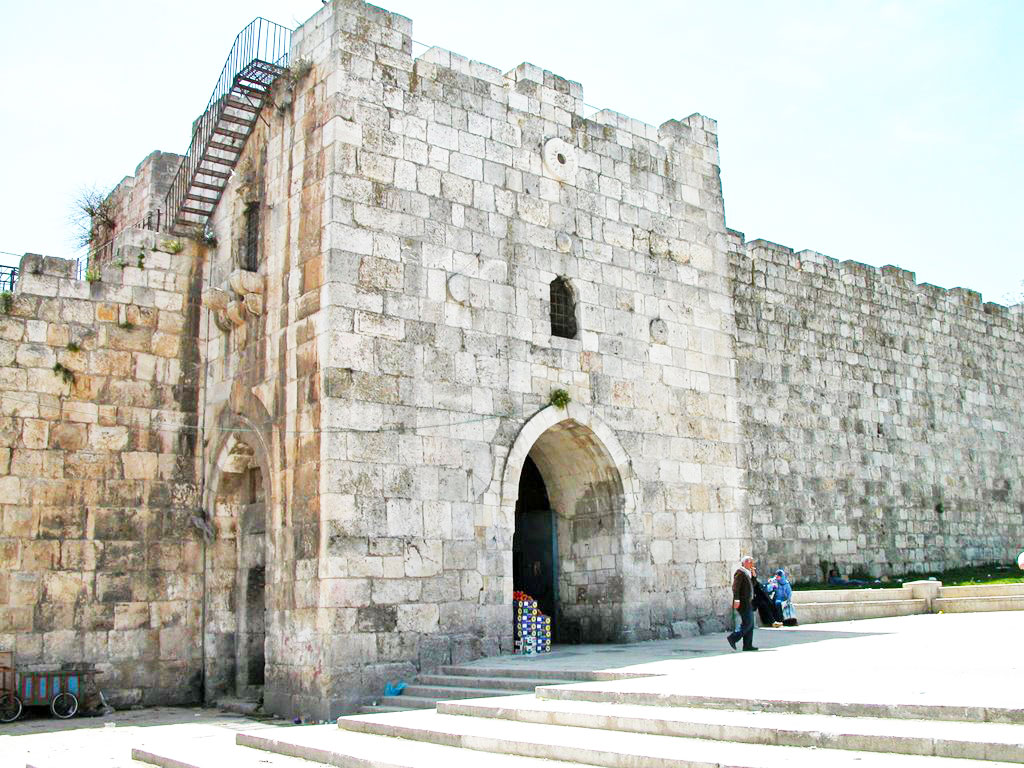
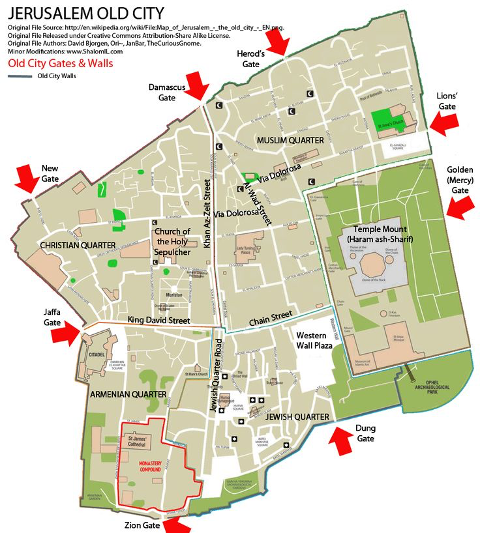
 The Dung Gate and the Just Gate could easily be connected by the fact that our just reward for our sin is death. All our righteousness is as dung, filthiness (Is. 64:6). We justly deserve punishment, but God instead has given us His righteousness.
 What a neat picture for the Golden Gate to be linked to the Pure Gate. That gate will be opened when the Pure and Holy One comes. The Messiah has already entered the predecessor of this gate once before riding on a donkey a few days before He died to pay for my sin. Soon He will return to claim His rightful kingdom.
 There is nothing in Scripture about a hill called Golgotha or a mount called Calvary. “The place of the skull” was next to a road; it still is today. Romans crucified criminals beside the main road to teach a lesson to passersby of what happens when you disobey Roman Law.

 No surprise. It will probably be the most popular verse for 2020 as well! Humans are typically anxious people. Do any of these words describe you?


 Think of a dog chasing a cat. The cat has no desire to stay put if a huge German Shepard is charging its way.
 (like a journal or a ring with index cards).
 He said that, in order for us to learn to be good counselors of others, we first had to be able to self-counsel. Our assignment was to identify a sin pattern that we personally struggled with and to track it for six weeks.
 Locating or identifying the temptation is a huge part of victory (James 1:14). Personally I struggle with worry. It is insidious and sneaks into the depths of my soul. I want to comfort-eat to relieve the pressure that I feel and get my mind off the vexatious thoughts. When I react sinfully, I feel badly afterwards because I know that I have not responded in a Christ-honoring manner. So if I am able to shine the flashlight on the temptation by locating it, that is a great start.
 Lord is the next key. We are told in James 1:2 that we are to count it joy when we are tested. Jesus said we should ask the Father, “do not to lead us into temptation.” He doesn’t tempt us with sin, but He allows the situation to make us stronger under pressure (vv. 3-4), and to motivate us to call out to Him for help (vv. 5-8).
 Lingering with the Lord and sharing honestly with Him what I am struggling with, and even what I am tempted to do in sinful reaction, is like releasing the pressure that the temptation builds up. The sin especially flees if I speak it out loud or write it down. You shock yourself as you see your hand spell out the sin.


 This passage hits us with a surprise. Paul exhorts us to fight sexual immorality, impurity, covetousness, filthiness, foolish talk and crude jokes … with thankfulness. Paul didn’t simply shout “stop it,” like Bob Newhardt. He said to replace the sinful behavior with thanksgiving. We fight back against sin with thanksgiving!
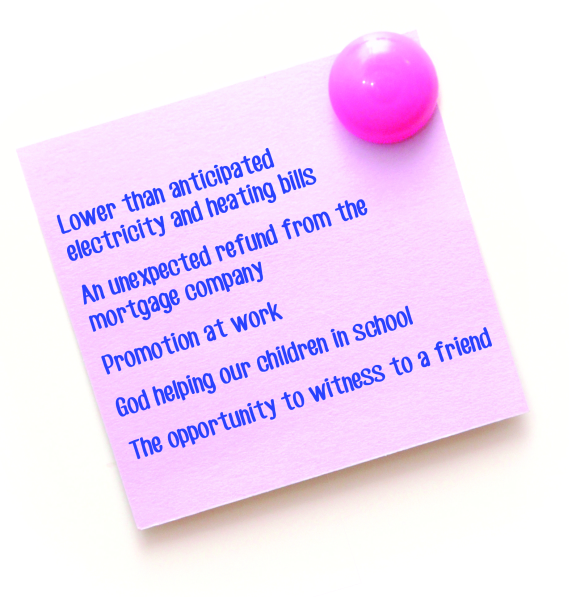 things written out in an area easily visible like on your refrigerator and when that temptation comes, read those 4-5 things out loud and thank God that He is God, and you are not, and He is trustworthy and will measure out grace and strength to do His will.
 in the wrong order. We tend to look first at our circumstances and try to interpret God’s love and care, which seems missing.
 The strength of being th(i)nkful can only come from trust in a sovereign Creator and God that is good and worthy.

 let me instead be th(i)nkful for my car, for my ability to drive to the shop, push a cart, have the funds, make decisions from often hundreds of choices … and so on. As the familiar meme says, “what if we had tomorrow only what we thanked God for today?”
