The Problem with “Home”
 My life in the will of God right now is a bit crazy. We have two “homes” – an apartment in Amanzimtoti, South Africa, and a mission-owned house in Atlanta to which we return twice a year while we train new missionaries. It is bizarre to leave home … to go back home!
There are three key elements that help me feel at home: the presence of my husband, music that we play in the house, and a Yankee Candle called Home Sweet Home. We light this candle, its fragrance fills the place, and my nose tells me I am home.
When God’s Word Finds A Home
My mind and heart are also homes, and many things live in them; some residents bring peace and others cause conflict. This morning I was meditating on Colossians 3, and came to verse 16:
“Let the word of Christ dwell in you richly, teaching and admonishing one another in all wisdom, singing psalms and hymns and spiritual songs, with thankfulness in your hearts to God.”
 The Apostle Paul writes that the message about Jesus should be at home in us profusely, filling every room, like that Yankee Candle. His Word should fill and flavor our thinking, influencing what we want, what we mediate on, and eventually what we say and do.
As we are changed, we end up sharing this potpourri of the soul with each other, exchanging insights, singing deep truths captured in new songs and golden oldies, with heart-compelled thankfulness to the Lord. In True Spirituality, Francis Schaeffer wrote:
“A quiet disposition and a heart giving thanks at any given moment is the real test of the extent to which we love God at that moment.”
Can God’s Mission Be Home?
I want you to know that home can be somewhere else from where you have always known it to be. Because of the great love of our Savior, we can choose to make home where He wants us to go. Yes, it may feel a bit awkward at first, and that we somehow are turning our back on our incredibly loved extended family members, but God pours out grace for us to create home in a new place, embrace His will and, in time, even love it.

David and I are presently in the midst of helping out with missionary training at our mission headquarters outside of Atlanta, GA.Our days are full of serving in different capacities from teaching, counseling new and older missionaries, helping with the youth sessions, serving in the nursery, recording videos for the mission … and the list goes on.
There are so many conversations with people getting ready to take their “home” around the world. At times, I feel I get a little glimpse of just how important these days are to our Savior, the Lord Jesus.
As an MK (missionary kid) I am very aware of the costs of missionary life. My family first crossed the Atlantic by boat to make a home in Norway in 1964, when I was 4 years old. Since then we have always taken flights. 🙂
David and I took our four children and made a home in South Africa over twenty years ago. In the group currently going through missionary training here at HQ, there are three people headed for South Africa, all aware of the coming cost of serving cross-culturally.
The idiom “Home is where the heart is” actually means one’s home is made up of the places and people one loves or cherishes most. As we grow to love and cherish our Lord God, we can find home anywhere He chooses for us to be, but in reality and in the long haul, heaven is our home.
I hate to break it to you, but your life will be over soon. Live in such a manner that when you finish, you will be filled with thankfulness and not regrets.

 The Apostle Paul used this wardrobe principle in “the twin epistles” – Ephesians and Colossians. If you are following Jesus,
  How often do you put on gratitude? Do you know where it is in your closet? Do you even own the garment? You might need to go shopping.
 Romans 12:2 says we are transformed by renewing the mind – learning to think God’s thoughts. Life isn’t about me; it’s about God. He is not my genie; I am His servant. Earth is the unbeliever’s only heaven, and the believer’s only hell. Hard times aren’t a disaster; God designs them to refine, strengthen, and improve me as an image-bearer of the Creator.
 He said that, in order for us to learn to be good counselors of others, we first had to be able to self-counsel. Our assignment was to identify a sin pattern that we personally struggled with and to track it for six weeks.
 Locating or identifying the temptation is a huge part of victory (James 1:14). Personally I struggle with worry. It is insidious and sneaks into the depths of my soul. I want to comfort-eat to relieve the pressure that I feel and get my mind off the vexatious thoughts. When I react sinfully, I feel badly afterwards because I know that I have not responded in a Christ-honoring manner. So if I am able to shine the flashlight on the temptation by locating it, that is a great start.
 Lord is the next key. We are told in James 1:2 that we are to count it joy when we are tested. Jesus said we should ask the Father, “do not to lead us into temptation.” He doesn’t tempt us with sin, but He allows the situation to make us stronger under pressure (vv. 3-4), and to motivate us to call out to Him for help (vv. 5-8).
 Lingering with the Lord and sharing honestly with Him what I am struggling with, and even what I am tempted to do in sinful reaction, is like releasing the pressure that the temptation builds up. The sin especially flees if I speak it out loud or write it down. You shock yourself as you see your hand spell out the sin.




 Closely connected to the ‘Don’t Worry Be Happy’ philosophy is the famous Smiley sticker, the inspiration for many of today’s emojis. Harvey Ball (not Forrest Gump) in 1963 is recognized as the original creator of the famous icon.
 I remember growing up in the 1970’s (that’s me with the camera) and buying smiley stickers with my allowance in the Brumunddal Bokhandle. This was a bookstore in the little Norwegian town of Brumunddal where I spent my childhood. So exciting to spread joy and happiness all over my school books or backpack, really anywhere it would stick! 🙂
 and 1005 songs, had all the riches he desired, and nothing was out of his reach. He taught people through his example in judging difficult cases – like when two mothers were arguing over one baby. He built houses and planted vineyards, gardens, and parks with aqueducts and pools to water the trees. He employed skilled musicians and was surrounded by beautiful women.
 for thank, thanked, thanks, thanking, thankful, thankfulness, thanksgiving, thanksgivings, thank-worthy, 67 references came from the Old Testament and 68 from the New Testament.
 Creativity: relating to or involving the use of the imagination or original ideas to design or fashion something
 What a great sorrow to Him if I am just “thankful for” and not “thankful to,” as though I could chalk all of this up to chance, or luck, or random mutation, or a cosmic hiccup. No! I must give the credit, the applause, the fame, and my sincerest thanks to this Creator. It is all His work.
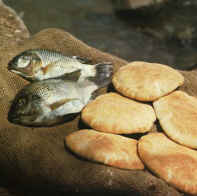 loaves and two small fish. Their solution was broken, insufficient.
 feet and get a big look at earth’s story – full of creativity and goodness, then full of sin and suffering, and then full of hope because God’s restorative creativity that’s just around the corner.

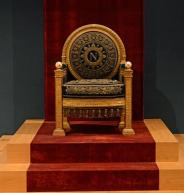 I find that I want to be in control; I want my superior understanding of what is best, my keen sense of order, and my better set of values, to be on the throne. It is difficult to trust that God has everything completely in control and is sovereign. And even if He is in control, He at times does things in a messy and hurtful way; there seems to be no order, purpose, or reason for an illness, an accident, or a financial reversal. Thus, I indict my God and conclude that my way is better.
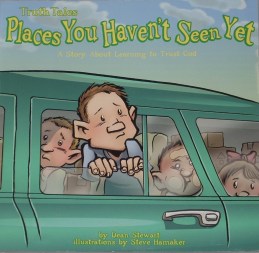 In reading to them I came across this book called
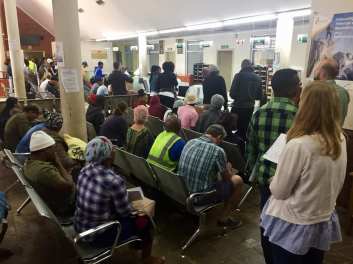 I love it. I know that is God’s grace. People are praying for us and we feel it. Thank you if you are one of them. 🙂 I am surprised at how much I love it here. The years we spent up in Johannesburg are coming in handy as there are familiar things mixed in with the new. So th(i)nkful!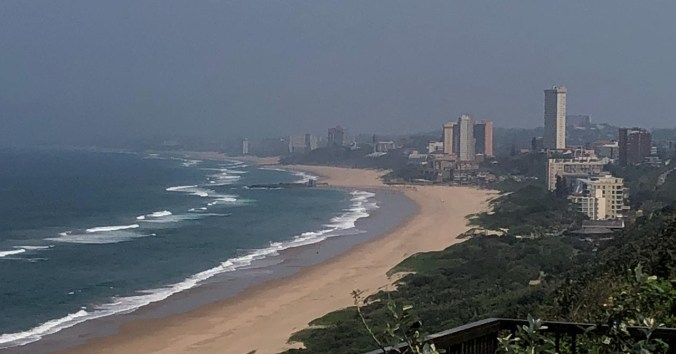
 th(i)nkful