The Brain and Thinking

Our Amazing Brains

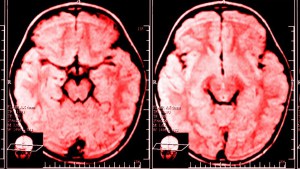
When God created mankind in His likeness, He gave us an amazing brain. Simply put, the brain controls the mental and physical processes and the actions of a human being.brain 3

Ready for a big word?  Neuroplasticity is the ability of the brain to change throughout an individual’s life.

It can be shaped very much like a ball of Play-Doh, albeit with a bit more time and effort. 🙂

Scientists claim that the brain is capable of being re-engineered – its shape, size, and functions modified – and that we are the engineers.

“Thought changes structure … I saw people rewire their brains with their thoughts, to cure previously incurable obsessions and trauma.” ~ Norman Doidge, Canadian-born psychiatrist and author of The Brain That Changes Itself.

Complaining and the Brain

My friend, Joanna Chapmon, sent me an article on how complaining affects the brain.brain 1 This is a visual of what happens when we constantly complain.
The neural pathways that we engage in when complaining actually change the shape of the brain, causing us to complain even more!

When we instead choose to be th(i)nkful, we can also change our brains. By choosing to think thanks about every situation in our lives we change the shape of our neural brain pathway making it easier to think thanks in the future.  Our brains are not stagnant, but continually change as they are programmed through repeated thoughts and attitudes throughout our days.

“A joyful heart is good medicine, but a crushed spirit dries up the bones.”
Proverbs 17:22

The admonitions in scripture from Ephesians 4:23 and Romans 12:2 sure make a lot more sense in the light of this discovery – we must renew our minds.  But amazingly, by doing so, we can actually change the inner workings of our brains to make renewed thoughts flow more naturally.  The Lord wants us to worship Him with our thoughts.  When we choose to think thanks, we are obeying His will for us as stated in Ephesians 5:20 and I Thessalonians 5:18.  Give thanks always in every circumstance!

Th(i)nkful’s Benefits

The brain article mentioned pointed out:

“In depression, there’s nothing fundamentally wrong with the brain. It’s simply that the particular tuning of neural circuits creates the tendency toward a pattern of depression. It has to do with the way the brain deals with stress, planning, habits, decision-making and a dozen other things — the dynamic interaction of all those circuits. And once a pattern starts to form, it causes dozens of tiny changes throughout the brain that create a downward spiral.”

Although there can be physical reasons for why someone becomes clinically depressed, there are often major reasons connected with the person’s thought patterns. Just think of the positive effects on a person’s brain when he/she engages in a pattern of th(i)nkfulness.

gibbJane Gibb, a dear co-worker of mine, shared with me how she was struggling with some stress at a particular time. She decided to engage thinking thanks about that situation, and as she cultivated the thought pattern of looking for things to give thanks for in her situation and started writing things down, the stress lessened.  She benefited.  She was putting God’s Word into practice by renewing her mind.

Challenge

So how are you programming your brain these days?  You are programming yourself whether on purpose, or not.  Do you naturally gravitate towards complaining about a situation or do you instead look for things to be thinkful about in that situation?

I challenge you to begin aggressively carving out some new th(i)nkful neural pathways that will not only help you grow in Christ as He desires, but also benefit you physically as well.

Further study:

  • Professor Richard Restak, Optmizing Brain Fitness.
  • Dr. Caroline Leaf, a South African neurologist,  has done extensive work on the thinking and the brain.

“It is only with gratitude that life becomes rich!”  –Dietrich Bonhoeffer

Second Right

Anxiety My Enemy

Anxiety is not my friend.

I have had a propensity towards being anxious as long as I can remember.  Philippians 4:6, which says, “Don’t be anxious about anything,”  has been a place where I have parked often.

Recently I had a friend point out some valuable insights into that passage. When you consider the verses that surround the famous verse 6, you get a better picture of what Paul was exhorting the Philippians to do.

4 Rights

Let’s take Philippians 4:5-9 apart. There are 4 Rights in this passage – Right Awareness, Right Praying, Right Thinking, and Right Practice.

1. Right AwarenessRight Awareness

(v.5 CSB) Let your graciousness [gentleness, reasonableness] be known to everyone.  The Lord is near.  When we are in a conflict or facing hard circumstances, that pressure can cause our words and reactions to be filled with spikes and poison.  We need to realize that God is right here in our presence (Matthew 28:20, 1 Corinthians 6:19, Hebrews 13:5-6), and we are right there in God’s presence (Ephesians 2:6, Hebrews 10:19-22)!

Every sin that we commit is a result of a wrong view of God. If we practiced His presence, we would sputter and fume less and speak to Him more.  Jesus tore down the curtain into the Holy Place by His work on the cross, and we are allowed to enter in without a priest and speak to the God who created or permitted these circumstances!  The Lord is near is a great reminder that we should turn our thoughts toward Him and pour out our hearts.  He is there observing us; He fights for us; He prays for us. He is at hand in formulating the trial and filtering the toxic to get us to trust Him and talk to Him.

2. Right Praying.

(vv.6-7) Do not be anxious about anything, but in everything by prayer and supplication with thanksgivingRight Praying 2 let your requests be make known to God. And the peace of God, which surpasses all understanding, will guard your hearts and your minds in Christ Jesus.

This SECOND RIGHT is the one I want to emphasize. In the middle of instructing us to ask God to respond to our needs in specific ways, Paul adds “with thanksgiving.”  We are to pray earnestly (“please help with this”) with thanksgiving (“thanks for this”). We need to think thanks about what is testing us and express that thanks to God.

How do we do that?  We choose to look for things that we can be th(i)nkful for right in the difficulty.  It is after praying this way that the supernatural peace comes that will guard our hearts and minds in Christ Jesus. In fact, some would argue that thanksgiving is the trigger for downloading God’s peace.

3. Right Thinking.Right thinking

(v. 8) Finally, brothers, whatever is true, whatever is honorable, whatever is just, whatever is pure, whatever is lovely, whatever is commendable, if there is any excellence, if there is anything worthy of praise think about these things.

Having rolled my burdens onto the Lord, it is amazing how quickly I grab them back and then stress over them as though I am the only God who can fix them.  Paul writes that the battle is in our meditations. I need to focus on what’s true, honorable, right, pure, lovely, commendable, excellent, and praiseworthy.  By way of contrast,  what we should not think about are things that are untrue, improper, dodgy, blameworthy, evil, dubious, unethical, shameful, ignoble, and disgraceful, to name a few.

4. Right Practice.

(v.9) What you have learned and received and heard and seen in me – practice these things, and the God of peace will be with you.

So after we have now learned this new way of living – right awareness of the Lord’s presence right here, right now, right praying that always includes thanksgiving, and right thinking that fuels our outlook and conduct, we are to DO this over and over.  We practice this.  We are not just hearers of the Word, but doers.

Second Right

Being th(i)nkful is a direct cure for anxiety.  When we worry, we are not trusting that God is in control.  When we are th(i)nkful, we are resting in His sovereignty and choosing to meditate on all the things we can be thankful for instead of untruths that fuel our anxieties.

Dr. Shelbi Cullen, my counseling internship professor at Master’s Seminary, shared these thoughts to help me help others, but I have found that it is first helping me.  🙂

  1. Remember that the Lord is right nearby.
  2. Pray hard with thanksgiving.
  3. Think the right way.
  4. Practice these things.

Practice th(i)nkfulness to vanish anxiety

Th(i)nkful for Truth

What is Truth?

Truth – any statement in accord with fact or reality as known in the mind of God

True – fidelity to an original or standard; if something lines up with Truth it is true.

Sometimes the best way to define something is to say what is the opposite.92E02B33-75E6-4B48-9324-C3B52B40A131  Truth has no elements or shades of unreality.  Something that is true is not a lie.  It has fidelity (loyalty) to the standard. It is true to the original.


A picture of truth is when Jesus claimed that He was the Way, the Truth, and the Life (John 14:6).  He is truth personified.

While Jesus is the living Word of God, the Bible is the written Word of God. John 1:14 says that the Word was made flesh and dwelt among us. The Bible is Truth.

  • Psalm 119:160  “You word is true from the beginning: and every one of Your righteous judgments endures forever.”
  • John 8:32 – “Then you will know the truth, and the truth will set you free.”
  • John 16:13 – “But when He, the Spirit of truth, comes, He will guide you into all the truth. “
  • John 17:17 – “Sanctify them in the truth; your word is truth.”
  • Galatians 2:5 – “We didn’t yield in submission to them even for a moment, so that the truth of the gospel might be preserved for you.”
  • 2 Timothy 2:15 – “rightly handling the word of truth”

Truth Belt

God’s Truth is described as both a belt and a sword in Ephesians 6:14-18.  It holds the armor together but as a sword it also pierces between the soul and spirit, discerning the thoughts and intentions of the heart (Hebrews 4:12).

Why Be Th(i)nkful for Truth?

If we have no standard, there is nothing to shape our worldview or perspective. There is no objective standard of right and wrong – humanity just makes rules up as we go along.

Without Truth there is also no meaning, value or purpose to our lives except what we subjectively make up to give ourselves and our friends and family some happiness.  Without Truth, everything that happens in life is without design – just a matter of random fate, luck, chance or fortune. But when we acknowledge Truth, everything changes. We have a solid anchor to hold us steady.

The Value of “Speaking Truth into Someone”

snowrope-e1532456704174.jpgWhere I grew up in Norway, snowstorms at times would bring “whiteout” conditions where you couldn’t see a few feet in front of you. If a building near town was 20-50 yards away, a whiteout was dangerous. Some people got lost and their frozen bodies weren’t found until spring. So the town put up a rope fence tying the buildings together.

Truth is like that rope line; without it, you’re on your own and death is likely.  The value of having truth spoken into your life by a friend is immeasurable; it brings you back to the straight line in a swirl of circumstances, emotions, and panicked reactions.  A friend helps realign our perspective – –

“Wait!  Our God is in control.  He has allowed your failure … designed this illness … sent this financial reversal … to accomplish a number of things for His glory and your improvement.  Your pain has nothing to do with Him being angry; He didn’t spare His own Son from pain.  He is not wringing His hands or pacing around His throne.  He is looking at us right now and whispering  ‘perfect.’ You’re not in this alone. He will never leave you, nor forsake you, and I am here for you as well. I’m so sorry it hurts, so sorry, but our God is up to something.” 

Changes in perspective bring changes in emotions, changes in our conduct, and at times, changes in the outcome.  Just recently I was going through a mental battle.  Difficulties and different trials were pressing on my thoughts; I was increasingly dominated by sad feelings.  And then, I had a dear friend “speak truth” into my life.  Wow!  What a change.

Truth In Love

Ephesians 4:15 states that we must speak truth in love to each other in order for us to grow up in Christ.  This means mostly grace seasoned with salt that stings at times (Colossians 4:6) but not the other way around. If you trust a person’s love, there are few things better than sitting back together and “truth-telling” – stating the good things that are true, thankfully gasping at the bad things that didn’t happen, and mulling over our God’s promises and presence that never change.

Thank you God for being Truth, for giving us Truth, and for enabling us to speak the truth in love to one another.

Thankfulness and Sexual Sin

Connection Between Sexual Sin and Thanksgiving

Studying what the Bible has to say about thanksgiving over the past couple of years has yielded some fascinating truths.  I knew that being thankful was a good thing and that God was honored by it, but I am learning that thankfulness is, at the same time, a comfort and a powerful weapon.

There are strategic placements of contrast throughout the Scriptures.  Romans 12:21 says “Do not be overcome by evil, but overcome evil with good.”  Using this same replacement principle in another letter, the apostle Paul contrasts sexual sin and thanksgiving.

Watchman Nee once summarized Ephesians as “Sit, Walk, Stand.” In Ephesians 4 and 5, Paul is helping believers understanding the contrast between the sinful patterns of the old life and the new walk of faith and love as a regenerate Jesus-follower.  Then, he says something eye-opening.

“Sexual immorality and all impurity or covetousness must not even be named among you, as is proper among saints.  Let there be no filthiness nor foolish talk nor crude joking, which are out of place, but instead let there be thanksgiving. For you may be sure of this, that everyone who is sexually immoral or impure, or who is covetous (that is, an idolater), has no inheritance in the kingdom of Christ and God.”  Ephesians 5:3-5

Regret

Instead of engaging in sexual sins, obscenity, sexual talk, and sexual humor – wholly improper and out of place for believers – there is to be thanksgiving.   Thanksgiving is the replacement, or can we say cure, for sexual sin.

Sexual sin is rooted in a heart that is discontent with God’s ways and what God has provided and seizes control to get its “deserved” comforts and pleasures. Rebel willfulness ignores the commands of Christ, and even what is healthy in the long run, and runs off into pornography, adulterous relationships, fornication, sexual abuse, and the list goes on.  The 180 degree opposite is a th(i)nkful person, learning to be content, celebrating what God has provided rather than chafing and brooding over what is missing. Dr. John Street writes:

“Giving thanks to God is an integral part of being a Christian – a child of God.  This is particularly true in the life of the believer as it relates to sexuality.  Those who are discontent and unthankful for how God has made them will often be greatly tempted to indulge in sexual deviancy.”  Dr. John Street, The Biblical Counseling Guide for Women, p. 305

Learning to Be Content

In life you can almost always boil down your struggles to whether you serve Self or God.  God doesn’t hate our bodies and cravings.  He designed them.  He wants us to enjoy our bodies to the fullest.  He even uses the picture of how we love ourselves in showing how we are to love others because it is a given that we love ourselves.

Thinking thanks about your situations will help you be content.  There is a peace that comes from filling your mind with gratitude.  God is in control.  He knows what is so hard for you right now.  He also has given us His Word to help us.  Rather, let there be thanksgiving, He says, to combat sexual sin and temptation.

“Gratitude is the opposite of every sin we commit.”

Freedom

Breaking free from sexual sin is a huge battle.  The doom may scream at you – “You are a slave! A prisoner! You’ve been in this too far and too long to ever get out!” Regret overcome 2 You need hope and a powerful weapon!  Heath Lambert, author of Finally Free: Fighting for Purity with the Power of Grace, said something in a lecture that grabbed my attention.  He said that “gratitude is the opposite to every sin we commit.”

There is hope.  It could start with thanksgiving.  In I Corinthians 10:13, Paul wrote that with temptation there is also a way of escape so that you are able to bear it.  I strongly believe that one of the great ways of escape is th(i)nkfulness.


Hey, it’s always good to get a little feedback.  I received this note from a person who reads my blog:

Dear Karin, I just want to thank you for your teaching on thinkfulness. We are in a really difficult place right now but God is good and He is ever-present and His hand is at work. The unknown is always so scary though, but as I was journaling this morning I was just considering how powerful thinkfulness is, and how thankful I am to be able to use it in being victorious. So I just wanted to thank you for being willing to share this concept that the Lord put on your heart, it is a huge blessing to me!

Th(i)nkful That It Turned Out Differently

Open Hand Principle

My husband David has an message called Keeping an Open Hand.  In it he describes how we are allowed to clutch our hand around two things.clutched hand Those two things are 1) our relationship with God and 2) our commitment to do His will for our lives.


Everything else is to be kept in an open hand.Hand open

When you meditate on that, it exposes how we often clutch things that need to be released.

Expectations, for example, are things we need to hold loosely.  If we let a dream or wish morph into a targeted goal that drives us, pushes aside competing loves, and creates an expectation that is not God’s will, we will struggle terribly if God calls on us to release it and receive what IS His will instead. Best to dream while  keeping a neutral disposition. Psalm 16:11 says, “You make known to me the path of life; in Your presence there is fullness of joy; at your right hand are pleasures forevermore.” Fullness of joy doesn’t come from chasing my dreams; it comes from being in His presence.

Expectations

Have you ever thought back to things that you prayed so fervently for that didn’t happen?  I have. Big White HouseI remember when David was practicing law as a young new lawyer in south-eastern Pennsylvania that I prayed earnestly that we would be able to buy a large white historic house on the outskirts of town.  I even made a name for it and dreamed about how we would raise our family there and use it for hospitality.  It was a great dream, just not the Lord’s will for us.

That white house is just an example.  What about when we pray for success, health, fame, or even the salvation of others? Our desires and requests, although seemingly right, may not be what God wants for us. Maybe He will answer our requests totally differently than what we expect, or at a very different time in our life.

Romans 8:26 and 34 mention that the Spirit and Jesus Christ both make intercession for us. I love envisioning my prayers going through that grid.  I pray earnestly, but I cannot see the full picture. He can. We may not understand why He does things the way He does until glory, but we can trust that He does them well.  He is sovereign and trustworthy for me, His child.

If I turn my dreams into strong expectations I will almost chronically be an unthankful person because God’s choice is so seldom what I would have chosen.  But if I can yield my hopes to Him and leave my dreams at His feet, I will have no problem finding contentment and can even celebrate the path He has chosen for me.


Th(i)nkful in Simply Obeying

Zulu ladiesNurturing my relationship with God and earnestly renewing my thoughts so I can discover His good, acceptable and perfect will for my life (Romans 12:2) can bring simple joy and contentment.


These are good truths on which I am reflecting, especially as David and I prepare to move back to South Africa to work among the Zulu.  We are excited to learn the Zulu language and get acclimated to life in Amanzimtoti because God has shown us His will, and that directive trumps all other dreams and wishes.

What about you? How are you expressing your dreams to God?  Is your disposition summed up in “not my will, but Yours be done?”  As with gardening and athletics and most worthwhile things in life, His way is not the easy way, but it is the best.  And often as we grow older and look back, we can be th(i)nkful for unanswered prayers.  Our amazing God, Infinite Mind and Wisdom, has designed bigger and better plans, purposes, and pictures.

P.S. If you’re interested in a copy of David’s Keeping an Open Hand message, just email me.


Th(i)nkful and Take 5

Even a Child Can Do It

Take 5 3

Our son Nick and his family seem like a perfect family.  They look like they must always be kind to each other; their children are probably good and kind and share all the time.

Well, if you are human, you realize that is not the case.  They struggle like every family struggles.  There is always an ongoing fight to do what is right.

A while back one of their children developed a real rage problem.  I am the Yaya (what my grandchildren call me), and on one visit even I saw that this was a real difficult puzzle.  Nick and Julia asked us to pray for them to have wisdom and discernment, and so we did earnestly. I am sharing about this with their permission and with the hope that their story could help others.

One particular evening the anger again came to a head.  Take 5 1Nick and Julia had been reading different things to try and find some answers, and they had come up with a plan.  As Nick started to talk to his child he laid down some rules that the child needed to follow when he began to feel great anger.  The idea was to help him get control of these overwhelming feelings he was experiencing.  They called it “Take 5.”

Take 5

  1. Take deep breaths
  2. Count from 1 to 10, and then count backward from 10 to 1
  3. Say one thing that you are thankful for
  4. Practice smiling even if you don’t feel like it
  5. Pray to God for help

The first two cause a person to break from the aggravating situation, slow things down, and let off some steam.  But Nick and Julia chose being th(i)nkful as the exercise that tends to “overcome evil with good” (Romans 12:21).  Forcing yourself into a thought-search for positive things tends to eat the stuffings out of anger.

Take 5 has helped tremendously!  Not only has it helped their child control his anger outbursts much better, but also the parents, and grandparents (!) have benefited from this exercise.  It is simple enough for a young child to implement, but effective enough for anyone, young or old. Hearing this little guy pray to God for help is so inspiring. We, too, can pray to God for help and He hears and answers us.

After a season of their child experiencing victory, Nick and Julia happened upon a candy bar that was called Take 5.  🙂  Take5One evening their little guy was allowed to stay up after the others had gone to bed, and just Daddy, Mommy, and the little victor each got to enjoy a Take 5 bar. Hearing about this made my heart smile.

You Choose Th(i)nkfulness

Just like a little child seeking to get control over his or her emotions and choosing one thing that they are thankful for, we as adults can combat both the flurry and fury of negative emotions by choosing to be thankful. It requires a choice.

So, I shared the Take 5 concept with a friend recently and within a day she texted me that she had put it to use. At the end she commented, “Take 5 is not just for 4-year-olds!”

Thanks requires choice.  

Being Th(i)nkful Promotes Healing

Being Th(i)nkful at Midnight

Psalm 119:62 says “At midnight I will rise to give thanks to You because of Your righteous judgments.” Often when I am not able to sleep, I get up and go to the kitchen, make a cup of tea, read in my Bible and begin to journal my th(i)nkful lists.

Write it down

It brings healing for my soul.

Writing down how God is doing wondrous things from infinite to infinitesimal builds healing in my broken pieces and hope. He is infinite mind and infinite power and is the sovereign designer and ruler over all of my circumstances.

Thinking Thanks About My Trauma

A car hijacking at gunpoint and being awoken by someone stealing inside our house while we were sleeping were some of the worst traumatic incidents of my life. Many others have gone through much more difficult scenarios.Members Of Support Group Sitting In Chairs Having Meeting

It is interesting to experience this after going through some trauma.  Every time you retell your traumatic story, you get rid of a little more of the sting.  An old Swedish proverb states: “A burden shared is a burden halved; a joy shared is a joy doubled.”

If you’re of a th(i)nkful mindset, you can strengthen other people by sharing 1) the Scripture that came to mind to guide and comfort you in the furnace, 2) the ways in which your trauma could have been worse, and 3) the ways that you’ve become stronger and wiser as a result of the test, and 4) the ways in which your relationships with God and others have become deeper and less self-serving.

Passing Along Th(i)nkful Skills

I had this happen to me recently in Egypt.  A couple had gone through traumatic incidents in South Sudan were they served at an orphanage. Seeking to build relationships, David and I chatted with them about some of the traumatic experiences we had in South Africa. I mentioned my hijacking incident and said that Philippians 4:8 had been an anchor for my thoughts.

Although my hijacking incident did not end in death or severe pain, I had been tempted to think out the “what if’s.”  The words “think on what is true” arrested my panicking thoughts.  I was so thankful for how the truth of God’s Word helped heal me from my trauma.  Focusing on verses concerning God’s sovereignty build my confidence in His meticulous providence – all the details of my life are orchestrated for my Christlikeness and His glory.  There was no alternate ending to my trauma; it was what He planned.  In fact, I am immortal, invincible and indestructible until God is finished with me.  And when His story called “Karin’s life” is finished, there is nothing that will keep me here!

The next day our new friends came up to us and shared how something difficult had happened with some of their friends just the night before, and how they used Philippians 4:8 to encourage and comfort them. God’s Word had ministered not only to me, but sharing how I had been helped by God’s word, had ministered to others. Praise Him!


It’s a good thing to give thanks to the Lord, and to sing praises to Your name,
O most High. Psalm 92:1

promoting health 1

We cannot think thanks about our trauma unless we trust that God is sovereign in all our affairs. We see in the scriptures that thinking the way God desires us to, trusting in Him and acknowledging Him in our ways, brings healing to us.  That healing begins in our soul and can minimize physical stress-induced illness as well.

Following Proverbs 3:5-7 brings us to Proverbs 3:8. “It will be healing to your flesh, and refreshment to your bones.”

Trust in the Lord’s sovereign design, purposes and control, and then think thanks, no matter how bitter your grief. Allow grace to help you process your trauma through the grid of th(i)nkfulness. Ultimate physical healing is when we receive our perfect bodies in heaven.

Th(i)nkful is an adjective and used just like thankful.  The difference is to simply highlight that to be truly thankful, you have to choose to think thanks and express it.

705D3C1A-60A4-47BA-9FA1-A7BDFAB64A2E

Th(i)nkful (adj) ~ choosing to download grace/strength from the Lord to think thanks about every circumstance in your life and express that thanks orally or in a written form.

Thankful in vs. Thankful for

004853F9-94D8-4CB3-B1D5-D78D2CB97AF8Difference Between In and For

The difference between giving thanks in and giving thanks for is worth pondering.

Recently while discussing this topic with some friends, the question arose on how a person could give thanks for horrific things that had happened to them. It seems totally absurd to give thanks for trauma and abuse.

We rehearsed the verses from I Thessalonians 5:18 and Ephesians 5:20 where we are instructed to give thanks in all circumstances as well as giving thanks always for all things. How do we make sense of giving thanks for all things?

I want to compare the concept of giving thanks in the circumstance compared to giving thanks for the circumstance.

Begin with Giving Thanks IN

“Giving thanks in” is giving thanks for the good things all around your dark reality, points of light in the middle of the storm, though it feels so uncomfortable to do so. Perhaps you can only focus on Scripture’s promise that God will never leave you nor forsake you (Hebrews 13:5b). Maybe you can think thanks that this circumstance is helping you remember that life is a vapor and soon it will be gone. There is a purpose for you right now and in your immediate circumstance – you are to please God (2 Cor.5:9).

We trust in the sovereignty of our God. He has promised to not test us above what we are able. He has promised to never leave nor forsake us. We cry out to our Creator God to hold us and comfort us in our distress. He knows all we have gone through and are going through. It’s hard to trust Him though when my heart is so crushed, but we must. And we must begin to think thanks.

Rise to Giving Thanks FOR

“Giving thanks for” is actually thanking God for the dark thing itself, because by it God achieved a greater good. As time passes and you get a better view of how God is shaping things, you often recognize the great void and terrible loss of gospel opportunity there would have been without the trial.  You would have been happier and busy somewhere else, and God’s profound work would have been undone. That’s when you learn to embrace the trial itself.

But that is deep blue hero stuff.  It took a long journey for Joni Eareckson Tada to come to the place where she gave thanks for her horrific accident that changed her life completely. Joni became a quadriplegic as a result of a diving accident and by it has had the chance to minister to hundreds of thousands around the world. The friend that helped her through the early days of that trial, Steve Estes, said:

“God permits what he hates to accomplish what he loves.”                

871F7942-D49B-4514-957B-F793D354E7AF

“I have learned to kiss the waves that throw me up against the Rock of ages.” Charles Spurgeon

Th(i)nkful Repels Grumpy

Natural Forces

Don’t you love how fast little round wheels can make you go on a skateboard?

There is another natural force that also interests me.  When you put two magnets together, one side attracts and one repels.  That is just the way it is.  I love being able to take advantage of something that just is because God put it into nature.

One of the advantages of being th(i)nkful is that it naturally repels complaining.  When grumpy meets th(i)nkful, they repel each other.  repelling 3In other words they are not good bedfellows. One has to leave.

When you choose to think thanks about every circumstance in your life, whether those circumstances are positive, neutral, or negative, you are creating a natural repellent to ingratitude and complaining.

When our kids were little, I would teach them the ABC’s of Scripture memory.  We had a verse for every letter of the alphabet.  I can still quote those verses as we drilled them often into our minds.  RepellingThe ‘D’ verse was “Do all things without murmuring and disputings.” (Phil. 2:14).

Complaining and murmuring seemed to come very easily to young children, and well, for that matter, to not so young children. In fact, even as adults, most of our problems seem to be rich people problems. “I lost my iPad, or our dryer just died, or we muddied our really good track shoes, or I didn’t get to the sale on time.” We are blessed to even having such problems.

Choosing to think thanks about whatever it was that initiated the complaining had a way of expelling the ingratitude.

Choose to be Thankful

Really, it is not that hard.  Just choose to be thankful! Repelling 1You refuse to think the grumpy thoughts of complaining and instead exercise your will to think thanks about whatever is in front of you.

The beautiful natural thing that happens is that you begin to repel the negative force of murmuring and you experience grace to embrace prickly things that God has ordained in your life to make you more like His Son.

My Own Choice

I am writing this to stimulate you to think thanks, but I’ll let you in on a secret.  I need to be reminded of these principles myself.  David and I have had the unique privilege of doing extensive traveling this past year and it is not over yet.  Our journeys have taken us from New Zealand to China; Seattle to Philadelphia; Kansas to Wisconsin.  Later this year we are moving to Amanzimtoti, South Africa.  Yes, it is amazing.  I really do love it.  BUT…it is exhausting and I struggle to choose gratitude at times.

So, let me make a th(i)nkful list in regards to travel:

  1. We get to experience and learn so many new things
  2. Our own view of life is challenged when we observe how others live
  3. Seeing how big the world is makes us realize how big our God is
  4. We get to taste different foods
  5. Connection with the Body of Christ all over the world is extremely encouraging
  6. We get a vast amount of exposure to illustrate lessons of life
  7. We may be a connection point for other people
  8. God gives us enough strength to do His will

So here’s to future trips coming up! I choose to think thanks and get on my roller blade.  David, I am right behind you! 🙂

Repelling 2

Simple Travel Tips

There are tricks you can put into use that ease the difficulties.

  • Plan out a clothes package that mix and matches
  • Drink lots of water to help with air travel
  • Perhaps take an aspirin the day before air-travel to thin your blood
  • When flying, get up and move from time to time to avoid bloodclots
  • Have a checklist to go over so you don’t forget important things like charging cords, brush or comb, makeup, toothbrush and toothpaste, inflatable neck pillow, headphones, reading material
  • Have a toiletry bag with things just for travel if possible
  • Keep thank you cards in your suitcase


Pathway through the Woods

Brain Neural Pathwaywooded debris 1

Cultivating  th(i)nkfulness can be compared to carving a path through the woods.  It  seems overwhelming at first with debris and obstructions.  It takes great effort to remove fallen logs and roots.  You may need some tools like a spade and a chainsaw, or good sharp clippers.

Our brains are similar in that forging a new brain pattern or neural pathway in order to create a new life habit is daunting at first but gets easier with time. God has created our brains to be able to do this.

Neuroplasticity is the ability of the brain to form and reorganize synaptic connections, especially in response to learning or experience or following injury.

How Do I Do It?

The first practical step you do when beginning to carve a brain path, is to deliberately lay out a plan. Your goal is to have your thoughts automatically head towards what to think thanks about in any given situation. You begin to search in your thoughts for things that you can be thankful for.

If you are in an unusually happy situation, it’s not very hard to find things to be thankful for. Even in normal, day-to-day times it’s not hard to begin to discover th(i)nkful items.

However, when hard times come, the difficulty  level rises to delineate thankful items. Let me illustrate with this example from my friend Dawn:

“My heart was tempted to complain about the mounds of laundry today. The Holy Spirit reminded me, “Be thankful. Think thanks.”

So as I’m folding I start saying in my mind…
Thank You, God for these clothes.
Thank You for your provision of new and used hand-me-downs.
Thank You that they are clothes we got to choose and that we like them. 😊
Thank You for the little (and big) legs that move to make these pants dirty.
Thank You for the soap to wash them.
Thank You for the washing machine that washes and I don’t have to do it by hand.
Thank You for the tumble dryer that works in my basement, and that I don’t have to air dry them in the cold.
Thank You for the dryer that gets the wrinkles out so I don’t have to iron.
Thank You that I am able to be at home and squeeze this chore in between schooling.
Thank You for the energy and wellness to do this. I’m not sick in bed.
The list could go on…
Be th(i)nkful. Think thanks when you’re tempted to complain in your heart.

She chose to download grace and begin carving the neural brain pathway of thinking thanks about the situation.  She then expressed it.  Engaging in the discipline of being th(i)nkful ended up not only helping her mindset, but encouraging others to do likewise.

Patiently Conquer Step by Step

The habit of cultivatipath through woodsng thinking thanks takes time.  You have to see progress in little steps at a time.  Think about that path through the woods. As you step by step conquer the mess, soon the path becomes apparent.

In time you will be able to run that path.  How cool!!

This exercise is much more that just creating a better mindset for us.  Practicing th(i)nkfulness is an act of worship to our Redeemer who has given us a command.  Give thanks in all circumstances.  He knows that being grateful is a key to our sanctification and maturity in Him.

So… I just wanted to get you started this year on developing that brain pathway through the ‘woods.’

Who doesn’t enjoy a walk in the woods anyway?? 🙂

wooded-path-e1513099191945.jpg