The Christian Captain from the Townships
It’s a pretty exciting time here in South Africa – we just won the Rugby World Cup!  What’s just as noteworthy is that our first black captain, Siya Kolisi, led the team to the top. He is a Jesus-follower and rose from very humble beginnings.
In the old Apartheid South Africa (1948-1992), white people lived in the suburbs and worked in the cities. Blacks lived segregated in “townships” ringing the cities – places of poverty and crime, tiny homes and tin shacks crammed close together, poor public services, and dismal education.
Siya grew up in the Zwide township of Port Elizabeth, South Africa. He was raised by his grandmother and was often unsure if he would have anything to eat during the day. His favorite toy was a brick.
Reflecting on his childhood, Siya insists he was given the most important things in life – “love and support.” He frequently uses the word “tough” to describe his childhood, yet admits he didn’t realize it was so hard at the time; it was simply all he knew.
 He “fell off the wagon” a bit during his teen years even though he identified himself as a Christian. Eventually, he chose to be grateful for what he had, and began to work hard.
“While struggling with a lot of things personally — temptations, sins and lifestyle choices — I realized I wasn’t living according to what I was calling myself: a follower of Christ. I was getting by, but I hadn’t decided to fully commit myself to Jesus Christ and start living according to His way.
Walking alongside a spiritual mentor, I’ve been able to discover the truth and saving power of Christ in a whole new way. This new life has given me a peace in my heart I’d never experienced before. I don’t have to understand everything in life, and there are so many things I don’t, but I know God is in control of it all. My job is to do the best I can and leave the rest in His hands.” – Siya Kolisi
Thankfulness? In South Africa?
Many people here consider this a struggle. Due to systemic corruption, unmanageable debt, the collapse of the electrical grid, and chronic crime, thousands of skilled South Africans are emigrating every month because they see a collapse coming. About 15% of the houses on the market now are families leaving.
In a recent sermon series on a scriptural view of emigration, Pastor Des Venter spoke frankly about contentment. Contentment is wanting what you already have. It is focusing on and celebrating the good things in your God-given status quo. He said we will not be content in another place if we have not learned to be content with our present place. Contentment comes from within.
Paul wrote in Philippians 4:11-13 that he had learned to be content in whatever situation he was in. He had learned how to be poor and how to cope with an abundance of funds. He had learned the secret of facing plenty and hunger, abundance and need. Outside circumstances were beside the point; he could do all things through Christ who strengthened him.
Gratitude Creates Contentment
When you begin to incorporate thinking thanks about your present reality, you foster contentment in your ‘now.’ Many of us are problem-solvers; the downside of that is that we find no rest in our spirit until our issues are sorted out. Stopping for a minute and thinking thanks adds weight to the positive side of the scale and brings you back toward balance.
In expressing gratitude, your circumstances do not change, your mindset does.
Many South Africans are feeling much better about their country … simply because we won the rugby world cup. Why is that? Because we finally had something positive to focus on, and with hearts of gratitude, our outlook on our other and greater challenges somehow seems more positive.
Choosing to speak out and write down your thankfulness in the midst of hardships takes both hard work and a work of God’s grace. The Lord begins to knit your expressions of thanks into a beautiful creation that only He could provide the fortitude to accomplish.
“… Giving thanks always and for everything to God the Father in the name of our Lord Jesus Christ.” Ephesians 5:20
 The Choice of Gratitude
“For every Joni Eareckson Tada or Corrie ten Boom, there are countless others whose names and stories few have ever heard, who endure the worst that life has to offer and still come up thankful. Not unscarred, not unmoved, not functioning out of reality like robots, but still spotting reasons for hope and promise. They seem to know that the only thing more debilitating than what they’re going through would be going through it ungratefully.
No, the days don’t always get easier. The nights can still drag until utter exhaustion finally pulls a person under for a few hours’ sleep. But those who say “No” to resentment and “Yes” to gratitude, even in the face of excruciating pain, incomprehensible loss, and ongoing adversity, are the ones who really survive. They stand against the tide of memories, threats, loss, and sadness, and answer back. With gratitude.”
From Choosing Gratitude: Your Journey to Joy
By Nancy Leigh DeMoss

“They seem to know that the only thing more debilitating than what they’re going through would be going through it ungratefully.”
Nancy Leigh DeMoss
 Let’s do an experiment. Using your left index finger, point to your brain. Now using your right index finger, point to your mind.
 This is an actual endoscope photograph of neurons that have touched so many times, they have now formed synapses and connected. Whatever the thoughts were, they have now become a pattern … for better or worse.


 But if God so clothes the grass of the field, which today is alive and tomorrow is thrown into the oven, will he not much more clothe you, O you of little faith?
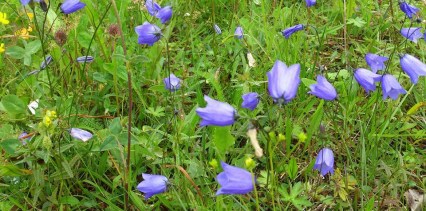
 Zooming up from Zululand, where we live now at the bottom of the earth … to Norway at the top of the earth, let me take you on a short trip. I grew up in a little town called Brumunddal, Norway. My father built a house that we called ‘Solheim’ on the hillside of Bjørgeberget.
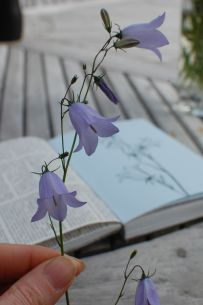
 They happened to bloom close to my birthday in July. I was so thrilled to find such beauties in the meadow on my birthday. I loved them. These wildflowers were so very delicate … frail … exquisite.
 He said that, in order for us to learn to be good counselors of others, we first had to be able to self-counsel. Our assignment was to identify a sin pattern that we personally struggled with and to track it for six weeks.
 Locating or identifying the temptation is a huge part of victory (James 1:14). Personally I struggle with worry. It is insidious and sneaks into the depths of my soul. I want to comfort-eat to relieve the pressure that I feel and get my mind off the vexatious thoughts. When I react sinfully, I feel badly afterwards because I know that I have not responded in a Christ-honoring manner. So if I am able to shine the flashlight on the temptation by locating it, that is a great start.
 Lord is the next key. We are told in James 1:2 that we are to count it joy when we are tested. Jesus said we should ask the Father, “do not to lead us into temptation.” He doesn’t tempt us with sin, but He allows the situation to make us stronger under pressure (vv. 3-4), and to motivate us to call out to Him for help (vv. 5-8).
 Lingering with the Lord and sharing honestly with Him what I am struggling with, and even what I am tempted to do in sinful reaction, is like releasing the pressure that the temptation builds up. The sin especially flees if I speak it out loud or write it down. You shock yourself as you see your hand spell out the sin.

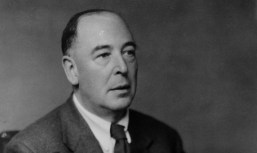 that men spontaneously praise whatever they value, so they spontaneously urge us to join them in praising it…I think we delight to praise what we enjoy because the praise not merely expresses but completes the enjoyment; it is its appointed consummation. It is not out of compliment that lovers keep on telling one another how beautiful they are; the delight is incomplete till it is expressed.” C.S. Lewis
 The gratitude is unfinished if it finds its end only in your thoughts.

 This is a visual of what happens when we constantly complain.
 Jane Gibb, a dear co-worker of mine, shared with me how she was struggling with some stress at a particular time. She decided to engage thinking thanks about that situation, and as she cultivated the thought pattern of looking for things to give thanks for in her situation and started writing things down, the stress lessened. She benefited. She was putting God’s Word into practice by renewing her mind.




 Nick and Julia had been reading different things to try and find some answers, and they had come up with a plan. As Nick started to talk to his child he laid down some rules that the child needed to follow when he began to feel great anger. The idea was to help him get control of these overwhelming feelings he was experiencing. They called it “Take 5.”
 One evening their little guy was allowed to stay up after the others had gone to bed, and just Daddy, Mommy, and the little victor each got to enjoy a Take 5 bar. Hearing about this made my heart smile.




 th(i)nkful