Two Secrets
I am going to tell you two secrets.
The Paradox Principle
The first secret is that growing in Christ is built on paradoxes. Things that seem absurd or contradictory prove to be true and right. That is hard for us to really understand. We have to adjust and make new goals and expectations based on those paradoxes.
- We died with Christ and are alive in Christ
- The more we die daily, the more alive we are
- The way up is the way down; and the way down is the way up
- To save one’s life you must lose it
- The more we give away, the more we gain
- We are strongest when we are weak
- Though poor, we can make others rich
- We are most sinless when conscious of sin
- We are wisest when we accept that we know little
- The more we serve others, the more joy we receive ourselves
- The more we sit quietly at His feet, the more work we get done for the Master
Notice the paradoxes in 2 Corinthians 6:9-10: “as unknown, and yet well known; as dying, and behold, we live; as punished, and yet not killed; as sorrowful, yet always rejoicing; as poor, yet making many rich; as having nothing, yet possessing everything.”
To overcome the most difficult trials of life, we begin, not by fighting them but by receiving them as from a loving Creator, being thankful in them, and eventually being thankful for them. It is counter-intuitive. A paradox.
The Replacement Principle

The second secret is the concept of replacement. When we grow in Christ, we desire to be free from sin and the things that easily capture us. A secret to overcoming sin, is given to us in Ephesians 5:4. Let me illustrate it first.
Don’t you love ‘Before and After‘ pictures? I do. I love to see messy, dirty things cleaned up and useful. It is super-inspiring.
But emptying out an overwhelming mess of useless papers, wrappers, and long-expired milk cartons is only half the job. Nature abhors a vacuum; we don’t live in empty rooms. The empty room needs to be filled with profitable things, with a place for everything and everything in its place.
Even Jesus talked about a house swept clean of a demon, but that demon returned and finding the house empty (not occupied) brought with it seven more. The end of the story for that person was worse than the beginning. The room had not been properly filled and was vulnerable to spiritual squatters.
The Weapon of Thankfulness
Replacement is true in human behavior. You don’t just stop doing something; you must replace it. When you focus on a thing, you give it power, so if you just repeat over and over, “I will not steal, I will not steal,” your mind will be filled with the topic of stealing. Not good. For a thief to stop being a thief, he has to start working and then focus on the superlative joy of giving to others in need (Ephesians 4:28). The stealing is replaced with compassion; taking is replaced by giving; evil is overcome with good.
Ephesians 5:1-4 says: “Therefore be imitators of God, as beloved children. And walk in love, as Christ loved us and gave himself up for us, a fragrant offering and sacrifice to God. But sexual immorality and all impurity or covetousness must not even be named among you, as is proper among saints. Let there be no filthiness nor foolish talk nor crude joking, which are out of place, but instead let there be thanksgiving.”
 This passage hits us with a surprise. Paul exhorts us to fight sexual immorality, impurity, covetousness, filthiness, foolish talk and crude jokes … with thankfulness. Paul didn’t simply shout “stop it,” like Bob Newhardt. He said to replace the sinful behavior with thanksgiving. We fight back against sin with thanksgiving!
As we actively think thanks and express those thoughts to God and others, we take back ground that has been formerly occupied with sinful thoughts. Being thankful could be viewed as an antidote to sin. We have a weapon in being th(i)nkful.
Summing Up
So did you get the two secrets? They actually work together.
- We overcome trials by receiving them from God with thankfulness.
- We overcome sins by replacing them with thankfulness.
How could you start down this road today? What about having 4-5 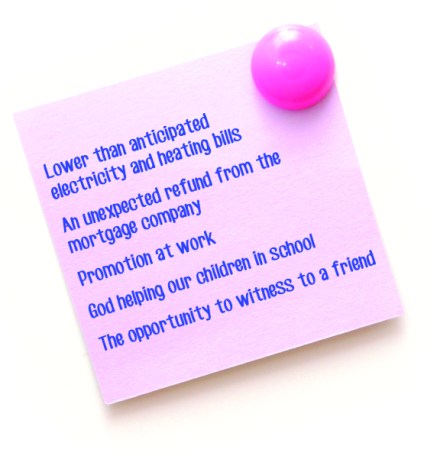 things written out in an area easily visible like on your refrigerator and when that temptation comes, read those 4-5 things out loud and thank God that He is God, and you are not, and He is trustworthy and will measure out grace and strength to do His will.
“Practically every sin we commit is a result of a lack of thankfulness.” Heath Lambert
 Closely connected to the ‘Don’t Worry Be Happy’ philosophy is the famous Smiley sticker, the inspiration for many of today’s emojis. Harvey Ball (not Forrest Gump) in 1963 is recognized as the original creator of the famous icon.
 I remember growing up in the 1970’s (that’s me with the camera) and buying smiley stickers with my allowance in the Brumunddal Bokhandle. This was a bookstore in the little Norwegian town of Brumunddal where I spent my childhood. So exciting to spread joy and happiness all over my school books or backpack, really anywhere it would stick! 🙂

 A right perspective of my circumstances begins with a right perspective of how close, loving, and committed my God is to me. If I go through a hardship and I look up and see God focused on me with two thumbs up and a smile, I may wonder what He is up to … but there is no doubt that I have His full attention and that He has some purposeful design in my circumstances.
 and only see the wildflower in it. Perception is a key component to gratitude. And gratitude is a key component to joy.”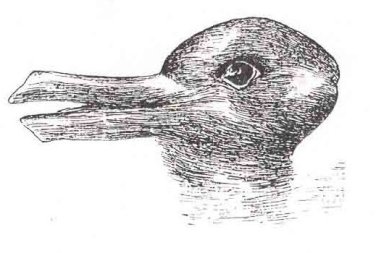

 and 1005 songs, had all the riches he desired, and nothing was out of his reach. He taught people through his example in judging difficult cases – like when two mothers were arguing over one baby. He built houses and planted vineyards, gardens, and parks with aqueducts and pools to water the trees. He employed skilled musicians and was surrounded by beautiful women.
 for thank, thanked, thanks, thanking, thankful, thankfulness, thanksgiving, thanksgivings, thank-worthy, 67 references came from the Old Testament and 68 from the New Testament.
 Creativity: relating to or involving the use of the imagination or original ideas to design or fashion something
 What a great sorrow to Him if I am just “thankful for” and not “thankful to,” as though I could chalk all of this up to chance, or luck, or random mutation, or a cosmic hiccup. No! I must give the credit, the applause, the fame, and my sincerest thanks to this Creator. It is all His work.
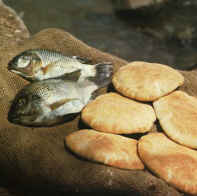 loaves and two small fish. Their solution was broken, insufficient.
 feet and get a big look at earth’s story – full of creativity and goodness, then full of sin and suffering, and then full of hope because God’s restorative creativity that’s just around the corner.

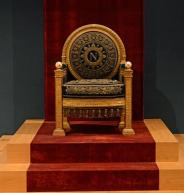 I find that I want to be in control; I want my superior understanding of what is best, my keen sense of order, and my better set of values, to be on the throne. It is difficult to trust that God has everything completely in control and is sovereign. And even if He is in control, He at times does things in a messy and hurtful way; there seems to be no order, purpose, or reason for an illness, an accident, or a financial reversal. Thus, I indict my God and conclude that my way is better.
 In reading to them I came across this book called
  When a person goes through a traumatic experience, that person experiences the happening objectively at first. But the later subjective re-experiencing of the happening is what I want to focus on. We relive notable experiences many, many times. It is in this subjective replay of the original experience where the key lies. You can choose how you relive an experience.
 As we leave 2018 and move into the brand new year of 2019 in a few days, I would like to challenge you to make a simple “thank you” part of your living. As you process daily things, as well as work through things of the past, insert a simple “thank you.” Let God help you to develop eyes to see not only all His blessings, for which you can be grateful, but also to see His designs in the dark places, because He is there too. And having His hand hold you through a valley of shadows is a cause for deeper gratitude as you get to know His ways, and heart, and character, and purposes more deeply.
 who has qualified you to share in the inheritance of the saints in light.” Colossians 1:11-12
 He posed the question that more than a few Christian kids have asked: What were we giving to the One who had the birthday?
 Take a piece of paper. Give careful thought and write out five characteristics that you love about your God. Take your time and use words that describe the attribute well. Next, write out five things that He has done this year for which you’re thankful.
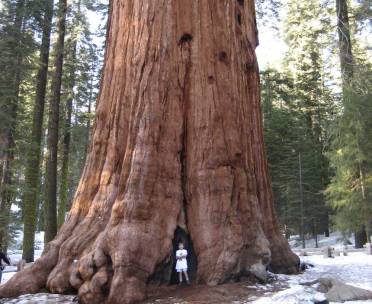 Did you know sequoias rely on fire to release the seeds from their cones? Those same fires burn off ground debris exposing soil in which seedlings can take root, open forest canopies through which sunlight can reach young seedlings, reduce competition, recycle nutrients into the soil. Sometimes, fire is necessary.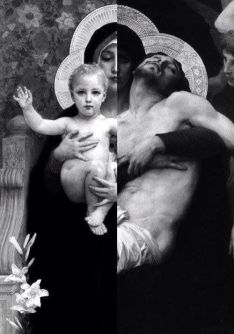
 new fresh growth will slowly happen.
 Americans celebrate Thanksgiving. In 1863 President Lincoln proclaimed a national day of “Thanksgiving and Praise to our beneficent Father who dwelleth in the Heavens.”
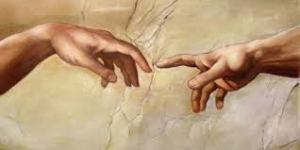 It is interesting to note that President Lincoln proclaimed that thanks and praise be directed to God. He recognized that it wasn’t enough for us to just voice our thanks for each other and for things, but it needed to be to our Creator Father who gave us life. We need to remember to be thankful to, not just thankful for.
 Hebrews says that praise is a sacrifice. Jesus’ work enables us to take our sacrifice into the very presence of God. In having the opportunity to praise God, what would you say? If you have a small view of God, the sacrifice of praise will bother you, and you will back out of His presence.
 One day, people from every ethnic group will join together around the Throne and lift up their praise to the One who is worth it, far above all other people and things (Rev. 7:9-10; 19:1-8). How cool to get a head start here on earth. 🙂 So whether it is thank you, tusen takk, Ngibonga, do jeh, grazie, merci, danke, khop khun, or arigato, let’s give praise and thanks to our God!
 th(i)nkful