The seed is planted. The tiny little capsule that houses great potential is placed down into the porous earth and patted still.
The seed is watered. The water seeps in around the little seemingly dead shell and provides needed moisture.
In time, the kernel germinates. The miracle of reproduction has begun as designed by the Creator, and slowly new growth forges out from the cracked pod reaching for the surface.
As the sun shines on the tiny seedling, the plant pushes up towards it. Little by little the seedling develops. Its roots sprout downwards to gain ground and the top of the plant reaches upward towards the sun. It is interesting to note that the root system for a tree is usually 1.5 times the crown of the tree. It takes a strong foundational anchoring network to assure that the tree gathers nutrition and stands firm even in strong storms.
Trees differ greatly in how fast they grow depending on their species and climate. Some trees in the heat of the equator can grow over five meters in a year while other trees in colder climates grow much slower.
The Tree – An Uncommon Illustration
The Lord uses the visual of a tree in Scripture. A physical illustration can help us understand abstract ideas. There are so many parallels between the structure and functions within a tree and the spiritual life, that one almost wonders whether God created trees chiefly for that purpose.
In Psalm 1, David describes a man delighting in the law of the Lord and meditating on it day and night, like a tree whose roots drink from a nearby river. This tree produces fruit in its season without the leaves ever withering. In Jeremiah 17, the man whose trust is the Lord is like a tree that flourishes even in heat.
“rooted and built up in him and established in the faith, just as you were taught, abounding in thanksgiving.“
Colossians 2:3
The th(i)nkful logo is a tree. I chose that logo because it is only possible to think and express thanks when a person is fully rooted in the belief that God is sovereign and can trust His character to do what is best in our lives. Only when resting in His promises, can we confidently choose to download grace/strength to think thanks in every circumstance we face.
Th(i)nkful (adj) describing people who choose to download grace/strength from the Lord to think thanks about every circumstance in their life and to express that thanks orally or in written form.
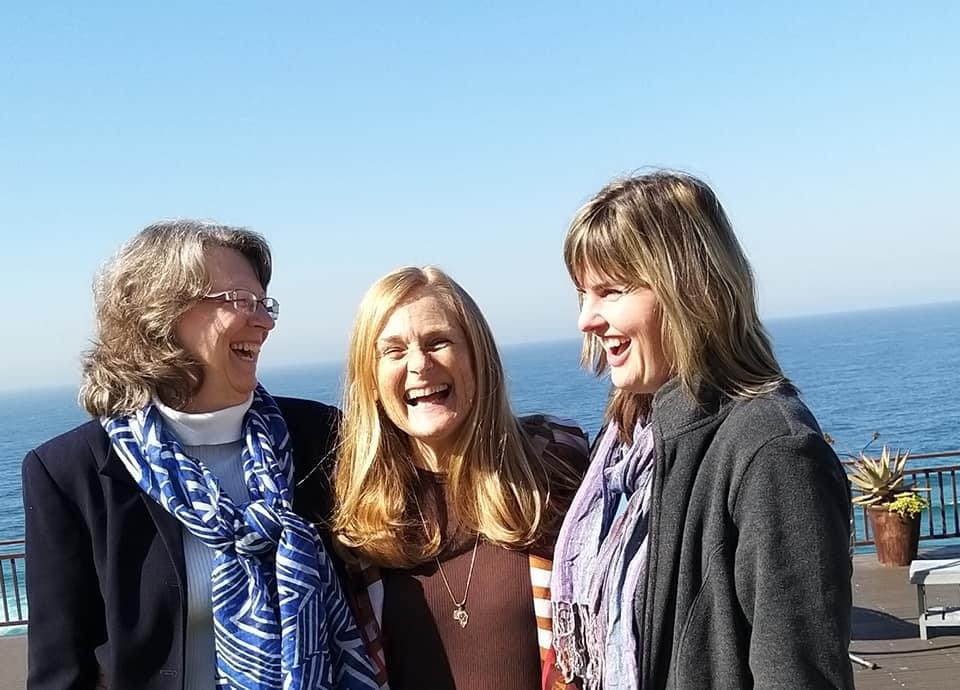
Debbie, Roxanne, and I served together in South Africa. We are all biblical counselors that seek to speak truth into counseling situations that God gives us. We get together online since we are now often on three different continents, and pray together and give each other good resource ideas to help with new challenges.
Recently, one of us had someone dear go through a difficult challenge. Hard circumstances were flooding this person’s life. The difficulties were not easy to fix, but she was confident she could trust our Lord’s sovereign plan. Then, she came across a great tool – a Gratitude Tree.
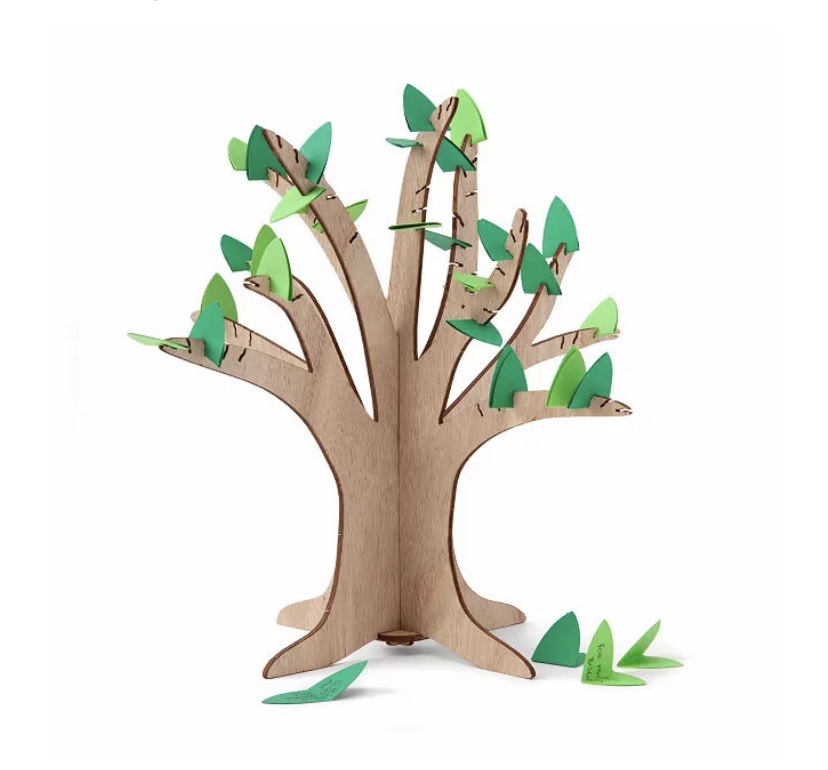
This is actually a product that you can purchase online. You put together the plywood pieces for the trunk and branches. You then use the green slips of paper to write down things for which you are thankful and place them on the little tree form. What a great idea, especially for moms and teachers! After some time, the little tree has lots of green, thankful leaves that produce a visual of the many things you are thinking thanks for.
I wanted to write and highlight this idea because I am always looking for ways to help people develop th(i)nkfulness. Sharing clever ways can inspire someone to action. Maybe you?
You don’t need to order the Gratitude Tree, but how are you promoting gratitude in your family? You could design and make something yourself. The beauty about using a tree visual is that it illustrates that it is a process. Just like how the tree has to be firmly rooted and connected to life-giving resources to produce leaves, so we have to be rooted firmly in our trust that God is in control and has “got this.” It is then that we can choose to think thanks about our current situation in light of our dear Saviour’s work in our life through our pain.
The Tree – Your Spiritual and Mental Health
So if you were to describe your level of gratitude as a tree, how would that tree look? Do you have a healthy brain neural pathway in place that kicks in with thankfulness when the storms of life come your way? Are you daily nurturing a good root system in God’s Word and His character for your gratitude tree so it can be put into action quickly?
We don’t have to develop thankfulness just for self-improvement, although that would be an admirable objective in and of itself. We strive to think thanks as a spiritual discipline in obedience to our God who has the goal of conforming us to the image of His Son. As our Creator, He has exhorted us to give thanks in all circumstances (I Thessalonians 5:18).
“Your actions reveal how badly you want something. If you keep saying something is a priority but you never act on it, then you don’t really want it. It’s time to have an honest conversation with yourself. Your actions reveal your true motivations.”
“The crowd joined in attacking them, and the magistrates tore the garments off them and gave orders to beat them with rods. And when they had inflicted many blows upon them, they threw them into prison, ordering the jailer to keep them safely. Having received this order, he put them into the inner prison and fastened their feet in the stocks.”
Acts 16:22-24
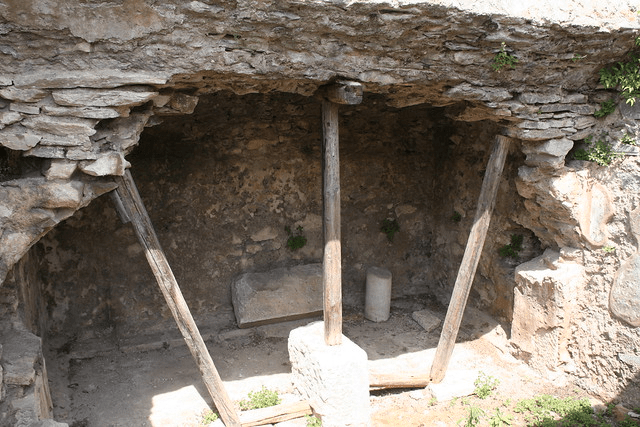
This photo is the alleged site in Philippi in which Paul and Silas were thrown into prison.
Paul and Silas had been obeying God and had shared the good news of the gospel with the people of Philippi. The Lord had opened one lady’s heart to the message; Lydia repented and believed. This was a new type of city for Paul on his missionary journey. He was trying to stay in Asia Minor (modern Turkey), but God had miraculously led him to cross over to Europe, to Macedonia. Philippi was the first stop. They didn’t even have ten devout Jewish men in that city to justify a Jewish synagogue.
Lydia, a business woman who dealt in purple fabric, was the first European convert. On the other end of the social spectrum was a slave girl who was demonized, and through the Apostle Paul’s prayer and rebuke, she was set free. These two were certainly very unlikely beginnings for a missionary’s church-planting strategy on a new continent. God works in mysterious ways. His ways are so much better than our ways.
But then Paul and Silas, in God’s providence, were taken captive and abused. This was illegal since they were Roman citizens. But the LORD was working out His plan through the stripping and beating and imprisonment. He loves His children, but often uses their suffering in this fallen world to accomplishes His greater purposes. Think Jesus.
Worship is Responding to God’s Sovereign Control
This is one of my favorite accounts in scripture. Paul and Silas were so convinced of the Lord being with them and working through their hardship that they reacted with worship!!! Can you believe it?
“About midnight Paul and Silas were praying and singing hymns to God, and the prisoners were listening to them …”
Acts 16:25
They were thinking thanks. They were th(i)nkful! They were rejoicing that they were counted worthy to suffer for Jesus’ sake. They followed the example of the other apostles in the first church in Jerusalem (Acts 5:40-41). Perhaps they thought, “We are privileged to suffer at the hands of religious and government leaders … just like our Lord Jesus. We must be doing something right, and God must be doing something good!”
When we encounter hardships, do we have this kind of reaction?
It is interesting to note that the other prisoners were listening to Paul and Silas praying and singing. Who sings in prison? They were pondering these echoing words of worship, which had to be sincere because there was no visible audience, and most prisoners would say that their god was punishing them or had failed them because they were in prison. But not these two.
The other prisoners also witnessed the miracle that God was about to perform.
God Intervenes
“… And suddenly there was a great earthquake, so the foundations of the prison were shaken. And immediately all the doors were opened, and everyone’s bonds were unfastened.”
Acts 16:26
The LORD God chose to intervene and send an earthquake and break the chains. This resulted in the Philippian jailer believing in the Lord Jesus Christ. His family also believed when they heard Paul speak. They were baptized right then. Wow!
How Does That Affect Karin?
On July 2, my husband and I arrived in the US after a long 43 hour trip from Amanzimtoti, SA. We were weary from a very full and demanding week of our first 7 Rivers children’s camp. Switching cultures can be exciting, but also draining and difficult when you are bone-tired. We felt low. It was even David’s birthday and I felt I had not properly prepared enough to express my deep, deep love and gratitude for my dear husband.
Sleep is a very good thing! The next morning we both were encouraged to keep on keeping on. Then I listened to a message that our son Joshua had preached the day before. It was on Acts 16:11-40. As the Spirit spoke through His Word and through our son, my faith was edified. I started to meditate on Paul and Silas praying and singing in that prison. I started to think about how God uses weak things to do His work….. like using me. He is the One that deserves all the glory. He delights in our weakness so that His strength can be made perfect in us.
Thank You, my Father, for helping me look to Jesus. This world is passing away. We must have ETERNITY stamped on the back of our eyelids. We look to Jesus, the Author and Finisher of our faith, who for the joy that was set before Him, endured the cross, despising the shame…. (Hebrews 12:2).
How Does That Affect You?
Do you respond to whatever is difficult in your life like Paul and Silas did in the yucky prison in Philippi? They saw God’s hand in their circumstances, and they practiced God’s presence by singing to Him.
God is micromanaging the good and bad circumstances in your life. Bad things happening has nothing to do with the way God feels about you if you are a true born-again believer. Jesus lived in near constant heat and discomfort without running water, electricity, or wifi, pressed by the crowds, traveling constantly, sleeping under the stars often, verbally abused and gossiped about by leaders, misunderstood by His disciples, and eventually betrayed by one of His own. This is the type of life the Father chose for the Son of His love.
God is not primarily our friend. He is the Author of history who is working out His infinitely complex plan. He is our Father. He is our coach putting us through structured suffering at times. And God is watching. And God rewards. Think thanks to God that you are loved and part of His plan, that He is in control, that His character is fully trustworthy, and that His mercies are new every morning.
“Behold, the eye of the LORD is on those who fear Him, on those who hope in His steadfast love.”
Probably most of you who read this blog have something hard in your life….something that you could in one way or another call a “thorn.”
Why is that? We want to fix things and try to get to that place in our lives where everything is going well, going smoothly, where everything is figured out, and everything is under control … but usually that’s an elusive place, and that euphoria never comes. The Lord seems to purposefully work through “thorns” in our lives for our good.
The Lord certainly doesn’t promise to keep us from thorns, rivers, or furnaces. In fact, He specifically tells us that He will be with us through those difficult times.
“When you pass through the waters, I will be with you; and through the rivers, they shall not overwhelm you; when you walk through fire you shall not be burned, and the flame shall not consume you.”
Isaiah 43:2
We pray, “God, deliver me from the furnace, from the floods, from the thorns!” But God providentially controls those things, and even sends those things, for His reasons … and with His company. He often says, “My child, I sent those to deliver you from you. I want to see My Son in you.”
Studying how Paul dealt with his thorn gives some clarity as to God’s view on our difficulties. Paul was so frustrated with this thorn that he asked three times if God would please remove it.
“So to keep me from becoming conceited because of the surpassing greatness of the revelations, a thorn was given me in the flesh …”
2 Corinthians 12:7
God answered that His grace was sufficient for him, that His power was made perfect in weakness.
We are not sure what Paul’s thorn was. Some have speculated that it was epilepsy, or perhaps his eyesight, maybe even recurring malaria. Others have guessed that it was a vexatious person who kept dogging and opposing Paul wherever he went. Perhaps it is a good thing that we don’t know what type of thorn it was so that we can insert our own thorn to learn how to handle these challenges.
Paul was entrusted with this difficulty to keep him from becoming conceited because of the surpassing greatness of the revelations he had received. The hardship countered the negative side effects of blessing. This hardship was carefully designed by the Lord for Paul’s own good and for the good of the churches that heard and read his words.
How Did He Handle It?
A few years after 2 Corinthians was written, Paul was put in prison in Rome. It was during this time in the early 60’s AD that Paul wrote what we call “the Prison Epistles” ~ Ephesians, Philippians, Colossians and Philemon. No doubt his thorn was still bothering him, but he chose to continue to serve the Lord and write these letters to encourage and instruct the believers. From what God was teaching him, he shared through the inspiration of the Spirit with others.
Paul knew that God has a big picture of everything going on, even in his individual struggles and challenges. Paul looked at himself as a servant of God called to accomplish a lifelong mission. He understood that the goal in life was not to be trouble-free, pain-free, bump-free, and bend-free … but instead to be conformed to the image of Jesus.
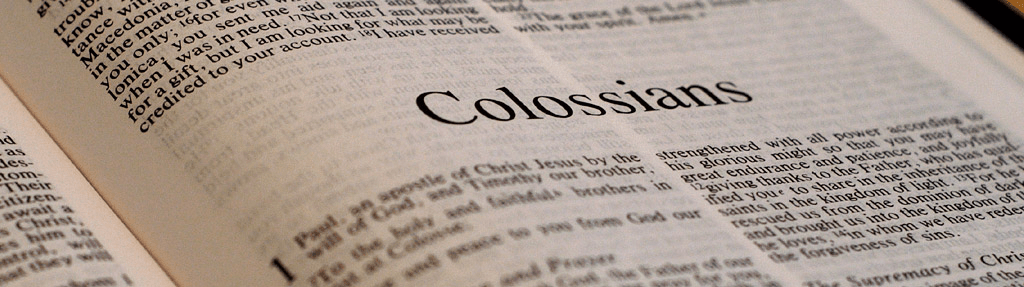
One of the skills Paul had learned to cope with thorns was to think thanks in every aspect of his life, even living with the thorn. One of these Prison Epistles is Colossians. Take a closer look at how Paul highlighted thinking thanks in that letter.
Thankfulness in Colossians
Colossians has special interest to me. It only has four chapters, but in every single chapter there is a verse dealing with thankfulness. In fact, in chapter three there are three verses in a row that address thankfulness!
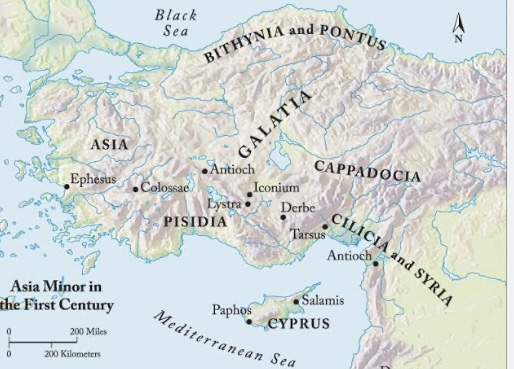
Do you know where in the world Colossae is? It is located in modern day Turkey.
Epaphras had been changed in Ephesus! He had heard Paul speak and Epaphras had responded and trusted in Jesus as the Messiah. He was so changed that he had to take the news of the gospel back to his home in Colossae.
He shared that Jesus had come and died and that he had risen again. Through Jesus’ work on the cross we could have forgiveness of sins and be adopted into the family of God. We could be reconciled to the Creator from the breach that our sin had caused going all the way back to Adam. The second Adam had come and fixed things!!
This is a picture of modern day Colossae.
The people of Colossae responded in faith. They believed and a church was established there.
Later there were some heresies that started to creep into the church, and Epaphras was so concerned that he travelled all the way to Rome to talk to Paul. Although Paul never actually visited that church, he prayed fervently for them. So Paul is writing this letter to encourage them and help them grow in their walk in Christ. And although he is in prison, Paul doesn’t ask for blankets, food, medicines, or visits. His ability to give thanks in his circumstances freed him to focus on others.
One of the fruits of being in Christ is being th(i)nkful. Look at how Paul addresses thankfulness in the four chapters:
In chapter one, Paul shares a prayer that he prays for the believers in Colossae. He prays for them to be filled with the knowledge of His will in all spiritual wisdom and understanding. In verse twelve Paul prays for them to give thanksto the Father. He knows that thinking thanks and expressing it, is part of the mature Christian life.
In chapter two, he admonishes the Colossians to walk in Christ, being rooted and built up in Him and established in the faith, abounding in thanksgiving.
In chapter three, Paul gives three verses in a row, 15-17, that include thanksgiving. “And let the peace of Christ rule in your hearts….and be thankful. Let the word of Christ dwell in your richly, teaching and admonishing one another in all wisdom, singing psalms and hymns and spiritual songs, with thankfulness in your hearts to God. And whatever you do, in word or deed, do everything in the name of the Lord Jesus, giving thanks to God the Father through Him.”
In the fourth and last chapter, Paul starts out with verse one encouraging the believers to continue in prayer, being watchful with thanksgiving.
What About Your Thorn?
Thanking God for your thorn, for your flood, for your furnace, is only done through the work of Christ in you. It is only as we view our human suffering in light of the gospel that things start to make sense. This life is momentary, our suffering is not even worthy to be compared to the glory that will be revealed (Romans 8:18). As we begin to see through the glasses of God’s perspective, we can even join James in counting it all joy as we see the trials develop steadfastness and endurance in us.
Could you take any help from Paul in the book of Colossians? Do you process things in your life with th(i)nkful glasses? Could you wrap that yucky thorn with thinking thanks of how it is making you like Jesus?
I am not saying it is easy, just that when we process the thorn God’s way, it changes us.
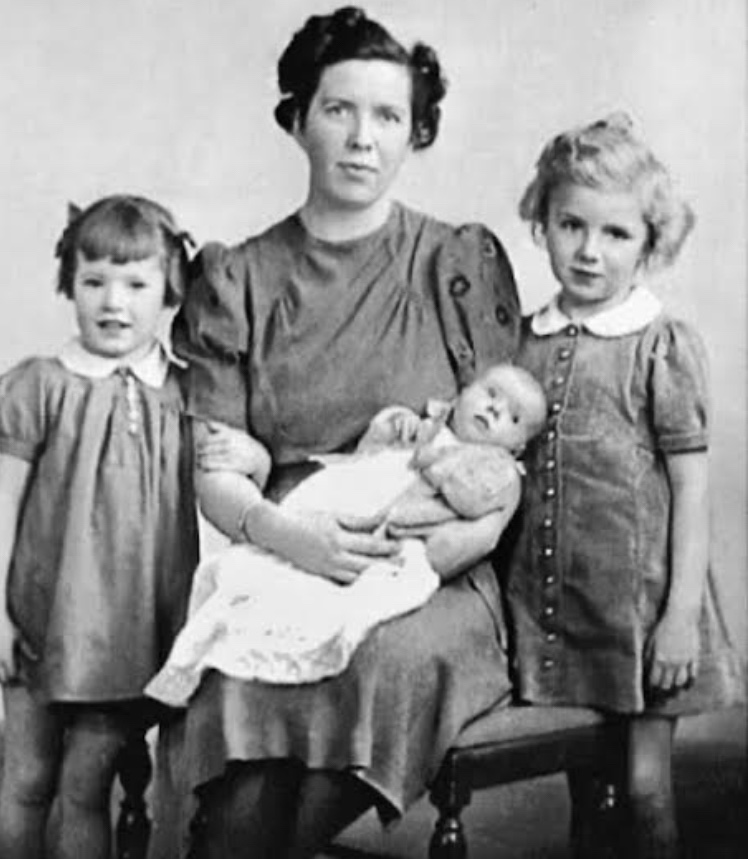
“Don’t go, Daddy!” The girls clung to their dad as he tried to go, walking towards the gangplank. Flo tried to think that it would only be a short time before Eric would join her and the girls in Canada. WWII had begun, and the roil in Europe and the Pacific was demanding many sacrifices from everyone.
The Japanese invaders had given foreigners in China the option to leave or to stay in “internment camps.” The Liddells had both felt that the Lord wanted Eric to stay and help with the work as much as he could, but Flo, expecting their third, and their two precious girls would head to Canada for safety.
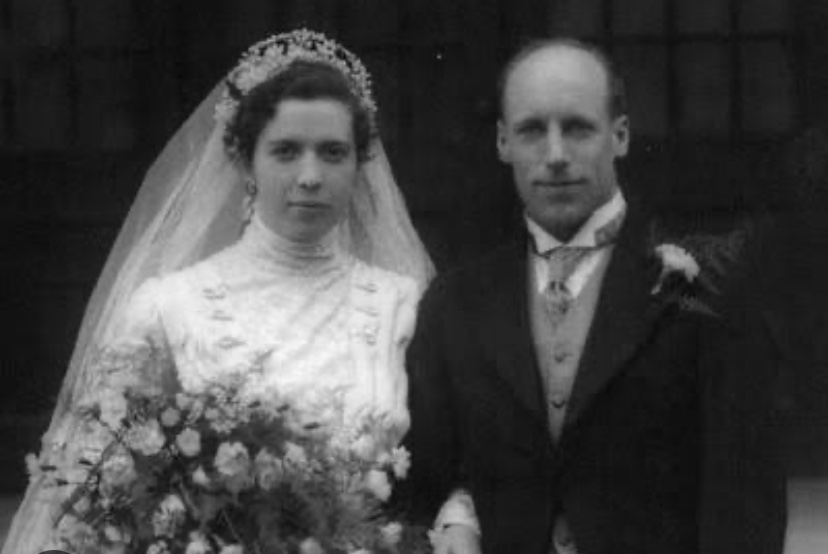
Eric and Florence had met in China, both being from missionary families. Eric had used his athletic prowess to further the gospel. Although an Olympic champion, he chose to spend his life on the mission field in China, where he was born.
Eric Liddell would never see his dear wife and beautiful girls again. He died in the Japanese internment camp. I will not spoil it for you, but wow, this was a good biography.
How Flo Reacted
The news of Eric’s passing would be brought to Flo’s door in Toronto, Canada.
She had been able to have contact with Eric to a degree, but things had become more sporadic as the war progressed. There was such hope and vision of being together again in the near future. The news came as such a heavy loss. Eric had succeeded in being a humble, cheerful, and encouraging person who was full of optimism even in dire circumstances in that internment camp. Now she had to find a new normal without him. She had to provide for the girls. The mantle was daunting.
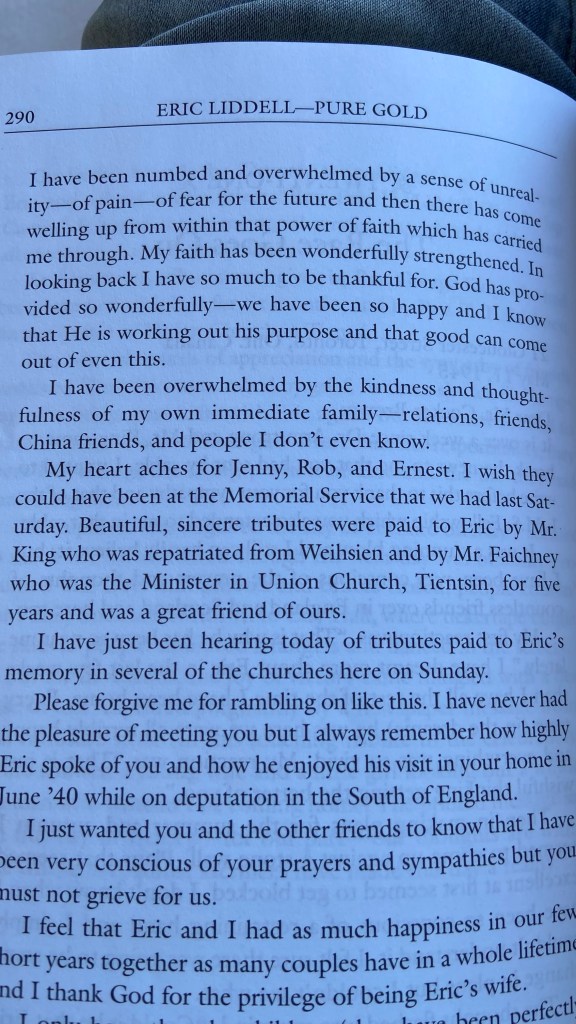
As I read this biography of a person David and I highly admired, I was impressed with the words that Flo penned shortly after his death.
“I have been numbed and overwhelmed by a sense of unreality – of pain – of fear for the future and then there has come welling up from within that power of faith which has carried me through. My faith has been wonderfully strengthened. In looking back I have so much to be thankful for. God has provided so wonderfully – we have been so happy and I know that He is working out His purpose and that good can come out of even this.”
Florence Liddell
The grieving process took its time with great challenges, but underneath were the everlasting arms of her Savior.
She chose to think thanks even when ambiguity and anxiety could have drowned all hope.
When reading about Flo’s response to the horrific news that her husband had passed away, I could not get over the grace that seemed to pour into, and then out of, her.
She utters her numbness and feelings of being overwhelmed, but she also expresses her faith being strengthened, and she notes how many things she is thankful for, like having enjoyed as much happiness in a few years as many couples did in a whole lifetime.
Two Heros
My husband and I have admired Eric Liddell for a long time. He is one of our heroes. His humble and kind way with believers and nonbelievers, his mediating disputes between people in the internment camp, his counseling of teens, and and his organizing activities for teens and children in the internment camp were evidences of his dogged commitment to Christ and to being Christlike.
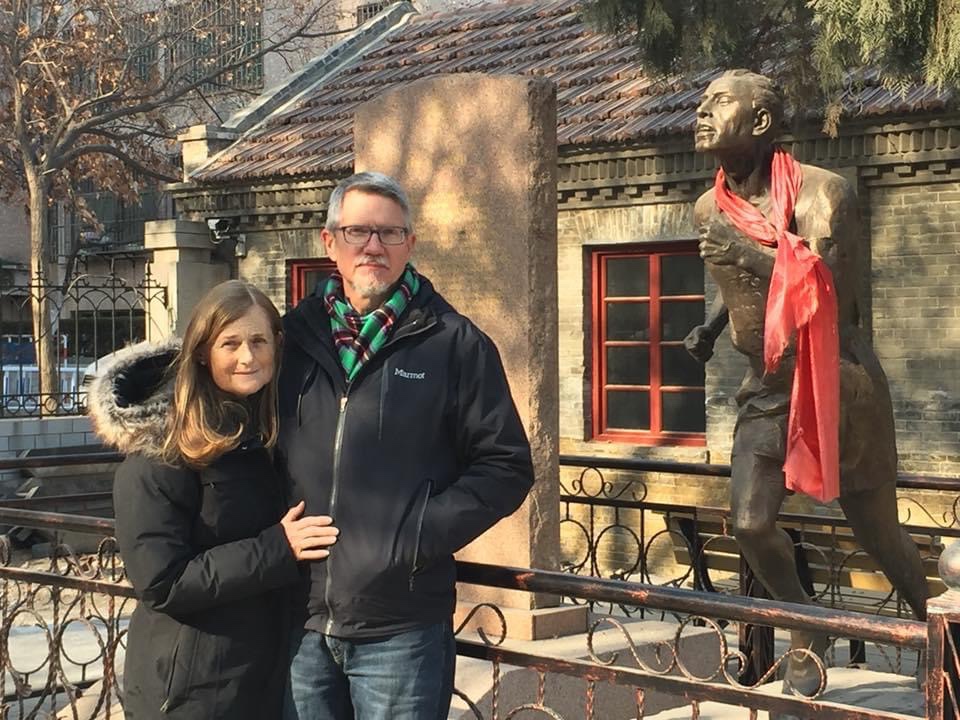
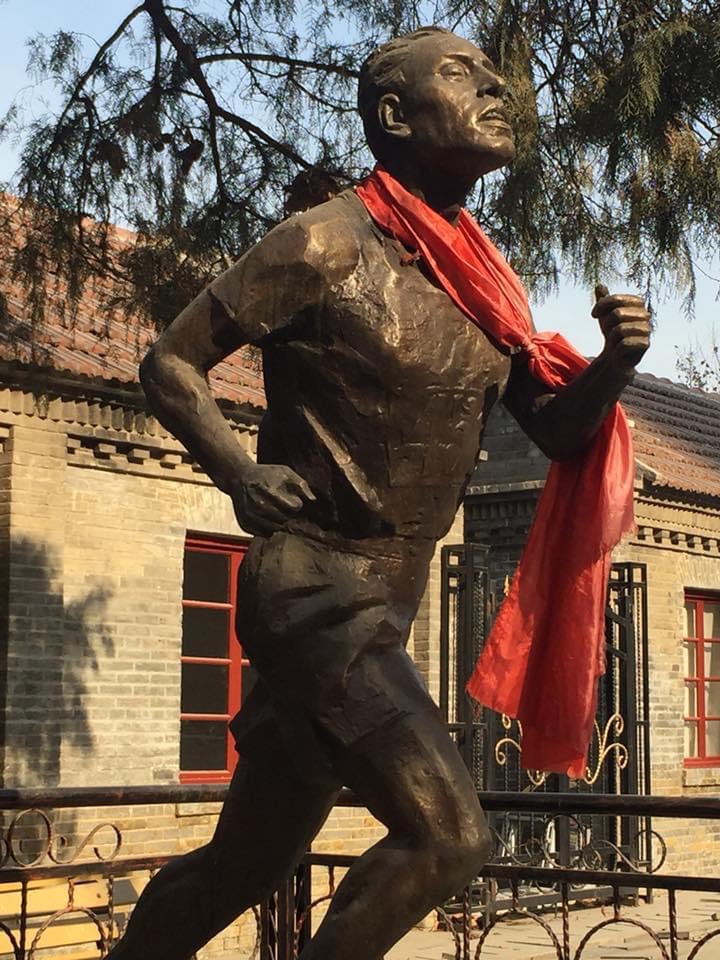
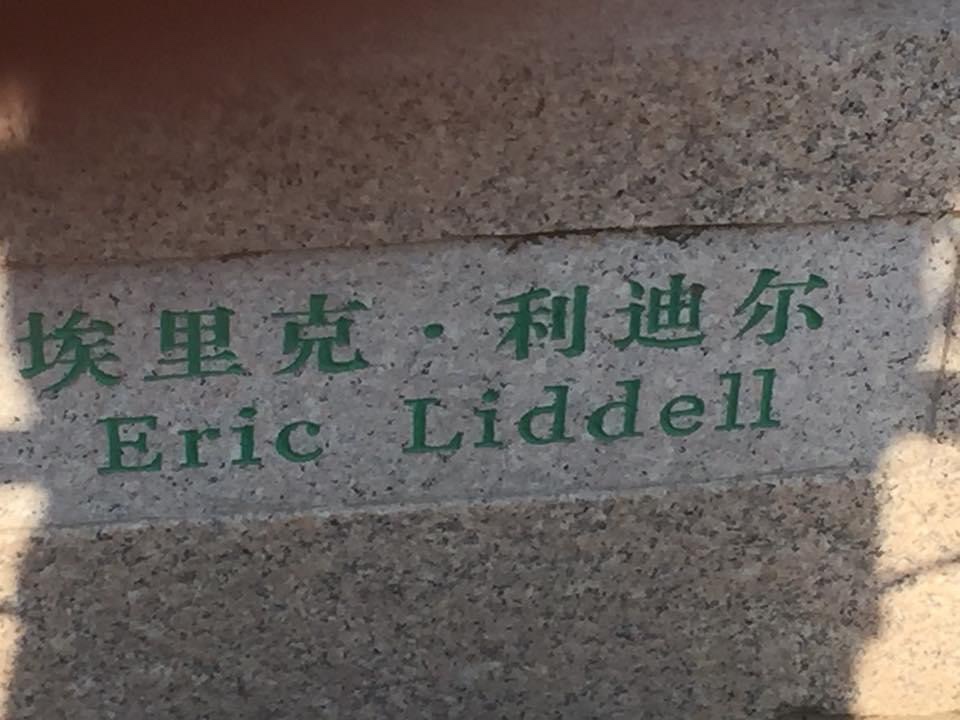
When visiting our daughter and her husband in China back in 2018, we had the privilege of seeing the place where Eric died in that Japanese internment camp. It is in Weifang, China. There is a lovely Chinese memorial to all those who lived and died in that camp, and a special statue to Eric, whom the Chinese claim as the first person from China to win Olympic gold.
Learning more about Florence Liddell has given me fodder to have two Liddell heroes; not just Eric but his wife as well.
I wonder how I would have responded in similar circumstances? How would you have?
Fostering a thinkful habit of always looking for things for which to be thankful is beneficial indeed. In everyday life, it bolsters our perspective and strengthens our faith as we joyfully obey the I Thessalonians 5:18 command of giving thanks in all circumstances.
But when those once-in-a-lifetime heavy blows come, thinking thanks is a matter of life and death – of angst, bitterness, and even insanity on one hand, and of perspective, trust, and recovery on the other. Unless we have a relationship with the Sovereign One who can be trusted in all the unexpected (for us) events that come, we are doomed.
Challenge
So what about you? Do you have a heavy, big blow that has come into your life? Has it already passed? Perhaps it has not come yet? What are you doing to prepare yourself to weather the storm that surely will present itself?
Put into action today the pieces that build a strong foundation in your mind when the battle engages. It is almost impossible to start forming a godly habit as the bullets fly, the cannons flare, and the missiles howl. You must have forged those convictions before the combat begins.
Develop a daily habit of recording things for which you give thanks…. from the mundane to the big.
Exercise a Psalm 50:23 way of life:
“The one who offers thanksgiving as his sacrifice glorifies me: to the one who orders his way rightly I will show the salvation of God.”
“Tusen takk,” the Norwegian man called over the fence to a friend who had been a big help. “A thousand thanks.” Precious words expressing a thankful heart were thrown out to the recipient. He hoped that the receiver would understand how grateful he was.
Moving south to Egypt, people also want to acknowledge that they have received thoughtfulness from others.
“Shukran,” the woman said to her friend as the friend kindly helped carry her bag and listened to her sharing hard things in her life. That is the Arabic word for thank you, from shakara meaning “to thank.” She might also say thank you by saying “tislam,” meaning “may things come out safe or healthy for you.”
Heading southwest we land in Indonesia, where they have a lovely way to articulate thankfulness.
“Terima Kasih,” the Indonesian man said as he sped by on his bicycle, followed by his broad smile with pearly white teeth. He expressed his gratitude for moving out of his path. He had a heavy load to carry to market. “Terima Kasih” literally means I receive your care.
It is interesting to dig a little deeper to learn the actual meanings of the phrases cultures use to say “thank you.” From the Norwegian “Tusen Takk,” meaning a thousand thanks, to the Indonesian “Terima Kasih,” meaning I receive your care, each language articulates it differently.
I Receive Your Care
Autonomy is a self-sufficiency that says I don’t need anything. I am good by myself. This is a prevailing attitude among a large portion of people, especially in Western cultures. When you stop to truly say “thank you,” you are saying that you were not enough. You needed help. You received help. You received care from someone outside of yourself. You are expressing that you are thankful for what the other person did to help your deficiency. For the poor and the sickly, that’s not hard, but for many people, it’s not easy.
We were taught from childhood that you need to say thank you when you receive a thing or receive help. It isn’t just a proper thing to do, it is a people skill a person needs for life, and a discipline that reminds my own heart how many of my needs have been met by others.
Some people whose lives didn’t turn out as they had hoped, begin to see the glass half-empty, externalizing blame and internalizing credit. “Others haven’t helped me; they need me to help them.” They scan for the imperfections and deficiencies in all things – people, plants, homes, cars, schools, children, food, politics, society, and the list goes on. A byproduct of such a heart attitude is that thankfulness falls away. We become adept at wanting more and different, but not so keen on identifying received care.
What Do YOU Receive?
It takes conscious thought to consider what one has received. You must meditate and acknowledge. This is why the English words think and thank are related. It begins by realizing our Creator God is the One who has made us and sustains us with our heartbeat and air to breathe on a continual basis. But it continues downward to acknowledge the people and things around us that give us care and kindness. When you begin searching for reasons to throw credit to others, your thankfulness seems to grow. There is so much we have received, and so many that deserve our thanks!
“For who regards you as superior? What do you have that you did not receive? If then you received it, why do you boast as if you did not receive it?”
1 Corinthians 4:7
I love different languages and cultures and long to be at the Throne of God all worshiping together with our varied backgrounds. There is a common thing that all of us humans have, however, and that is our ability to think thanks and to covey that thanks in verbal or written form to the one to whom it is due. Foremost, we give thanks to the One “in whom we live and move and have our being” (Acts 17:28). We are constant recipients of His care. But we also need to admit to others that we have received their care and say thank you.
Get in the habit! Do it genuinely and often.
“Gratitude is an offering precious in the sight of God, and it is one that the poorest of us can make and be not poorer but richer for having made it.”
It was hidden way up in the cupboard. I only ran across it as I was looking for something else, but there it was…a simple gift from our oldest son, Joshua. I received it at Christmas because he knew it would be so very precious to me. I had read it, but had forgotten just how precious it was. I read it again and tears started to fill my eyes. I shared it with David, my husband, and he read it, too. He, likewise, was touched by its contents.
So what was it???
It was a handwritten note on two sheets of plain paper expressing our son’s thanks to me for influence in his life. Powerful.
“It is only with gratitude that life becomes rich!”
Dietrich Bonhoeffer
Put It Up On The Wall!
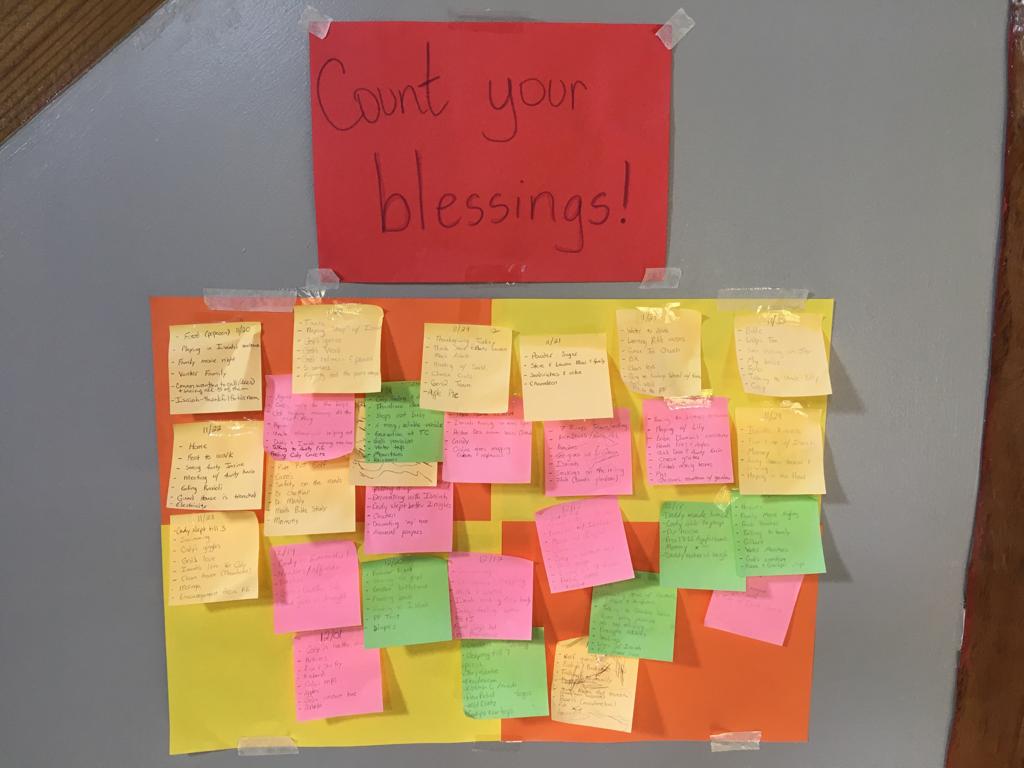
“I need help from you all to remember to be thankful,” she said. “So I want you to write out something you are thankful for and post it on the wall.”
Grace had an ingenious way of promoting thinking thanks for her family.
She created a place on her wall where the family could stick post-it notes with things that they were thankful for. As you passed by that wall throughout the day your mind was prompted to think on things that you were thankful for.
Later they would take down the papers and read them at supper time. What a great way to forge a brain neural pathway of thinking thanks! They have graduated to writing them down in a journal now so that they will not loose all the little slips of paper. They want to remember the things for which they were thankful.
This was like writing a long thank you letter to the Lord for who He is and things He had done.
Biblical Example
When Paul wrote 13 letters, preserved as “books” in the New Testament, he often began by rehearsing his thanks to God for the recipients of that letter. Actually, Paul mentions the topic of thankfulness at least 46 times in his 13 letters, sometimes exhorting others to give thanks (as in Colossians 3:15-17), and other times expressing his own thankfulness.
Interestingly, the phrase “thank you,” occurring nine times in the ESV Bible, is never directed to another person or group. “Thank you” is always directed to God in the Scripture. But Paul began almost every letter with some version of, “I thank God for you.”
“We always thank God, the Father of our Lord Jesus Christ, when we pray for you.” Colossians 1:3
Paul voiced his thankfulness for people. He encouraged them with his words. He thoughtfully included his gratitude under the inspiration of the Holy Spirit. He was going to be conveying great truths in his epistles that would mold the Church for centuries to come, and in some cases rebuking them for their sinfulness and blindness, BUT right there at the beginning of his letters, there is a verse expressing th(i)nkfulness.
I wonder how often you do that? Do you take the time to thank your God for the people He has placed in your life, and then express your thankfulness to those people, highlighting the reasons you are thankful?
A Challenge
I wonder if we fully realize how powerful it is to express our thanks not only to God, but also to others?
So I present you, my reader, with a challenge! To whom could you express thanks today?
Maybe you would write out a thoughtful note like Josh did for me. Maybe you could stick post-it notes on a wall like Grace did. Maybe send a text, or email, or an old-fashioned letter with stamps and everything, stating to someone the reasons you are thankful to God for them. You might even get up the courage to speak, to tell someone the reasons you thank God for them.
Just make sure you do SOMETHING today to express thanks to someone. You will encourage someone else and you yourself will receive a blessing for having done it.
“Do not withhold good from those to whom it is due, when it is in your power to do it.”
A seven year boy went on a walk with his family recently. Rounding a corner he suddenly called out, “Pockets of thankfulness.“
Such an artistic statement grabbed the attention of one family member. “Pockets of thankfulness?” they asked. “Yeah,” he replied, “we have breastplates of righteousness, helmets of salvation … why not pockets of thankfulness?” He was just continuing what he considered to be the logical progression of the armor of God.
Love it!!
Although the writer of Ephesians 6 did not included pockets of thankfulness, the picture seems to fit so perfectly as both a defensive and offensive piece of a Christian’s armor. Thankfulness shields us from temptation, and strikes back at the tempter.
In Isaiah 11:5 the author uses two descriptions of putting on a belt. “Righteousness shall be the belt of his waist, and faithfulness the belt of his loins.”
In Isaiah 59:17 the Lord God puts on righteousness as a breastplate, and a helmet of salvation on His head; He puts on garments of vengeance for clothing, and wraps Himself in zeal as a cloak.
In I Thessalonians 5:8 we are exhorted to be sober, putting on the breastplate of faith and love and the helmet of the hope of salvation.
The visual image of a piece of clothing to illustrate a spiritual truth is powerful. Having the direct command of Ephesians 5:20 to give thanks always perhaps gives us grounds to include pockets of thankfulness?
Fill those pockets with things, thoughts, and Scripture that will motivate gratitude!
Pocket Contents
“I’ll just put it in my pocket so I can get it easily.”
Does that sound familiar? A pocket keeps things handy. It is designed to hide things in a place where they can be brought out quickly. I know I often put things quickly in my pocket to have it readily available. Maybe I will need a tissue, or my phone, or some cash?? I will just put it here in my pocket.
Pockets first began appearing on waistcoats and trousers about 500 years ago. As you may remember, about half the population wasn’t wearing trousers back then. In Medieval times, both men and women wore bags that tied around their waists and filled them with whatever bits and bobs they needed.
Unfortunately, many Christians keep thankfulness locked up in a trunk to be opened once a year at Thanksgiving, or on the odd occasion where they are almost killed in an automobile accident or are experiencing cancer in remission. But thankfulness is NOT meant for your locked trunk. It should be in your pockets. Handy. A part of your routine even more than checking social media. Something you can quickly share with a friend. Oh, to have some really big pockets, heh?
What Would Be In Your Pockets?
Maybe the first thing you would put in that pocket would be cash. Seems like you would be so thankful to find some money when reaching into your pocket (even after it’s been through the laundry).
What would you make sure was in your pocket of thankfulness?
If you are a teacher or mother, could I suggest getting a visual of a pocket that you could use in teaching gratitude? Get a big square of blue jean material and sew a pocket on it, then pin it to a bulletin board.
IDEA 1: At the beginning or end of the day, write something you’re thankful for on a piece of paper. Put it in the pocket … for later times when the ingratitude seems to be winning in your life … or maybe for the end of the week when it’s time to count our blessings.
IDEA 2: Ask your children to put in a small object that represents something that they are thankful for and letting them share why that is special to them? The next day you could have a quiz holding up an object from the pocket of thankfulness and ask who remembers what it represented.
IDEA 3: See the inside flyleaf of your Bible as your “pocket.” I have a slip of paper readily available with at least five things that I can think thanks for. I want my eyes to often peruse that paper. We need reminders. We need them often.
Just as a side note ~ that seven year old boy who imagineered “pockets of thankfulness” just happens to be my precious grandson. #thinkful
“The unthankful heart discovers no mercies; but the thankful heart will find, in every hour, some heavenly blessings.”
She put the phone down, shock slowly creeping through her.
“Did not have a clue that this challenge was on its way,” she mused to herself.
“So how does God want me to to navigate this situation? How can I process these uncomfortable moments in a way that would be pleasing to Him?”
As the temptation to worry seeps in, we can have an emergency plan in place. We can practice for the upcoming “bend in the road” just like someone practices for an upcoming game.
1. The Replacement Principle – Matthew 6:25
Jesus gives some guidance when it comes to anxiety.
Therefore I tell you, do not be anxious about your life, what you will eat or what you will drink, nor about the body, what you will put on. Is not life more than food, and the body more than clothing?
Matthew 6:25
Interesting to note that He says don’t be anxious about your life. In the verses to follow He reminds us that we cannot add one hour to our lifespan. God cares for us as He does for the birds of the air and the beautiful grass of the field. He states that the Gentiles (unbelievers) are seeking after, and continually anxious about, those things.
In contrast He says to seek first the kingdom of God and His righteousness! That’s the cure for anxious thoughts that Jesus gives us!! Outward and upward focus! “What can I do for His Kingdom today? Who can I serve? Who can I encourage? Who can I share the gospel with? Who can I pray for other than myself and my problems?”
As believers, we are different in that we have a Heavenly Father that is looking out for us. He knows our needs and lacks no power to supply them … in His time … and in His way. He can also clearly distinguish our needs from our wants – often our fretting is about our wants. As a friend mentioned, “Most of the time, we have rich people problems. If we lived in the 3rd world with next to nothing, we would have none of these problems. We have problems because we have too much … and expect to keep it all.”
The anxiety battle is won firstly through the “replacement principle.” We can’t resist anxious thoughts by simply trying to not think anything. There are some men who claim they are thinking about “nothing,” but the mind is always processing or mulling over something. So, I must replace my anxious thoughts with some kind of active planning or pursuing whatever is good for the Kingdom.
2. The Stoking Principle – Philippians 4:8
“But I feel like I can’t help it,” you may say. “Anxiety is so powerful and takes over my thinking, my existence, and affects my sleep, my heart rate, my blood pressure, my digestion, my relationships, and my thoughts.”
What we allow our minds to feed on affects us. What we meditate on throughout the day and in our waking hours of the night slowly changes us.
“I cannot remember the books I’ve read any more than the meals I have eaten; even so, they have made me.”
Ralph Waldo Emerson
Is there a grid of what materials are cleared to cross the threshold into the furnace of our thoughts? Wood is good. Materials with petrol or gunpowder are not. Have my thoughts cleared the Philippians 4:8 test?
Finally, brothers, whatever is true, whatever is honorable, whatever is just, whatever is pure, whatever is lovely, whatever is commendable, if there is any excellence, if there is anything worthy of praise, think about these things.
Philippians 4:8
Are my thoughts true, honorable, just, pure, lovely, commendable, excellent, praiseworthy?? Or are they dark, pessimistic, desperate, slandering of God’s character, denying His nearness, or embracing some “bad karma” idea that you are getting what you deserve from years ago?
You are stoking materials into the fire of your mind that will eventually affect you. Paul gave us a list of good slow-burn thoughts that help us regain clarity. The very first on his list is “whatever is true.” “True” is whatever agrees with reality as known in the mind of God.
Thinking on what is really true cools the fire of most anxieties, which are mostly speculations about what will happen in the future without God in the picture – “I’ll get in so much trouble,” “I’m gonna die and leave my family in heartbreak,” “I could have been shot in the crossfire!” It is not true. None of it. Most anxiety magnifies the worse-case scenario and makes God disappear. It is the worst kind of speculation, imagining yourself alone in your trouble without God, His grace, His promises, or His people.
3. The Th(i)nkful Principle
Something bad happens and the fires of anxiety flare. Firstly, we’ve already seen that we can fight anxiety by getting busy with kingdom business at home, at school, at work, or in our community. Secondly, we have to watch our meditations and keep the combustible, harmful speculations out of the furnace. Thirdly, we need to think of what we can be thankful for in the situation and elsewhere in our life. This is the discipline of being th(i)nkful.
“Do not be anxious about anything, but in everything by prayer and supplication with thanksgiving let your requests be made known to God.”
Philippians 4:6
“In everything give thanks” is the Lord’s command because His meticulous Providence governs each detail of our lives, they are working for my good and His glory in His time, He is with me, He has measured what I can handle with His grace, I can cry out to Him at any time, and I have His Word, His Spirit, His promises, and His people around me. How will I respond? He is watching me. The angels in both kingdoms are watching. How will I respond?
Productive & Unproductive Anxiety
“anxious: (adj) uneasy and apprehensive about an uncertain event or matter: worried.
(from Latin anxius, from angere, to torment)
thefreedictionary.com
Giving proper prudence to a matter or having proper fear for a dangerous situation is NOT what I am referring to here. You can address a dangerous situation with caution and not be overrun and controlled by anxious thoughts.
In this picture our youngest daughter is looking at a young lion cub in South Africa. That little lion is strong. Not respecting the danger associated with this animal would be foolish.
BUT there is another fear that is not good. It is a faithless fear. It is a fear that God is not really in control. God doesn’t care about me and my little life. Those lies can feed a sinful anxiousness.
Navigation Plan
Do you have a plan to handle anxiety when a Sovereign God ordains life to throw you a curveball? You could formulate your own, but here’s an example of what to write out in the back of your Bible:
First run to the Lord in prayer and acknowledge that God is God and I am not
God is with me right at this moment and knows more about this than I do
God wants me to run TO Him with my cares not AWAY from Him and stew
Begin searching for things that I can think thanks about even right in the storm
Romans 8:18 tells me that the sufferings of this present time are not worth comparing with the glory that is to be
Matthew 11:30 describes the Lord’s yoke as easy and His burden as light
Even if everything else goes wrong, I can give thanks for Jesus saving my soul
This life is a vapor and will soon be over; I will be made perfect and my troubles will be over!
“And the peace of God, which surpasses all understanding, will guard your hearts and your minds in Christ Jesus.”
“Remember when we did that right before Christmas?” she said, as her mind drifted back to relive the moment. She paused to savor the memory one more time.
Do you remember things that you are thankful for? Do you pause for a moment to savor the joy of that memory?
Recently, we earnestly prayed with a family in our church-body here in South Africa for their urgent need. This precious family had not been all together as a family for many years. Their oldest sons had moved to the States to go to college and one got married. Waiting for important government papers prevented their travel with their newly adopted children.
Many of us came before the Throne on their behalf and asked for God to be merciful to them if it be His will. We prayed for a long time. God did not act until it got very close to the wire. We knew that we could trust the LORD even if His answer was ‘no.’
But in the fullness of His plan, He gave them their request right when He chose to do so, at virtually the last minute. Oh, the rejoicing in our church. We wanted to sing and dance to celebrate with them. We were SO thankful. Full of thanksgiving. Overflowing with thanks!!🙌🏼
They were ALL together for Thanksgiving. As I rehearse that happening, I want to smile and thank God anew.
It is a good thing to REMEMBER. It is important for us to tell others, too, especially our children and people in our sphere around us. “Let me tell you of this awesome thing God did in the life of one of our friends!”
“I will remember the deeds of the LORD; yes, I will remember your wonders of old. I will ponder all your work, and meditate on your mighty deeds.” Psalm 77:11-12
Remembering Builds Faith
In Joshua 4 the people of Israel were asked by the Lord to do a curious thing. One man from every one of the twelve tribes was to pick up a stone from the Jordan river as they passed through and carry it on their shoulder to the other side.
The children of Israel had weathered many hardships, and multiple challenges lay ahead. As they came upon the mighty Jordan river, the LORD did a miracle and dried up the river for all of them to cross over.
On the other side of the Jordan river at Gilgal, Joshua set up the twelve stones as a memorial to remember.
The Lord wanted them to have a physical reminder of God’s mighty power on their behalf.
“When your children ask their father in times to come, ‘What do these stones mean?’ then you shall let your children know, ‘Israel passed over this Jordan on dry ground,’ For the LORD your God dried up the waters of the Jordan for you until you passed over, as the LORD your God did to the Red Sea, which he dried up for us until we passed over, so that all the peoples of the earth may know that the hand of the LORD is mighty, that you may fear the LORD your God forever.”
Joshua 4:21-24
As the generations would tell and retell what had happened, the remembrance of what took place would build faith for the next generation to also trust that God would direct and provide for them.
Th(i)nkful Remembrance
We are nearing the end of 2022. What are things for which you can remember to think thanks for this year?
But…what if this year has been full of raw, difficult pain? What then?
We run to the character of God. We chose to rest in His sovereignty of working ALL things in a divine plan to conform me to be like Jesus. We remember that this life is just a vapor, we are headed for a celestial home. The incredible treasure in hard things is that the Lord is with us right in those awful times. He holds us, He whispers that we need to wait on Him and take courage. We remember the myriad of other people who are going through similar struggles.
He is coming back for us. He promised. We wait with anticipation and with thankful remembrance of all that He has done for us. The main thing being that if we have trusted in the work of Jesus Christ on the cross, He has forgiven all our sin, from the cradle to the grave.
What about making a time alone or with others, for which you express things you thank God for doing this year?
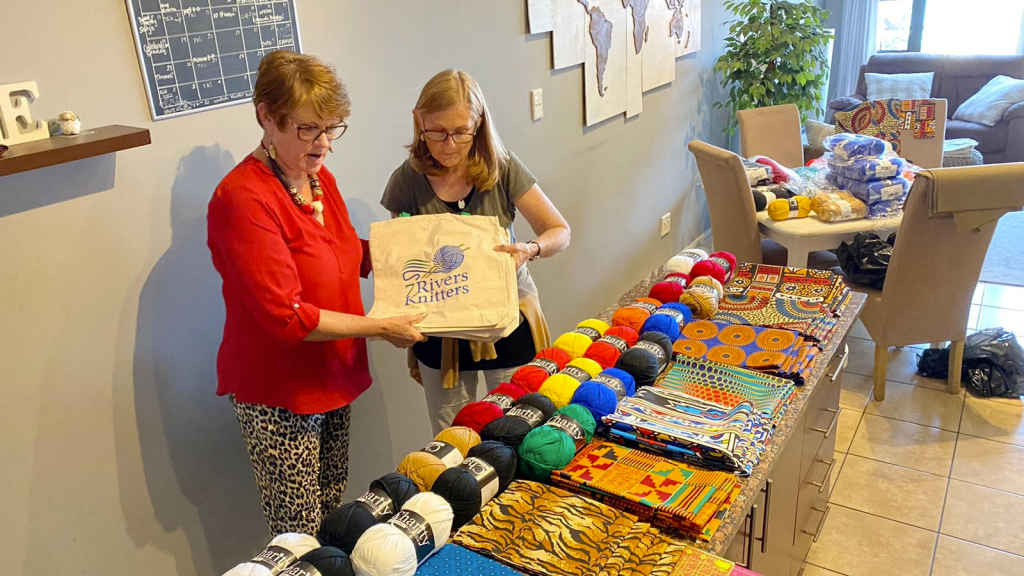
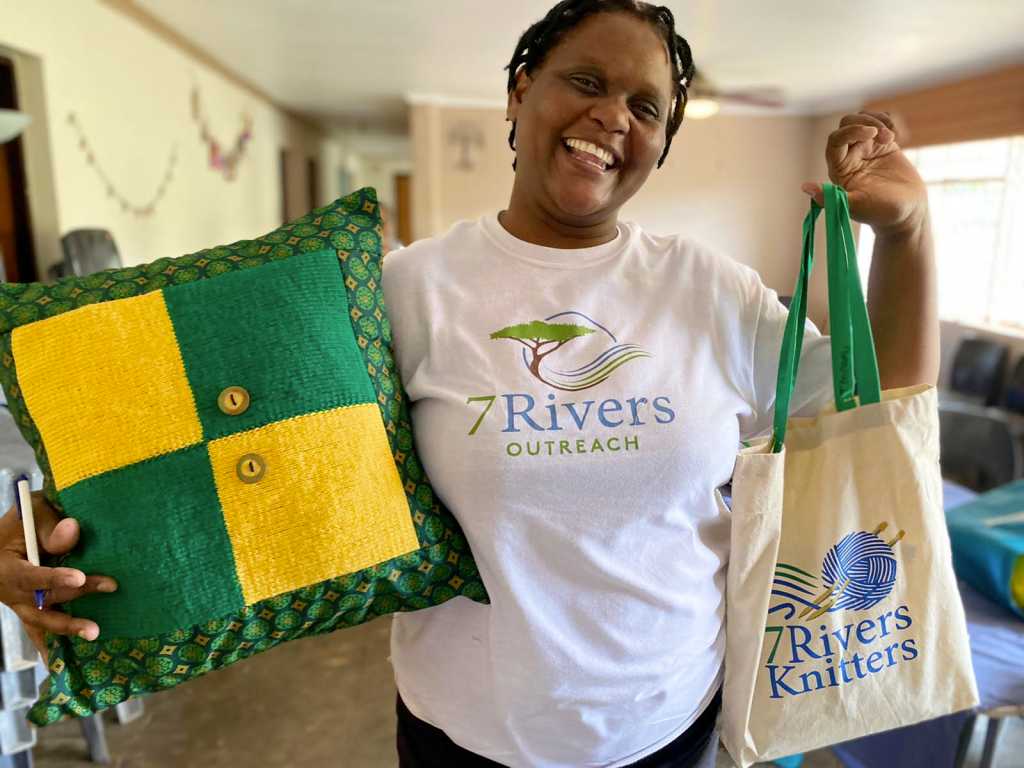
I have someone to thank. My friend Joan has been amazing! I asked her to come up with a project that my 7 Rivers Knitters could do while she visited here, and look what she did. She designed these awesome Zulu Decorative Pillow Covers that people can buy to make their home beautiful. We went shopping and cut out fabric together. We planned out and assembled these kits … and what a blessing they have been to the ladies. Yes, it has been challenging for them, but not impossible. We are learning and growing to make new beautiful things.
Joan has been a blessing in my life for many years. This last opportunity to think thanks was just so over-the-top. I was grateful for her thoughtful kindness and for the sustained effort she put into developing this project.
I thank the Lord for Joan. I am thankful to Joan. I am thankful for Joan.
The opportunity to thank someone is seldom out of reach. When we thank someone, we give credit to them. As I thank God for my friend Joan, I give Him credit for creating Joan and for sanctifying her and for equipping her as He has.
When I thank Joan, I give her credit as well. I say that I notice how creative she is, how much effort she put into designing the pillows, knitting and sewing a prototype, raising funds for the project, helping me shop for fabric and yarn, compiling kits, mentioning to her that I couldn’t and wouldn’t have done this project without her. There is so much credit I can give for so many things, rather than just saying “thanks for all your help on this.” It is a lovely thing to give someone “expansive credit.”
Am I looking for opportunities to express thanks? To give expansive credit to someone? Or do I maybe just sum up a massive amount of thanks for a sustained and multifaceted effort someone has made with a curt, “Hey, thanks”? Or worse yet, do I just think thanks and then say nothing? Don’t let your introverted personality or stoic culture stand in the way of practicing this godly discipline in your life.
It is interesting to note that when I go without something for a while, I become much more thankful to receive it back. The absence of something we have taken for granted – like electricity or water or a job or a friend – makes us aware of how nice it was to have those things or people. Only then, we realize that we need to be careful not to take that thing for granted. Must I lose something or someone to be truly thankful for them? Too many people give expansive credit to others only at their funeral. Give them a eulogy (eu=good; logos=message) before they die.
Reverse Entitlement
“We’re living in an age of entitlement. People believe that they are deserving of privileges or special treatment. “I have this coming to me.” As a Jesus-follower, let’s build our lives on what HE looks like, and overflow with thankfulness. Let’s not overflow with negativity or insensitivity, seldom praising the people we live with and work with. The Bible says bluntly, “Death and life are in the power of the tongue.” (Proverbs 18:21) We’ve all felt the pain of name-calling, put-downs, anger — things that killed our joy, confidence, or sense of worth. But there are some unforgotten comments that are like wind beneath our wings; among them is the powerful uplift of a “thank you.” An acknowledgment, a “thank you” to a son or daughter for their strength of character, generosity, sensitivity to people who are hurting, for their passion, sense of humor, discipline, insight, or honesty. Thiswill cause them to flourish.”
Dick Hester
Entitlement is a preoccupation about what has not come to me but should have. The energy is on pulling in the focus, on self-promotion, on gaining attention, on demanding privilege. The worst is when lethargy and mediocrity demand such things. Thankfulness is reverse entitlement. It is outward focus, others-promotion, attention deflection, and advocating privilege for someone who deserves credit.
Who Will You Thank Today?
So how about it. Who will you thank today? Be quick to do it. It might not be that hard. 🙂 And as we come up on the Thanksgiving season, perhaps this is something you could do as a family.
I want to have as a goal for every day that I have left to live that I would daily find someone to encourage. Maybe it would be a simple “thank you” for doing that. Maybe a text. Maybe a big smile. Maybe a written note. Maybe something I bake or buy.
It is important to remember that I thank God for that person and then express my thanks to the person. God is sovereignly behind every good and perfect gift.
“Every good and perfect gift is from above, coming down from the Father of lights, with whom there is no variation or shadow due to change.”
James 1:17
The beautiful repercussion of being quick to thank, is that you start being more th(i)nkful. It just happens automatically. You think thanks!























 th(i)nkful