Learn to Discern
In his book, Consider the Lilies, Jonny Ardavanis broadened my understanding by stating that the Greek word for anxiety, merimnao, in the New Testament is actually translated in different ways, “the first two being ‘care’ and ‘concern,’ and the third being ‘anxiety’ or ‘worry.’” The first two are good, and one is bad!
We have been going through Consider the Lilies in a ladies’ Bible study, and I was profoundly hit with the concept that there is a good anxiety.
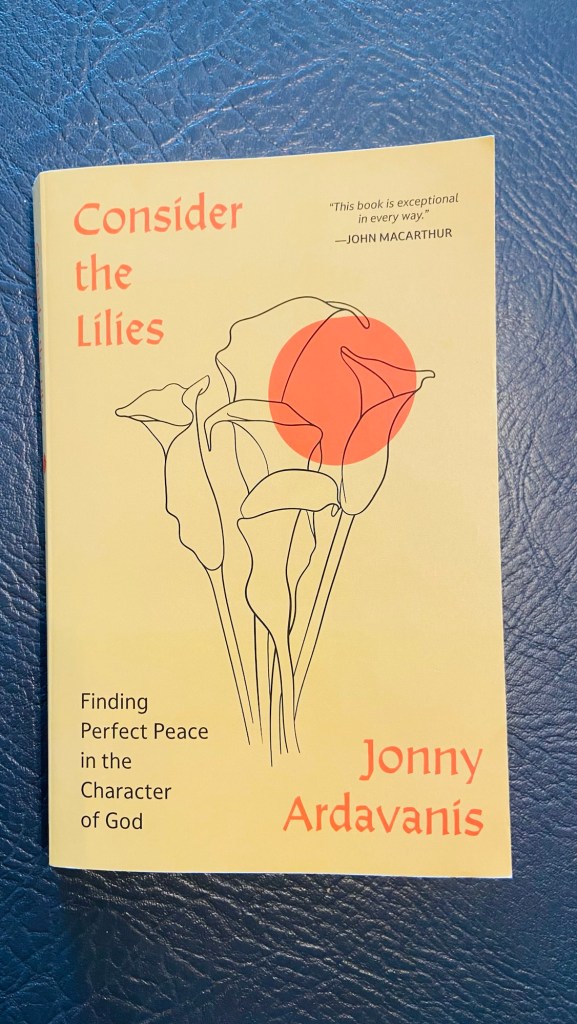
I found this most intriguing. I have presumed that any concern or anxiety is always portrayed negatively. But this word, merimnao, can also be a positive thing. Let’s take a closer look.
In 2 Corinthians 11:28, Paul wrote that he felt anxiety for all the churches.
“And, apart from other things, there is the daily pressure on me for my anxiety for all the churches.”
2 Corinthians 11:28
Most modern Bible versions translate the word Greek word “concern,” but it is the same word that is used for “anxiety.” Paul also uses this good concern in Philippians 2:20 – “For I have no one like him [Timothy], who will be genuinely concerned for your welfare.”
Perhaps you feel this is just semantics, but like Jonny Ardavanis exhorts us: “Specificity of definition matters as it relates to any subject in the Bible – especially as it relates to the subject of anxiety and worry and the character of God.”
Maybe it is good to evaluate what kind of concern I have about things in my life. Is it a proper concern, or is it anxiety and worry?
Pulled Apart
One of the definitions of merimnao, is “to have the mind pulled apart, cut into pieces, distracted or divided by worries.” In the 17 times that this word is used in the New Testament, 12 of those times it is used in a negative light. That concern has moved into an ungodly worry.
- Matthew 6:25 – Do not worry about your life…
- Luke 10:41- Martha, you are anxious and troubled about many things….
- Philippians 4:6 – Do not be anxious about anything……
What Makes Concern Sinful?
So how can I know when my positive care or concern moves into ungodly worry and anxiety? This is a crucial skill we need to develop.
There is no doubt that we will encounter things that create care and concern for us. The Lord knows that. So how can we put up an alarm within ourselves when we start to migrate towards anxiety and worry?
A good visual is that of a stagnant pool compared to a flowing stream.

If we feel that we have to rely on ourselves and not include God in our considerations, we isolate ourselves and are like that smelly, stagnant pool. God does not see. God does not care. God is angry or displeased with me and is getting back at me. I have to fix this problem, and if I can’t, then there is basically no hope. I am alone, and I just can’t cope with this.
Contrasted with that, is when water is moving, flowing like a stream that is fed by many springs that flow into it. I am not alone with my problem in a stagnant pool. God is there. God’s Word is there. God’s Spirit is there. God’s purposes are there. God’s promises are there. The hand of God’s meticulous providence is there, limiting and guiding. God’s Throne room is open to me at an instant. God has the answer, or God is the answer. He can fix hearts. He can fix my heart. For all these reasons, I can begin my prayer with thanks. Then I will pour out my heart … and wait on Him.

When we loose reliance on God and that He is in control, we stew around and around trying to fix things ourselves. Basically we are saying that we don’t trust God or He doesn’t exist – acting like a functional atheist.
Certainly we need to do our responsibility to try to find solutions if that is within our proper power to do so, but we have to watch what we are relying on. The Lord reminds us in Proverbs 3:5 to not lean on our own understanding. I don’t have to figure it all out. We have to remember to trust the Trustworthy One.
It has to do with what we think about. We tend to meditate and focus too much on the problem, and if there is ambiguity about the future, we indict God and presume that He will probably send the worst possible outcome, and all will be sorrow and misery.
Instead, God tells us to pour out our burdens to Him with thanksgiving (Philippians 4:6). Sure, we will feel concern over troubling things, but after we have done what we can, we need to truly, really, REALLY leave it with the Lord who can do so much more than we can.
We often begin with harmless considerations and care, but it transforms to something ugly.
The Three Checkpoints
There are three checkpoints that can protect me from the sinful anxiety.
In Matthew 6:25 our Lord Jesus gives us some wonderful advice.
“Therefore I tell you, do not be anxious about your life, what you will eat or what you will drink, nor about your body, what you will put on. Is not life more than food, and the body more than clothing?”
Context is the key to any verse. If we examine the verses that come prior to this command about not being anxious (Matthew 6:19-24), we will discover these three checkpoints.
FIRST CHECKPOINT: Examine what I treasure in my mind (vv. 19-21). One question that I use to identify those treasures is checking to see what I dream about when my mind is free. It is ok to think about earthly things as long as I always frame those things in what the Father’s will is for me. Maybe I am dreaming about having all my family together, for example, but I must hold that desire with an open hand because it may not be the Father’s will that it happen.
“The surest path to anxiety is to forget that we are pilgrims just passing through this life, and in turn, we stop living for the “better country” (Hebrews 11:16)
Jonny Ardavanis
SECOND CHECKPOINT: Examine what my eyes look at (vv. 22-23). You may argue that it doesn’t matter what I look at, but I would beg to differ. Our vision is the #1 input into the mind. Those images go into my soul. It may not be porn, but it could be clothes or fancy houses or travel or anything that looks so beautiful and desirable. If the Father wants me to have it and has already provided, then go ahead and look. If it is His Word, spend a lot of time looking. Dream the dreams that He dreams for you. But if it is not for you, guard your heart and don’t look at things He would not want you to look at.
Ardavanis warns that pornography has seemingly a direct correlation with people experiencing anxiety. Alluring our eyes to forbidden fruit and the false protection of the anonymity of a dark and secret world lays a trap that ensnares our souls in a deep and harmful manner. Unconfessed sin can rob a person of joy and peace (Psalm 51:12) and pull them into the depression of perpetual defeat.
Instead turn your eyes upon Jesus… things of the earth will grow dim.
“Although pornography promises an “escape,” all it truly does is perpetuate the prison of anxiety and despair.”
Jonny Ardavanis
THIRD CHECKPOINT: Examine who is my Master (v. 24)? What wins when it comes head-to-head with God? If I know what God wants me to do, and I don’t do that, what or who won? Whatever won is an idol sitting on the throne in my heart; it is my Master.
Could you have a different Master in your heart? Control? Bitterness? Unforgiveness? Fear? Comfort?
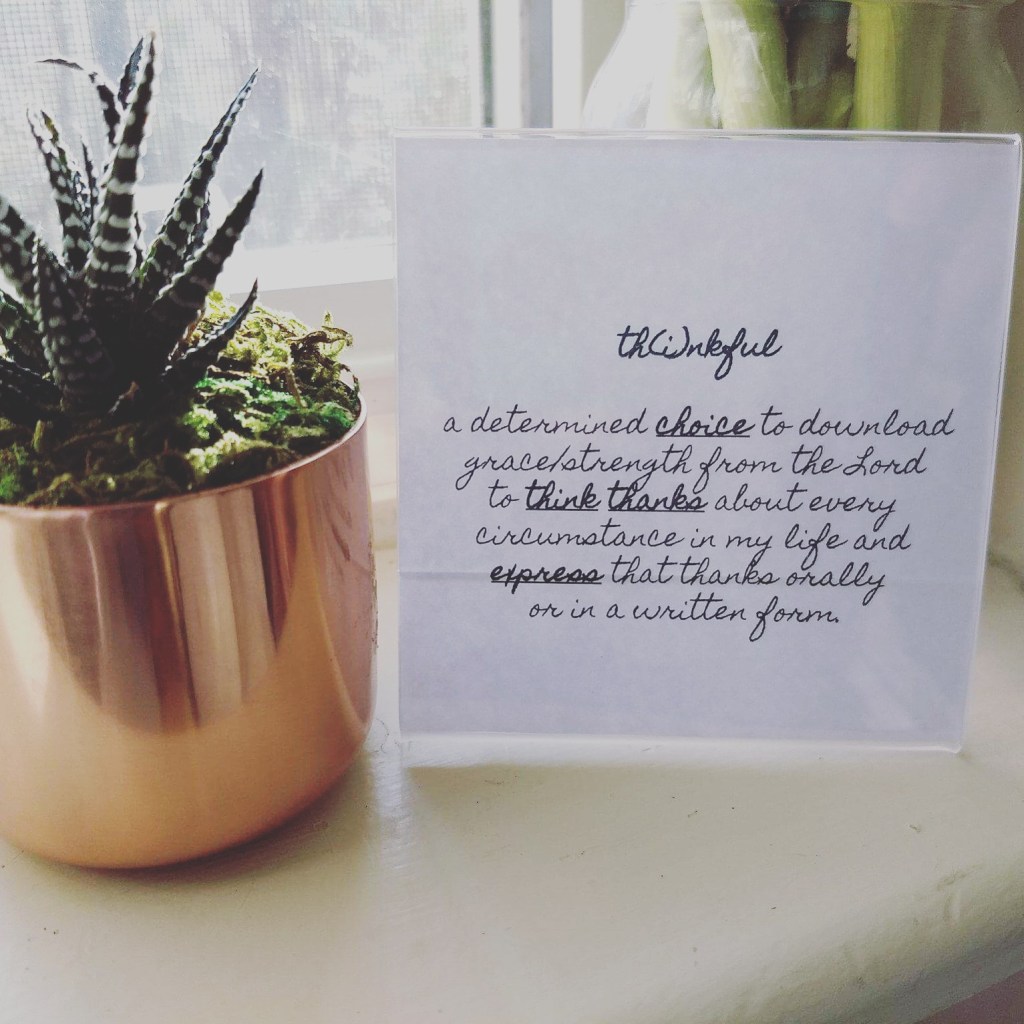
Th(i)nkful
Choosing to think thanks to God for everything as He commands, has a direct link to fighting the wrong kind of anxiety. He wants us to be quick to see His hand and to trust His character because we know Him. It is rooted in the full trust of God’s sovereignty. Yes, God may allow great sorrow in our lives, but He is always in control.
“We don’t always know why God allows evil. But we do know that God Himself is always good. Furthermore, we know this: God never allows any evil to take place that does not facilitate a greater good that could not have happened unless that evil had taken place.”
Scott Christensen
What do you know to be truth? Are you conscious of the warm-glow of His face on you (because Jesus made you spotless)? Are you meditating on God’s purposes for you at this very second? He’s your Dad if you have been adopted into His family. You can trust Him. If He takes care of the lilies of the field, He is going to take care of you.
All our anxieties are an invitation to draw closer to God by fixating our gaze on Him.

Information for this post was excerpted from “Consider the Lilies,” chapter 4, by Jonny Ardavanis





 You feel like you got such a good deal. You received a benefit, but did not have to pay for it. In Norwegian and a number of other languages, the word gratis is actually used for the word free. You did not pay for it. It was gratis.
 In Namaqualand, South Africa, there is a beautiful burst of glorious flowers that come gratis with the first rains that end the dry season. An otherwise parched desert produces this kaleidoscopic carpet. What a great metaphor for a dry heart, full of ingratitude, experiencing the spring rains of God’s grace resulting in a variegated burst of th(i)nkfulness.
 He actually ridiculed and harassed him for always saying “thank you.” Since he found it so irritating, our colleague tried to refrain from saying that he was thankful when with him.
 The Psalm 50 crowd is a bit more like you and me. They know about God, but they have gotten lost in empty religious routines, eyes half-open, trying to keep the rules. Righteousness is about a relationship, not rules and routines. But they forgot.
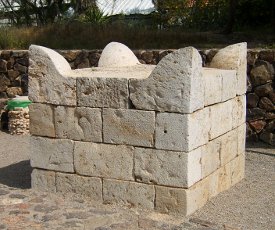 Interesting that God chooses the word sacrifice. Sacrifices in the Old Testament were offered on an altar. It was costly, took effort and purposeful choice. And God knows that giving thanks (externalizing credit and fame to someone other than self) doesn’t come naturally to us humans. It takes effort; it has to be a purposeful choice. It is a sacrifice to offer up thanksgiving, especially when it is directed to God.
 In complete contrast to ingratitude, I welcome you to consider the mandate of Ephesians 5:20, “Give thanks in everything” and to join the Psalm 50 crowd in breaking free from routine into a living and thank-filled relationship with your Creator and Redeemer.

 Giving flowers at the end of a concert, or a conductor pointing his finger to orchestra members in gratitude, are gestures of someone giving credit to another. Speeches given by award recipients typically deflect praise and thanks to parents and friends. Christian coaches and quarterbacks throw their thanks to teammates and to Jesus Christ.


 The outside appearance of a box can hide a multitude of things. It is often quite difficult to imagine what is inside. The actual item may be a lot smaller than the box, but the box is filled with tissue paper as a playful deception. That’s part of the giddiness of Christmas giving – concealing the contents, avoiding the predictable. At the appropriate time, however, the lid comes off and what is inside becomes visible.
 The Psalmist makes a revealing statement about the righteous person in Ps. 140:13. Someone who loves God and is cleansed by the Lamb, will surely give thanks. They will have a bent towards wanting to be th(i)nkful. It will fit for them and not feel out of place.



 th(i)nkful