Put On the Brakes

Slow Down!

Screech….

The brakes did their job, but you could smell burnt brake pads. The accident did not happen, but man, was it close. My heart rate was accelerated and I felt uncomfortable.

Have you ever been extremely close to a wreck? It instills a deep desire in you to try to avoid those situations in the future. I remember my Driver’s Ed teacher in high school saying we should stop with enough distance to see the tires of the car in front of us.

Let me introduce you to a really cool word!

Are you familiar with the word sophron?

Such a great word!

Quick meaning could be ~ put on the brakes ~ according to Nancy Wolgemuth in her book, “Adorned: Living Out The Beauty of the Gospel Together” (p. 163).

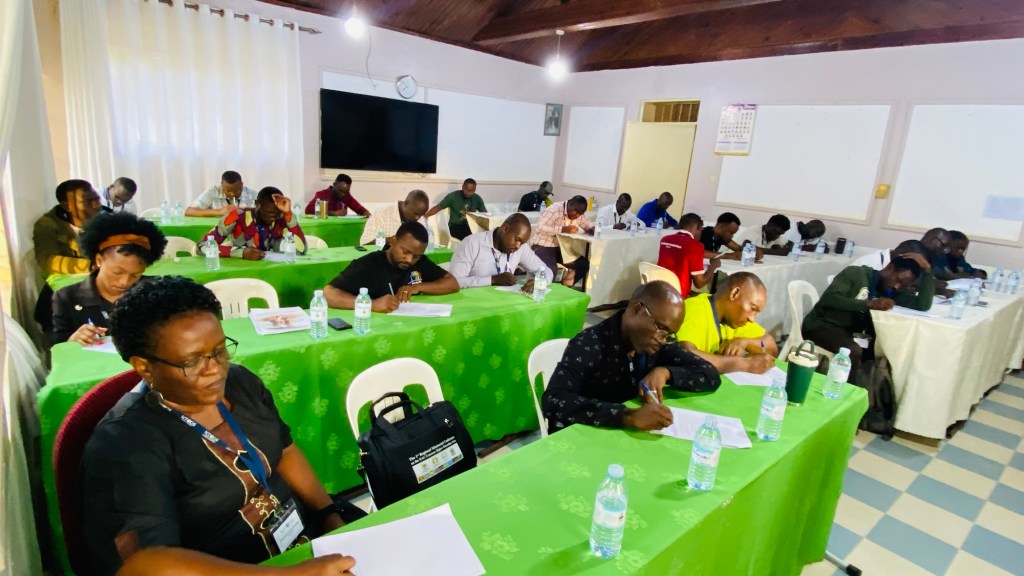
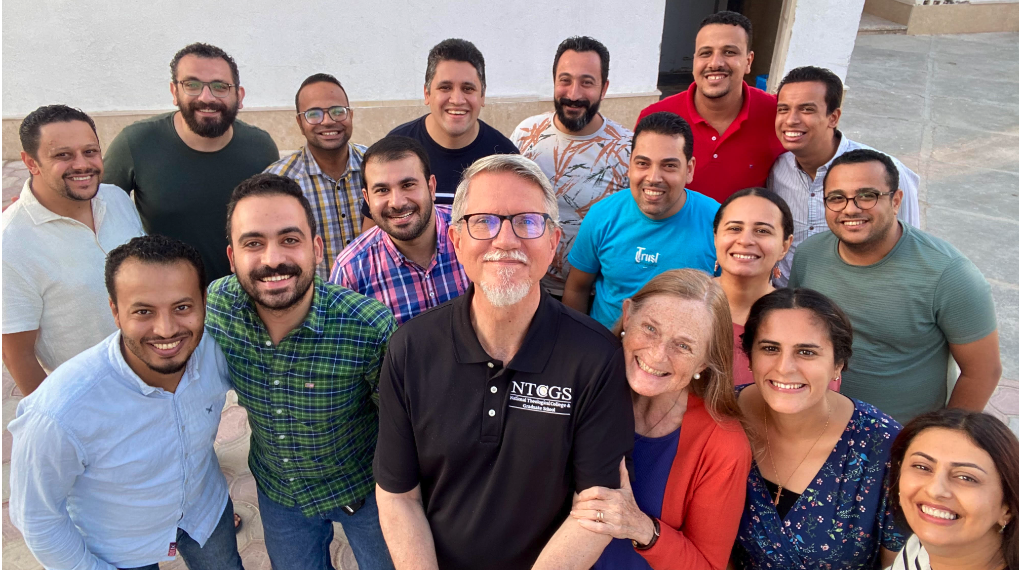
Sometimes there are natural pauses where it is easy to use the time to reflect on the things you are thankful for. Like we just finished a weeklong module of teaching in Egypt. It was easy to stop, during the week and after the week was done, to recount what we were thankful for.


  • That we had the joy of teaching this material to godly adults
  • The students were enthusiastic and loving toward us and the teaching
  • That we ourselves were encouraged by reviewing the truths from God’s Word
  • That we had a chance to help buy new TV’s to replace the old small ones, improving future visual learning in that classroom
  • Camaraderie with fellow staff and teachers

But sometimes, it is not so easy to stop and list things you are thankful for, especially when something or someone needs fixing! The Apostle Paul was concerned for the churches every day (2 Corinthians 11:28), yet when he wrote to those churches about urgent issues they were facing, he would put on the brakes and begin his letters by giving thanks for them before he would address different matters.

Self-Controlled Th(i)nkfulness

Reading through Titus 2, we find an exhortation for sober-minded self control.

Older men are to be sober-minded, dignified, self-controlled, sound in faith, in love, and in steadfastness. Older women likewise are to be reverent in behavior, not slanderers or slaves to much wine. They are to teach what is good, and so train the young women to love their husbands and children, to be self-controlled, pure, working at home, kind, and submissive to their own husbands, that the word of God may not be reviled (Titus 2:1-5).

Paul’s words are commending seriousness. There is a need for women to exercise self-control. Leaders in the church also need these qualities.

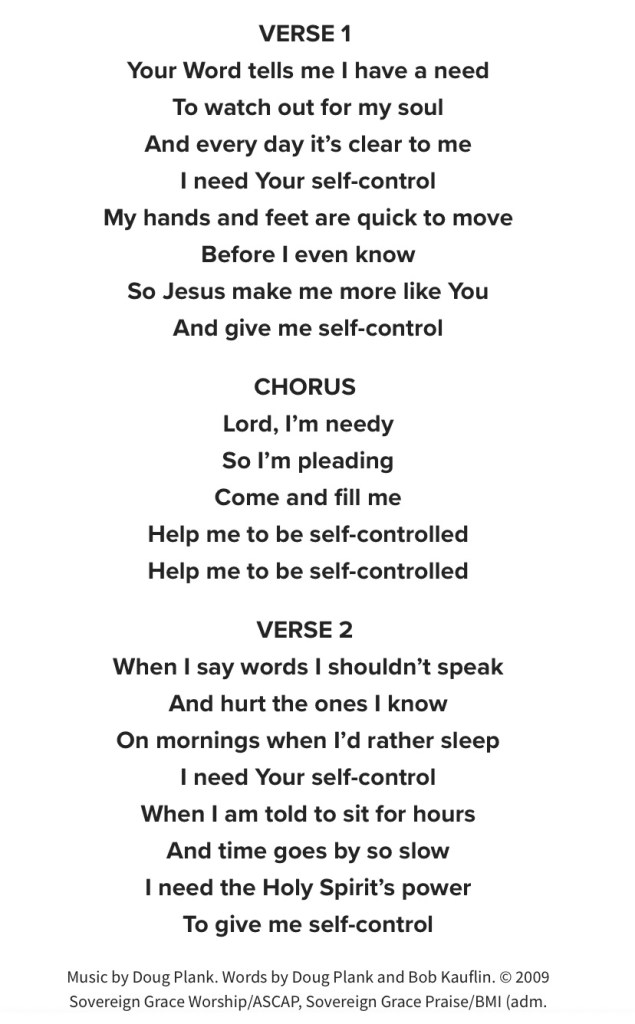
A new song we sang a few Sundays ago at our Phoenix Fellowship here in Durban, South Africa, drove home this point. The unusual title of the song was, “Give Me Self-Control.”

Self control is curbing your impulses and emotions, but it also includes controlling your pace, your pauses, and your pondering such that you keep a sane and sound mind. So many people are “run” by their job, their children, their pets, or the expectations of family and friends. Putting on the brakes to think thanks is an integral part of regaining a sound mind.

Resolutely untangling myself from the anxious demands of the next item on my to-do list, I have an opportunity to regain a balanced perspective, to see the strong hand of my sovereign God above all that is happening, to be mindful of hasty choices I am making, and to recommit myself to live slowly enough to discern His will and way for me.

I know that He desires me to think thanks in every circumstance because He tells me in His Word (I Thessalonians 5:18). But most often I need to stop in order to think. The impulse to be driven by outside demands must be controlled. So, choosing to be characterized by sophron, I am in a good place to develop a practice of thinking thanks.

Putting on the brakes in my life doesn’t mean I am not still busy doing the job set before me. It means that I am allowing the Holy Spirit to help me proceed with self control and wisdom.

When we’re not sophron, we don’t have any margin or heart for kindness.”

Adorned,” Nancy DeMoss Woldemuth

A Little Introspection

Are you sophron? Does that describe or characterize you? It should.

Why not start fostering that quality in your life today?

Take a moment to put the brakes on. Slow down your pace and emotions, cherish your pauses, and meditate on truth. Regain a sound mind through self-control. You did that by stopping to read this blog post. Well done! The Holy Spirit is with you, inside you, and can help you become peaceful and trusting of the Lord’s sovereignty in your life.

Write down seven things that you are thankful for right now. And a step further share those seven things with a good friend. It’s edifying to them, too.

God’s Journal

Thankful Remembrance

“Then those who feared the LORD spoke with one another. The LORD paid attention and heard them, and a book of remembrance was written before him of those who feared the LORD and esteemed his name.”

Malachi 3:16

God is God. He doesn’t need to write something down to remember it. But this passage states that God is listening to certain human beings. He listens with interest and delight as believers who are in awe of Him talk about Him and think of ways to honor His name. He has ordered that a “book of remembrance” be written about those believers. It seems that this is His ongoing journal covering centuries of conversations between believers.

There are a few verses that talk about books in the Bible:

  • Revelation 20:12 mentions the books being opened

It is interesting to note that ancient kings, like the kings of Persia, had books to keep track of memorable deeds that needed to be rewarded.

On that night the king could not sleep. And he gave orders to bring the book of memorable deeds, the chronicles, and they were read before the king. And it was found written how Mordecai had told about Bigthana and Teresh, two of the king’s eunuchs, who guarded the threshold, and who had sought to lay hands on King Ahasuerus. And the king said, “What honor or distinction has been bestowed on Mordecai for this?”

Esther 6:1-3

In Malachi, God is dealing with Israel because of their sin. He addresses their empty, hypocritical worship, teaching error, adultery and murmuring. But then as a great encouragement He says that He has been listening to the faithful ones. Of course nothing is hidden from the Lord. He sees our hearts and motives. He knows us better than we know ourselves. But He has apparently directed an angelic scrivener to keep an ongoing Book of Remembrance about the faithful ones and their conversations.

God is thinking thanks!! What!?

The Lord states that He remembers. He even says that those who feared the Lord and spoke to each other about God would not only be remembered, but also be His own special and treasured possession, like jewels were in ancient times.

They shall be mine, says the LORD of hosts, in the day when I make up my treasured possession, and I will spare them as a man spares his son who serves him.

Malachi 3:17

The Lord God doesn’t need to thank anyone. He is the author of all! He deserves the praise, the gratitude, the worship. That is why it is so fascinating that He, God, would “write down” the names of the faithful ones.

Searching For My Name

But … is my name in His journal? If I could do a word search, could I even find my name? If so, what was the quality of my words, and were they unmixed with self-interest? How many times has He listened while I spoke to others about Him with joyful amazement and high esteem?

Or have my sentiments about the Lord and His works just been private and kept to myself? Private feelings don’t get recorded. A journal entry requires the Lord to hear us talking to each other about Him.

Your Book

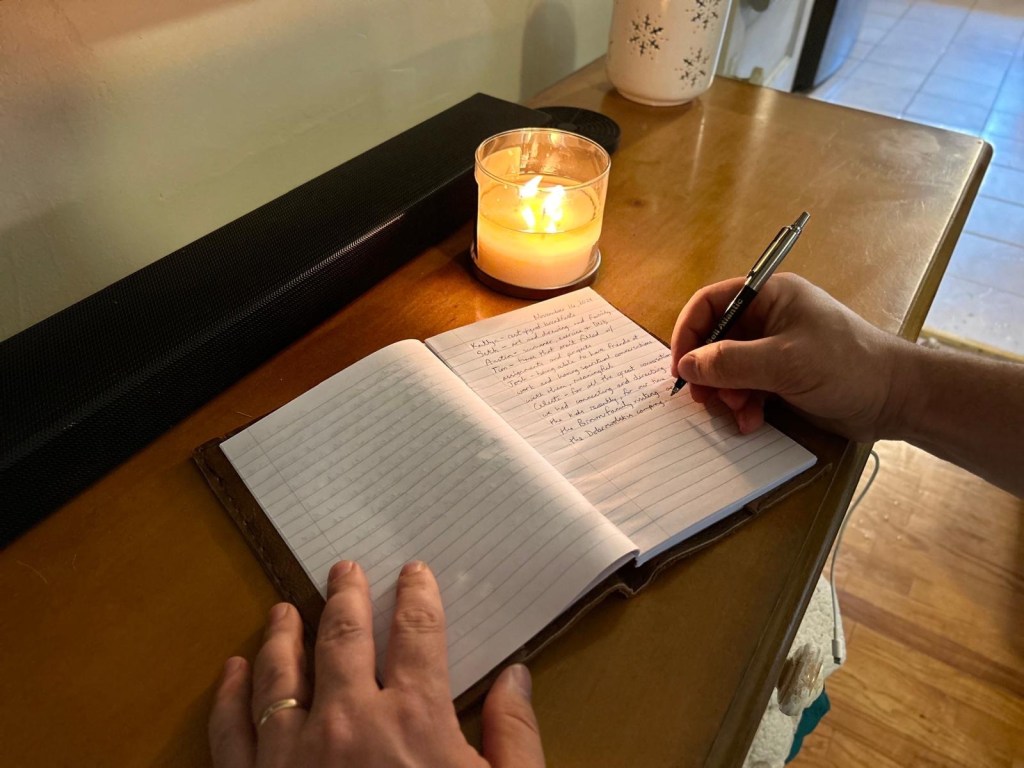
To be “godly” is to be “god-like.” God keeps a journal of people and conversations He is thankful for. Do you have a book of remembrance? Do you write down things for which you are remembering to think thanks?

I also wonder if those words in Malachi 3:16-17 were written for us to remember that God will reward righteousness. The Bema Seat is coming. And the beauty in all this is that whatever we thought, said, or did that was pleasing to the Lord we could do only with His help. Yet, He says that we will be spared as a man spares his only son.

The Lord Jesus exhorted His disciples to rejoice because their names were written in heaven (Luke 10:20). In Colossians 1:12-14 the Lord exhorts us to give thanks because He has delivered us from the domain of darkness.

“… giving thanks to the Father, who has qualified you to share in the inheritance of the saints in light. He has delivered us from the domain of darkness and transferred us to the kingdom of his beloved Son, in whom we have redemption, the forgiveness of sins.

Delayed

God’s reward is delayed. It is like the student that works hard all year and then at graduation is granted an award. The Israelites in Malachi had grown weary from waiting on the Lord. They felt like He didn’t see, He didn’t really care. They grew envious of the wicked.

We, too, can begin to grow weary and feel like it doesn’t really matter. “The Lord doesn’t see what I do, what I think about and treasure in my heart.” But that is a LIE! He does see. He does know all things, and nothing can be hidden from El Roi (the God who sees).

Be encouraged, you who fear, esteem, and converse! The Lord knows who you are, faithful ones. He will remember and reward. He wants us to keep on keeping on till the end. Even our precious Lord Jesus kept the end in view.

“looking to Jesus, the founder and perfecter of our faith, who for the joy that was set before Him endured the cross, despising the shame, and is seated at the right hand of the throne of God.”

Hebrews 12:2

Start them young!!

A Knife At Her Throat

The Attempted Hijacking

All four ladies were chatting pleasantly as they drove up to the intersection. Adaleen’s window was halfway down due to the hot temperatures outside. Out of nowhere the assailant’s hand reached in through the open window and pulled the keys out of the ignition, stalling the car. Shock gripped all the women. Adaleen crossed her hands on her chest and became completely still.

Her coworker in the front passenger seat quickly locked the doors as the assailant had forced the locks open. The war of unlock – lock went on for a second or two. Then the hijacker put a knife to Adaleen’s neck. She did not see the knife, but the passenger in the back saw it, and proceeded to throw her lunch pail at the man, which caught him off guard. At that very moment, a security guard drove up behind the car being hijacked. When the attackers saw the guard, they ran. The guy who had taken the keys threw them behind him as he ran.

A Guard’s Witness

The guard came up and checked on them. After telling him that no one was hurt, he asked them to drive up the road a bit to get out of this dangerous area. He wanted to chat with them. They did so. The guard said, “God protected you. I never come down this way, but for some reason I did today” (thank you, God!).

Wow! All four of the women were so shaken up. The one lady who had thrown her lunch pail, realized that her ID as well as her brother’s insulin medicine was in the pail that the men had taken. So they needed to go to a chemist (pharmacy) to get more medicine.

The Test of a Wrong Response

The first pharmacy was located right next to a liquor store. Adaleen was the only believer in the car. She is a young Christian who was baptized only last December, but before Christ, she struggled with sinful addictions. One of the other ladies said she would run over to the liquor store and buy some alcohol for Adaleen so she could stop shaking, but Adaleen said no, she would instead go home and talk to God to calm her.

That phamacy didn’t have the insulin needed so they had to go to a second pharmacy which was located right close to where Adaleen used to buy weed (marijuana). She was again tempted, but refused to run to those sources to cope. She dropped off her friends and headed home to her little flat, where she lives alone.

Th(i)nkful – The Right Response

That evening was the time that we normally met online for counseling, so a little after 7 pm, I got the whole story. Our church text group lit up with thankfulness and prayers for Adaleen because we were all sure that she wouldn’t sleep so well that night.

My heart was so touched with all that Adaleen had experienced just a short time earlier. As some of you may remember, I also experienced an attempted hijacking years ago in Johannesburg with my daughter Elly. When you have a traumatic experience like that, it is so easy to go right back to the emotions you experienced when you later hear a similar story. I sought to help Adaleen as much as I could. We read Scripture and we prayed. I shared what had been helpful for me to think about when I went through that test. Adaleen was shaken, but it was amazing to me that somehow this young believer was so fully conscious that the Lord had been with her and helped her.

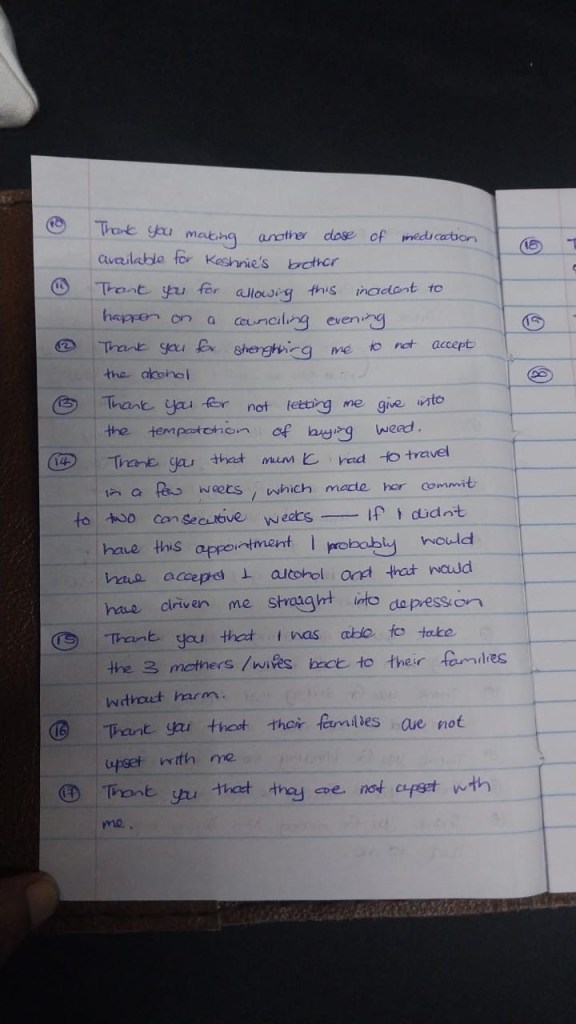
I asked her to write down things that she was able to thank God for in the ordeal. I said to please send me screenshots of what she wrote down. Adaleen wrote down twenty different things for which she thanked God. She was able to go to sleep and even slept well. Praise You, Father!!!!

The next day Adaleen went to work again, and her co-workers could not believe how calm she was. They said she must be in denial or not processing the trauma correctly. Adaleen used the attention she had to give God all the glory. She said that God had saved her. God helped her. God had given her good sleep and was giving her peace.

The Aftermath

The aftermath of a very traumatic experience is delicate and important. To choose to take every thought captive is extremely difficult.

“We destroy arguments and every lofty opinion raised against the knowledge of God, and take every thought captive to obey Christ,”

2 Corinthians 10:5

It involves thousands of decisions. We can do the right thing initially – the first big decision is usually the hardest, but then the reinforcing echo-decisions are of critical importance.

I have found that having a friend to walk through that pivotal time is so helpful. Just touching base with a daily text on how things are going can be the thing needed to stay on track with choosing to think thanks.

Ataraxis, Not Anxiety

Ataraxis: (Ancient Greek), a state of tranquility, freedom from anxiety and mental disturbance

Ataraxis was a new word for me. I love the meaning. However, true tranquility can only come from one source! When Paul exhorts the Philippian believers to not be anxious, he wrote that they should instead pour out their specific burdens to the Lord with thanksgiving, and then the ataraxis of the Lord, which defies understanding (as it did with Adaleen’s coworkers) would keep, hem in, shield and protect them (Philippians 4:7).

I wonder if you have ever taken God up on His challenge in Philippians 4:6-7. When a new challenge comes your way, I urge you to try. It may not be an attempted hijacking with a knife at your throat, but whatever is trying to hijack your thoughts and lead you to despair, arrest it! Emotions are real but they are not reality. Still, they can be wild animals that continuously claw and bite at your soul.

Choose to take those thoughts captive. With strength and clarity, think thanks for God never leaving or forsaking you during the incident He chose in order to build your proven character. Thank Him for using every and all things to conform you to the image of Jesus Christ (Romans 8:28-29). It may be a wresting match in your mind, but as you win with the Lord’s help, ataraxis comes. It may seem illusive at first through the fire and fog of the trial, but it will eventually come into focus.

And the peace of God, which surpasses all understanding, will guard your hearts and your minds in Christ Jesus.

Adaleen gave me permission to share her story

Your Past Can Be Your Friend

Past Helps

A storm was brewing visibly on the horizon. I could smell that familiar scent of fear.

How could I handle this new trial? I didn’t want more hurdles to feverishly conquer. I just wanted peace, no more problems that disturb and bring up unwanted memories from my past.

Have you ever read the book, “Putting Your Past In Its Place?” I am going through it presently in two different counseling cases. I appreciate Steve Viars’ easy-to-understand style and the way he organizes difficult elements of a person’s past.

One of the chapters describes how our past can be our worst enemy, but in the next chapter he points out that our past can also be our best friend. It depends on how you process what happened, and what God was doing as it happened. He brings out two examples from the Scriptures – David and Job.

In I Samuel 17 David is presented with Goliath’s taunts to the armies of Israel. David overhears the vulgar threats that Goliath is spewing out. Although not a part of the army, David expresses that he is willing to go and fight this giant. He describes to those who try to stop him that in his past God helped him to kill the lion or the bear that came to take one of his sheep that he was watching. He recalled the past blessing of God and it poured courage over him to again trust the LORD for the present challenge.

Likewise in Job 2:10, Job is hit with intense difficulties, even to the point where his wife urges him to curse God and die. But Job responds with:

“Shall we receive good from God, and shall we not receive evil?”

Job remembered all the good God had showered upon him. He let his past help him process his present.

Thankfulness Builds a Resevoir

Developing thinkful neural pathways in your brain can actually reshape a hard past into a faithful friend. You learn to recognize God’s fingerprints. You see deeper than the scarred surface. You record day after day blessings from God that He graciously bestows. You learn to trust this incredible God that is sovereign and loves His children deeply.

You develop a knowledge of God’s mystery, which is Christ, in whom are hidden all the treasures of wisdom and knowledge (Colossians 2:2b-3). This knowledge, this mental thinkfulness, prepares you so that when you are faced with new challenges, you can call on your past as a trusted friend for perspective, wisdom, comfort, and courage.

Rehearsing the Past

God commanded the children of Israel to teach their children about how God had helped them in the past.

“… when your children ask their fathers in times to come, ‘what do these stones mean?’ then you shall let your children know, Israel passed over this Jordan on dry ground. For the LORD your God dried up the waters of the Jordan for you until you passed over, as the LORD your God did to the Red Sea, which He dried up for us until we passed over, so that all the peoples of the earth may know that the hand of the LORD is mighty, that you may fear the LORD your God forever.”

Joshua 4:21-24

It is the Father’s will for us to remember how He helped us in the past, and by remembering, we would be emboldened to trust more presently.

God tells us in Romans 15:4 that whatever was written in former days was written for our instruction, that through endurance and through the encouragement of the Scriptures we might have hope.

Begin Building

Prepare yourself today for the battles coming tomorrow. Develop thinkful patterns to equip yourself to fight the sorrow and doubts that will doubtless tempt you in days to come. Have a reserve of trusted friends from the past that will testify to your shaking faith that indeed our God IS faithful! He helped us in the past and He will help us now. He will not leave nor forsake us. He will not stop loving us. He will weave all things together for our good, conforming us steadily into the image of Jesus. And one day He will come for us. Why? Because He promised and He never lies!!

LET THE PAST BECOME YOUR FRIEND!

“Careful readers will recognize that what we are really talking about here is thanksgiving. Both Job and David developed the discipline of acknowledging God’s blessing and continually building a reservoir of memories and lessons from which to draw.”

Stephen Viars, Putting Your Past In Its Place, page 52

Picture from my past where my family was sharing about Jesus

Thorns, Rivers, and Furnaces

Do You Have a Thorn?

Probably most of you who read this blog have something hard in your life….something that you could in one way or another call a “thorn.”

Why is that? We want to fix things and try to get to that place in our lives where everything is going well, going smoothly, where everything is figured out, and everything is under control … but usually that’s an elusive place, and that euphoria never comes. The Lord seems to purposefully work through “thorns” in our lives for our good.

The Lord certainly doesn’t promise to keep us from thorns, rivers, or furnaces. In fact, He specifically tells us that He will be with us through those difficult times.

“When you pass through the waters, I will be with you; and through the rivers, they shall not overwhelm you; when you walk through fire you shall not be burned, and the flame shall not consume you.”

Isaiah 43:2

We pray, “God, deliver me from the furnace, from the floods, from the thorns!” But God providentially controls those things, and even sends those things, for His reasons … and with His company. He often says, “My child, I sent those to deliver you from you. I want to see My Son in you.”

Studying how Paul dealt with his thorn gives some clarity as to God’s view on our difficulties. Paul was so frustrated with this thorn that he asked three times if God would please remove it.

“So to keep me from becoming conceited because of the surpassing greatness of the revelations, a thorn was given me in the flesh …”

2 Corinthians 12:7

God answered that His grace was sufficient for him, that His power was made perfect in weakness.

We are not sure what Paul’s thorn was. Some have speculated that it was epilepsy, or perhaps his eyesight, maybe even recurring malaria. Others have guessed that it was a vexatious person who kept dogging and opposing Paul wherever he went. Perhaps it is a good thing that we don’t know what type of thorn it was so that we can insert our own thorn to learn how to handle these challenges.

Paul was entrusted with this difficulty to keep him from becoming conceited because of the surpassing greatness of the revelations he had received. The hardship countered the negative side effects of blessing. This hardship was carefully designed by the Lord for Paul’s own good and for the good of the churches that heard and read his words.

How Did He Handle It?

A few years after 2 Corinthians was written, Paul was put in prison in Rome. It was during this time in the early 60’s AD that Paul wrote what we call “the Prison Epistles” ~ Ephesians, Philippians, Colossians and Philemon. No doubt his thorn was still bothering him, but he chose to continue to serve the Lord and write these letters to encourage and instruct the believers. From what God was teaching him, he shared through the inspiration of the Spirit with others.

Paul knew that God has a big picture of everything going on, even in his individual struggles and challenges. Paul looked at himself as a servant of God called to accomplish a lifelong mission. He understood that the goal in life was not to be trouble-free, pain-free, bump-free, and bend-free … but instead to be conformed to the image of Jesus.

One of the skills Paul had learned to cope with thorns was to think thanks in every aspect of his life, even living with the thorn. One of these Prison Epistles is Colossians. Take a closer look at how Paul highlighted thinking thanks in that letter.

Thankfulness in Colossians

Colossians has special interest to me. It only has four chapters, but in every single chapter there is a verse dealing with thankfulness. In fact, in chapter three there are three verses in a row that address thankfulness!

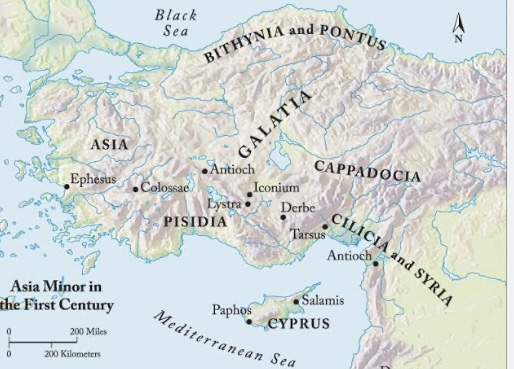
Do you know where in the world Colossae is? It is located in modern day Turkey.

Epaphras had been changed in Ephesus! He had heard Paul speak and Epaphras had responded and trusted in Jesus as the Messiah. He was so changed that he had to take the news of the gospel back to his home in Colossae.

He shared that Jesus had come and died and that he had risen again. Through Jesus’ work on the cross we could have forgiveness of sins and be adopted into the family of God. We could be reconciled to the Creator from the breach that our sin had caused going all the way back to Adam. The second Adam had come and fixed things!!

This is a picture of modern day Colossae.

The people of Colossae responded in faith. They believed and a church was established there.

Later there were some heresies that started to creep into the church, and Epaphras was so concerned that he travelled all the way to Rome to talk to Paul. Although Paul never actually visited that church, he prayed fervently for them. So Paul is writing this letter to encourage them and help them grow in their walk in Christ. And although he is in prison, Paul doesn’t ask for blankets, food, medicines, or visits. His ability to give thanks in his circumstances freed him to focus on others.

One of the fruits of being in Christ is being th(i)nkful. Look at how Paul addresses thankfulness in the four chapters:

  • In chapter one, Paul shares a prayer that he prays for the believers in Colossae. He prays for them to be filled with the knowledge of His will in all spiritual wisdom and understanding. In verse twelve Paul prays for them to give thanks to the Father. He knows that thinking thanks and expressing it, is part of the mature Christian life.
  • In chapter two, he admonishes the Colossians to walk in Christ, being rooted and built up in Him and established in the faith, abounding in thanksgiving.
  • In chapter three, Paul gives three verses in a row, 15-17, that include thanksgiving. “And let the peace of Christ rule in your hearts….and be thankful. Let the word of Christ dwell in your richly, teaching and admonishing one another in all wisdom, singing psalms and hymns and spiritual songs, with thankfulness in your hearts to God. And whatever you do, in word or deed, do everything in the name of the Lord Jesus, giving thanks to God the Father through Him.”
  • In the fourth and last chapter, Paul starts out with verse one encouraging the believers to continue in prayer, being watchful with thanksgiving.

What About Your Thorn?

Thanking God for your thorn, for your flood, for your furnace, is only done through the work of Christ in you. It is only as we view our human suffering in light of the gospel that things start to make sense. This life is momentary, our suffering is not even worthy to be compared to the glory that will be revealed (Romans 8:18). As we begin to see through the glasses of God’s perspective, we can even join James in counting it all joy as we see the trials develop steadfastness and endurance in us.

Could you take any help from Paul in the book of Colossians? Do you process things in your life with th(i)nkful glasses? Could you wrap that yucky thorn with thinking thanks of how it is making you like Jesus?

I am not saying it is easy, just that when we process the thorn God’s way, it changes us.

Abound in thanksgiving……..

Navigating Anxious Thoughts

Whoa!! Didn’t Expect That One

She put the phone down, shock slowly creeping through her.

“Did not have a clue that this challenge was on its way,” she mused to herself.

“So how does God want me to to navigate this situation? How can I process these uncomfortable moments in a way that would be pleasing to Him?”

As the temptation to worry seeps in, we can have an emergency plan in place. We can practice for the upcoming “bend in the road” just like someone practices for an upcoming game.

1. The Replacement Principle – Matthew 6:25

Jesus gives some guidance when it comes to anxiety.

Therefore I tell you, do not be anxious about your life, what you will eat or what you will drink, nor about the body, what you will put on. Is not life more than food, and the body more than clothing?

Matthew 6:25

Interesting to note that He says don’t be anxious about your life. In the verses to follow He reminds us that we cannot add one hour to our lifespan. God cares for us as He does for the birds of the air and the beautiful grass of the field. He states that the Gentiles (unbelievers) are seeking after, and continually anxious about, those things.

In contrast He says to seek first the kingdom of God and His righteousness! That’s the cure for anxious thoughts that Jesus gives us!! Outward and upward focus! “What can I do for His Kingdom today? Who can I serve? Who can I encourage? Who can I share the gospel with? Who can I pray for other than myself and my problems?”

As believers, we are different in that we have a Heavenly Father that is looking out for us. He knows our needs and lacks no power to supply them … in His time … and in His way. He can also clearly distinguish our needs from our wants – often our fretting is about our wants. As a friend mentioned, “Most of the time, we have rich people problems. If we lived in the 3rd world with next to nothing, we would have none of these problems. We have problems because we have too much … and expect to keep it all.”

The anxiety battle is won firstly through the “replacement principle.” We can’t resist anxious thoughts by simply trying to not think anything. There are some men who claim they are thinking about “nothing,” but the mind is always processing or mulling over something. So, I must replace my anxious thoughts with some kind of active planning or pursuing whatever is good for the Kingdom.

2. The Stoking Principle – Philippians 4:8

“But I feel like I can’t help it,” you may say. “Anxiety is so powerful and takes over my thinking, my existence, and affects my sleep, my heart rate, my blood pressure, my digestion, my relationships, and my thoughts.”

What we allow our minds to feed on affects us. What we meditate on throughout the day and in our waking hours of the night slowly changes us.

“I cannot remember the books I’ve read any more than the meals I have eaten; even so, they have made me.”

Ralph Waldo Emerson

Is there a grid of what materials are cleared to cross the threshold into the furnace of our thoughts? Wood is good. Materials with petrol or gunpowder are not. Have my thoughts cleared the Philippians 4:8 test?

Finally, brothers, whatever is true, whatever is honorable, whatever is just, whatever is pure, whatever is lovely, whatever is commendable, if there is any excellence, if there is anything worthy of praise, think about these things.

Philippians 4:8

Are my thoughts true, honorable, just, pure, lovely, commendable, excellent, praiseworthy?? Or are they dark, pessimistic, desperate, slandering of God’s character, denying His nearness, or embracing some “bad karma” idea that you are getting what you deserve from years ago?

You are stoking materials into the fire of your mind that will eventually affect you. Paul gave us a list of good slow-burn thoughts that help us regain clarity. The very first on his list is “whatever is true.” “True” is whatever agrees with reality as known in the mind of God.

Thinking on what is really true cools the fire of most anxieties, which are mostly speculations about what will happen in the future without God in the picture – “I’ll get in so much trouble,” “I’m gonna die and leave my family in heartbreak,” “I could have been shot in the crossfire!” It is not true. None of it. Most anxiety magnifies the worse-case scenario and makes God disappear. It is the worst kind of speculation, imagining yourself alone in your trouble without God, His grace, His promises, or His people.

3. The Th(i)nkful Principle

Something bad happens and the fires of anxiety flare. Firstly, we’ve already seen that we can fight anxiety by getting busy with kingdom business at home, at school, at work, or in our community. Secondly, we have to watch our meditations and keep the combustible, harmful speculations out of the furnace. Thirdly, we need to think of what we can be thankful for in the situation and elsewhere in our life. This is the discipline of being th(i)nkful.

“Do not be anxious about anything, but in everything by prayer and supplication with thanksgiving let your requests be made known to God.”

Philippians 4:6

“In everything give thanks” is the Lord’s command because His meticulous Providence governs each detail of our lives, they are working for my good and His glory in His time, He is with me, He has measured what I can handle with His grace, I can cry out to Him at any time, and I have His Word, His Spirit, His promises, and His people around me. How will I respond? He is watching me. The angels in both kingdoms are watching. How will I respond?

Productive & Unproductive Anxiety

“anxious: (adj) uneasy and apprehensive about an uncertain event or matter: worried.

(from Latin anxius, from angere, to torment)

thefreedictionary.com

Giving proper prudence to a matter or having proper fear for a dangerous situation is NOT what I am referring to here. You can address a dangerous situation with caution and not be overrun and controlled by anxious thoughts.

In this picture our youngest daughter is looking at a young lion cub in South Africa. That little lion is strong. Not respecting the danger associated with this animal would be foolish.

BUT there is another fear that is not good. It is a faithless fear. It is a fear that God is not really in control. God doesn’t care about me and my little life. Those lies can feed a sinful anxiousness.

Navigation Plan

Do you have a plan to handle anxiety when a Sovereign God ordains life to throw you a curveball? You could formulate your own, but here’s an example of what to write out in the back of your Bible:

  • First run to the Lord in prayer and acknowledge that God is God and I am not
  • God is with me right at this moment and knows more about this than I do
  • God wants me to run TO Him with my cares not AWAY from Him and stew
  • Begin searching for things that I can think thanks about even right in the storm
  • Romans 8:18 tells me that the sufferings of this present time are not worth comparing with the glory that is to be
  • Matthew 11:30 describes the Lord’s yoke as easy and His burden as light
  • Even if everything else goes wrong, I can give thanks for Jesus saving my soul
  • This life is a vapor and will soon be over; I will be made perfect and my troubles will be over!

“And the peace of God, which surpasses all understanding, will guard your hearts and your minds in Christ Jesus.”

Philippians 4:7

Who Is Your God?

Do You Know Who Is Your God?

A thinker recently told me, “Every mature man needs to figure out who is his god.” I liked that. Do you know who is your god and how you worship that god? You do worship, you know. Whether you are aware of it or not. Every human being worships something or someone.

Do you realize that with any other god beside the One True God, you can never be fully thankful.

A god, or idol, is anything that wins over the true God when two ways diverge. When you come to a fork in the road that requires a choice, you pick what you worship.

Counselors have identified three main gods or idols: the god of comfort, the god of control, and the god of people-pleasing, but they take on varied mantels to attract us and pull us in.

Tim Keller identified several similar Idols: power, work, achievement, image, dependence, independence, religion, irreligion, inner ring, racial/cultural, ideology, materialism, family, relationship…..

Most of us feel a pang of guilt when these idols are mentioned. Most of us could raise our hands that we battle with more than one. There is one sure thing: these gods always disappoint and fall short. These gods will leave you unthankful because they cannot be relied upon.

If you have formed a relationship with the One True God, Yahweh, His character and promises are unchanging, and though His ways lead into deep darkness at times, we know that He is micromanaging every detail for His plan and glory and for our good.

You want to worship such a God the way that He desires you to worship. He desires to cleanse you from your sin and to make you new. His new life and indwelling Spirit changes you from the inside out. He begins to renew your mind as you put off the shackles that belong to another god, and put on the things that please the true and righteous God.

As we conform to the image of the Lord Jesus, we become less us and more Him. We live life with a different perspective than someone who lives for the deceptive and disappointing gods of this world. One of the elements of Christlikeness is to live life thinking thanks to the Father (Matthew 11:25, Luke 10:21, John 11:41, Colossians 1:3).

As we think thanks, we learn to see His fingerprints in our every day lives. Our minds look for things to give thanks for on a continual basis.

The beautiful thing that happens to us when we worship the One True God is that He satisfies us. In His presence is fullness of joy (Psalm 16:11).

Deep Darkness

One of the true tests of what your worship happens when you are going through difficulties. It is easy to be thankful and trust God when things are going smoothly.

What about in ‘deep darkness?’

Psalm 23:4 says that even though I walk through the valley of the shadow of death, I will fear no evil, for You are with me; Your rod and Your staff, they comfort me.

The “shadow of death” can be literally translated as “deep darkness.” Even in the times of deep darkness I do not need to fear evil. The reason the psalmist gives is because the Shepherd is with me, His rod and staff comfort me. If you have the god of comfort, you will be very uncomfortable. If you have the god of control, you will be outraged. If you have the god of people-pleasing, you will struggle to keep your friends and family happy in the deep darkness.

Thinking thanks even in the deep darkness seems almost impossible even with the One True God. It feels like it is hard just to breathe. Yes, it is very hard. And it may take a long time before we are able to get to the point where we can even contemplate thinking on something that we can be thankful for.

But when we finally look up, we will see that we did not wander off on our own; the Shepherd has been there. Then we can begin to see things that are gifts from the Shepherd, and then follows a slow release of a deep joy that builds as we gain perspective from a distance.

He has not left me to wither up by myself. He is with me!

Just that thought is enough to give you cause for thinking thanks. He has not forsaken me. He cares about me intensely. He has even counted all the hairs on my head. He loves me with an everlasting love that will not end (Jeremiah 31:3).

God’s Trusted Character

So who is your god? Do you know? Have you identified who it is?

The gods of this world that I am tempted to worship are temporal. They do not satisfy. Yes, maybe there is quick, temporary satisfaction, but they will never follow you into the deep darkness. Only One Shepherd will.

If you worship the God of the Bible, you have the confidence that He is the Blessed Controller of all things. He will work all the difficult things together for my good, conforming me into Jesus’ likeness.

Actively pursue thinking thanks. Figure out a way that works for you. Whether you say it orally to someone daily or write it down or make a voice message to someone. Weave it in to the fiber of your life. Obey the Shepherd who walks with us and guides us.

“Give thanks in all circumstances; for this is the will of God in Christ Jesus for you.”

I Thessalonians 5:18

Gratitude Rewires

Thinkful for Percimony

My youngest granddaughter Perci is learning to walk. She lurches, wobbles, and falls, but gets back up. It is so precious to see her try to move one foot in front of the other and maintain balance. Not an easy feat!

But after awhile, she will “learn” – she will have actually unwittingly hardwired her brain to move her body toward her goal without thinking through the steps. She will simply lean and start, alternate between legs, maintain her balance, turn left and right, and achieve her little goals!

It takes months of trial and error, but once the neuro-pathways are developed, it will happen automatically. Percimony will know how to walk.🚶‍♀️

Percimony is also developing a much deeper skill for life – problem solving. She had a desired target across the room (the piano). She decided to take stock of her resources to get there, which were not good since she lacked coordination. She could have sat in a puddle of weeping and woes, but she decided to work at it; trying and failing until she felt her skills getting better. In time, she got there.

How Is Your Brain Wired?

The beautiful thing about Percimony’s brain is that it is new. It is getting wired and programmed for the first time, and wow does it learn quickly. For the rest of us, the ability to learn is getting slower and more difficult as time goes by. What is even more difficult is the task of learning something differently from the way you’ve always done it. This is what the Bible calls “renewing,” which requires a bit of “undoing” first.

To “renew your mind” (Romans 12:2, Ephesians 4:23) is to actively examine your thinking in the light of God’s Truth (John 17:17) to assure that you are thinking correctly. It is to identify and root out wrong perceptions of who God is, who Jesus is, who the Spirit is, who your neighbor is, who you are, and how you should relate to these others. Paul wrote that we are to “destroy arguments and every lofty opinion raised against the knowledge of God, and take every thought captive to obey Christ” (2 Corinthians 10:5). We may need to identify and painfully pull down idols of the heart like the desires for control, comfort, and affirmation that have woven their way through all our thoughts.

We are then to plug in thinking that pleases God. This takes work, repetition, and time. It may take an accountability partner to help give you a little signal when “you’re doing it again.” You will likely need to memorize verses in areas where you are weak, and meditate on those truths (Psalm 1:2).

Rewiring for Gratitude!

So perhaps you’re grumpy, chronically unthankful, a glass-half-empty, little black raincloud to all who know you. Perhaps you dismiss it as just being a problem-spotter, or being an idealist, or “just stating the obvious.” While improvements are normally helpful, the truth is that God commands us to give thanks in everything (Ephesians 5:20). Even if it needs fixing, we can begin with thinking thanks. It helps wire our brains correctly to first search for and highlight the good, then move on to remedies.

I love it when the secular experts “discover” what God has long said is actually really good for us.

“Studies have shown that performing simple gratitude exercises, like keeping a gratitude diary or writing letters of thanks, can bring a range of benefits.”

Christian Jarrett

One notable study followed over 40 participants seeking treatment for depression and anxiety. Half were asked to write letters expressing gratitude before the first few counseling sessions, while the rest formed a control group who attended “therapy-as usual.” Three months later, both groups were asked to perform a generosity task while being measured by MRI.

According to Jarrett: “The participants who’d completed the gratitude task months earlier not only reported feeling more gratefulness two weeks after the task than members of the control group, but also, months later, showed more gratitude-related brain activity in the scanner. The researchers described these ‘profound’ and ‘long-lasting’ neural effects as ‘particularly noteworthy’..[This suggests] that the more practice you give your brain at feeling and expressing gratitude, the more it adapts to the mindset…a sort of gratitude ‘muscle’ that can be exercised and strengthened.”

NeuroImage Volume 128, March 2016, Pages 1-10

Exercising My Gratitude Muscle

YAY!!!! Percimony took steps into her daddy’s arms. So much celebration followed. Perci even clapped for herself. :). I am exercising my gratitude muscle as I rehearse so many things for which I am thankful to God. He is a good, good Father and is helping me renew my mind to think on what is true, what is good, what is sufficient, and what is trustworthy. I can give thanks to Him for everything because He is the ultimate Authority in all my days and moments, and does all things well.

“Enjoy the little things, for one day you may look back and realize they were the big things.”

Robert Brault

The DNA of Joy is Thankfulness

What is DNA?

Virtually all living things have a programming code within themselves. It is what makes them who or what they are. You have it and I have it. It is, of course, deoxyribonucleic acid … better known as DNA.

DNA: a self-replicating material that is present in nearly all living organisms as the main constituent of chromosomes. It is the carrier of genetic information.

Paul Tripp makes a bold statement when he states that “the DNA of joy is thankfulness.” The genetic makeup of joy is thankfulness.

We need to first come up with a good definition of joy. You can see the word “hap” in happiness, which is a feeling of pleasure based on happenings around us. It is a positive emotion responding to external stimuli. When outside circumstances become difficult, the positive feeling is gone.

Joy, in contrast, is like a hardy plant that grows based on processes taking place on the inside – the replication of billions of DNA. Like a spiritual evergreen that is rooted in the water of life, joy is a slowly growing positive contentment generated by the Spirit of Jesus inside the believer that is not a mere product of my circumstances. Joy generates an inward smile … not flashy spike of outward elation. When outside circumstances become difficult, the inward replication continues and even increases.

But what ideas is the Spirit using to generate this good and positive calmness in my heart and mind? John Piper writes: “Christian joy is a good feeling in the soul produced by the Holy Spirit as he causes us to see the beauty of Christ in the Word and in the world” (John Piper, Desiring God, “How Do You Define Joy?”).

First, the Spirit takes our minds to the Word of God, flipping through its pages to discover the steadfast love of the Lord for His people, His sovereignty over the odds, His ability to bring beauty out of ashes, and glory out of oppression. This builds our confidence in Him for our present struggles.

Second, if we give Him the chance, the Spirit also takes our minds through the world of our lives, our friends, family, and church community to search for His fingerprints, for answers to prayer, for so many things to be thankful for even in our struggles.

If you look at the Word and your world only on the surface, you will struggle to find the beauty of Christ and the splendor of His designs. This is often why over-busy people crash and burn when things go wrong; they don’t have time to search for Spirit-guided insights into the Word and the world. Spirit-led “th(i)nkfulness” requires reflection. The more you think and look for the beauty of Christ, the more DNA of thankfulness you produce … and it takes a lot of DNA to grow this tree of joy.

Carrying Th(i)nkfulness

Paul David Tripp gives us a poem in his book New Morning Mercies that explains how remembering to be thankful to God and all He has done can bring us inner joy:

I wish I always

carried it with me.

I wished it always

shaped the way

I look at life.

I wish it directed

my desires.

I wish it was

the natural inclination of

my heart.

I wish remembering

your boundless grace

would silence

my grumbling.

I wish my worship of you,

my trust of you,

my rest in you

would drive away

all complaint.

If my heart is ever

going to be freed of

grumbling

and ruled by

gratitude,

I need your grace:

grace to remember,

grace to see,

grace that produces

a heart of humble joy.

Paul David Tripp

How This Might Work Practically

Studying Psalm 107 helps to create joy’s DNA. Five times the writer encourages the reader to thank the Lord for His goodness and His steadfast love and His wondrous works to the children of men. He ends with: “Whoever is wise, let him attend to these things; let them consider the steadfast love of the LORD.”

When we cultivate remembering God’s steadfast love for us, and rehearse all that He has given to us, we begin to wind up that DNA double helix of thankfulness that will produce joy. This is great for husbands and wives, dads and moms, at the end of an event or a weekend to call out, “OK, let’s rehearse the good things God did for us this weekend,” and then do a rapid “thinkful volley” back and forth. The remembering gives a rush of new DNA, building joy in us and inspiring us to trust Him for future days.

Life in the Scorched Earth

But sometimes a field fire just torches your tree. All joy seems lost. I am all too familiar with deep sorrow in these past six months having lost a sister, brother-in-law, dad, nephew and other precious things. How can I remember God’s steadfast love when I sit in ashes?

It is precisely when my circumstances are difficult that I need to remember the steadfast love of the LORD. Though He sent the fire and the tree of joy is gone, there is still the rootstock and the DNA of th(i)nkfulness is still replicating. The God of the fire is also the God of the living water underneath me. My God is still on the throne. He is trustworthy even when He allows hard things. He is with me and comforts me. He cares for me even through tears of sorrow.

With enough DNA, the little sprig of joy will pierce the blackened soil, and joy will begin its journey of growth and fullness reaching toward heaven.

Choosing to remember His steadfast love will genetically produce joy.

Anonymous

Everything…in All Things

Very, Very Close

Jerry Bridges is one of my favorite authors. His classic, Trusting God, devotes the last chapter to ‘Giving Thanks Always.’ I just re-read that this morning as I am going through this book with a young lady that I am mentoring. Here, at the very end of his exhorting us to trust God even when life hurts, he emphasizes the importance of thinking thanks.

“The basis for giving thanks in the difficult circumstances is all we have been learning about God in this book: His sovereignty, wisdom, and love, as they are brought to bear upon all the unexpected and sudden shifts and turns in our lives. In short, it is the firm belief that God is at work in all things – all our circumstances – for our good.”

Jerry Bridges

The words “in everything” from I Thessalonians 5:18 and “in all circumstances” in Romans 8:28 are very, very close in the Greek and even in English. It is precisely because I can trust that God is working all circumstances together for my good – chiseling, sanding, poking, heating, smoothing and varnishing me – to make me like Jesus, that I can give thanks in everything.

Thanksgiving, the Opposite of Pride

When you give thanks, you are admitting that you received something. You needed something, and then you received it … and so you acknowledge the help, you throw the credit to another person. You are confessing that you are not self-sufficient. You have been dependent. You are a debtor.

While many nonbelievers feel and express their thankfulness, the world’s value system struggles with thankfulness, instead emphasizing what we lack, or mythically claiming that our own inner resources brought us success. Thankfulness toward God is especially set at naught because He is not truly a part of their worldview; they are trying to suppress any recollection of Him.

“Although they knew God, they neither glorified him as God nor gave thanks to him, but they became futile in their thinking, and their foolish hearts were darkened.”

Romans 1:21

For those of us who have trusted in Christ alone for our salvation, we are different. Our worldview says that God is close, that He knows and cares, that He sovereignly ordains and orchestrates all our circumstances for our good and His glory. If the trial was no longer developing our good and His glory, it would immediately end. We should feel inwardly compelled to give thanks! Part of the sanctification process started at salvation is to renovate our fleshly tendency of ingratitude into a spirit of gratitude as a fruit of the Spirit working in us.

We humble ourselves before God and cast our anxieties on Him because he cares for us (I Peter 5:6-7). We accept the adversities with His help and give thanks even for “thorns” – the pains, the delays, the heartaches, the frustrations – that come our way. As Thomas Brooks wrote years ago, we should be “mute Christians under the smarting rod,” except for giving the thanks we give for the design in the disaster.

God is Good at Being God

The foundation for how we can think thanks in all circumstances is that we trust a sovereign God. He can handle our trust. He is good at being God. 🙂 Oh, that I would be quick to get to this point.

Always look for the fingerprints. They are all over the place. He is the Master Artist and is taking all the pieces of my life and putting it together for his glory. I can praise Him even when I don’t see the full picture yet. It will be so good.

“The way to cast our anxieties on the Lord is through humbling ourselves under His sovereignty and then trusting Him in His wisdom and love.”

Jerry Bridges