Brain Neural Pathway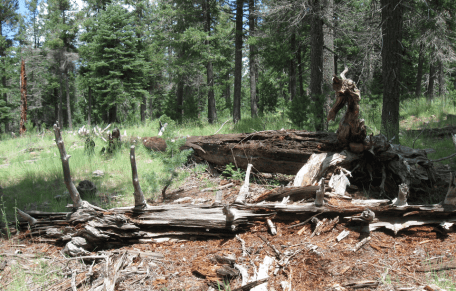
Cultivating th(i)nkfulness can be compared to carving a path through the woods. It seems overwhelming at first with debris and obstructions. It takes great effort to remove fallen logs and roots. You may need some tools like a spade and a chainsaw, or good sharp clippers.
Our brains are similar in that forging a new brain pattern or neural pathway in order to create a new life habit is daunting at first but gets easier with time. God has created our brains to be able to do this.
Neuroplasticity is the ability of the brain to form and reorganize synaptic connections, especially in response to learning or experience or following injury.
How Do I Do It?
The first practical step you do when beginning to carve a brain path, is to deliberately lay out a plan. Your goal is to have your thoughts automatically head towards what to think thanks about in any given situation. You begin to search in your thoughts for things that you can be thankful for.
If you are in an unusually happy situation, it’s not very hard to find things to be thankful for. Even in normal, day-to-day times it’s not hard to begin to discover th(i)nkful items.
However, when hard times come, the difficulty level rises to delineate thankful items. Let me illustrate with this example from my friend Dawn:
“My heart was tempted to complain about the mounds of laundry today. The Holy Spirit reminded me, “Be thankful. Think thanks.”
So as I’m folding I start saying in my mind…
Thank You, God for these clothes.
Thank You for your provision of new and used hand-me-downs.
Thank You that they are clothes we got to choose and that we like them.  😊
😊
Thank You for the little (and big) legs that move to make these pants dirty.
Thank You for the soap to wash them.
Thank You for the washing machine that washes and I don’t have to do it by hand.
Thank You for the tumble dryer that works in my basement, and that I don’t have to air dry them in the cold.
Thank You for the dryer that gets the wrinkles out so I don’t have to iron.
Thank You that I am able to be at home and squeeze this chore in between schooling.
Thank You for the energy and wellness to do this. I’m not sick in bed.
The list could go on…
Be th(i)nkful. Think thanks when you’re tempted to complain in your heart.  “
“
She chose to download grace and begin carving the neural brain pathway of thinking thanks about the situation. She then expressed it. Engaging in the discipline of being th(i)nkful ended up not only helping her mindset, but encouraging others to do likewise.
Patiently Conquer Step by Step
The habit of cultivati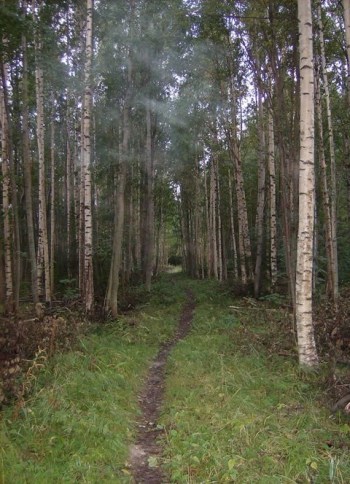 ng thinking thanks takes time. You have to see progress in little steps at a time. Think about that path through the woods. As you step by step conquer the mess, soon the path becomes apparent.
In time you will be able to run that path. How cool!!
This exercise is much more that just creating a better mindset for us. Practicing th(i)nkfulness is an act of worship to our Redeemer who has given us a command. Give thanks in all circumstances. He knows that being grateful is a key to our sanctification and maturity in Him.
So… I just wanted to get you started this year on developing that brain pathway through the ‘woods.’
Who doesn’t enjoy a walk in the woods anyway?? 🙂


 The outside appearance of a box can hide a multitude of things. It is often quite difficult to imagine what is inside. The actual item may be a lot smaller than the box, but the box is filled with tissue paper as a playful deception. That’s part of the giddiness of Christmas giving – concealing the contents, avoiding the predictable. At the appropriate time, however, the lid comes off and what is inside becomes visible.
 The Psalmist makes a revealing statement about the righteous person in Ps. 140:13. Someone who loves God and is cleansed by the Lamb, will surely give thanks. They will have a bent towards wanting to be th(i)nkful. It will fit for them and not feel out of place.

 THE DAILY EXCHANGE. Every day Elisa and Nicole text back and forth things they are #thinkful for. They have developed a pattern to spur each other on to look for things that they are thinking thanks about that day. Both of these ladies live in a climate where a long winter is approaching and it becomes harder to feel thankful and more necessary to think thanks. I welled up with tears to read that they were doing this. How cool! Having an accountability partner to keep you on track helps incredibly.
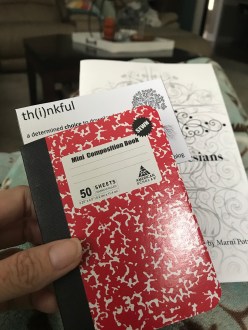 TH(I)NKFUL JOURNAL. My friend Marni sent me this picture. She had been given a small journal. It was to inspire one to write down one thing every day that your were th(i)nkful for. Our brains develop neural pathways by doing something over and over again. At first it feels like you are carving a difficult path through the woods, but as you do it over and over, it starts to happen automatically.
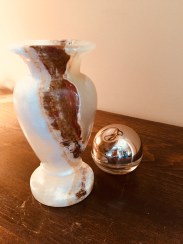 e an alabaster box filled with precious spikenard perfume and poured the ointment on Jesus. Jesus was visiting Bethany six days before his crucifixion and had been invited to a meal at Simon’s house. Resurrected Lazarus was seated at the table, and Martha was serving. Mary took a costly treasure, worth a person’s yearly wage (about $50,000.00 today), and poured it out on Jesus. Her act was taken by Jesus as preparation for His upcoming burial (Mark 14:8). John tells us the house was filled with the odor of the ointment (John 12:3). Imagine spending $50,000 for something that would disappear in a few minutes! She was obviously convinced of who Jesus really was, and must have strongly sensed that his death was close.
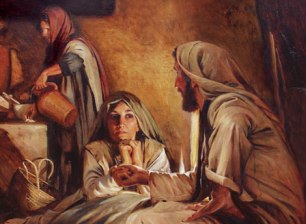 and listening at His feet (Luke 10:18-42). He had also come to them in Bethany four days after Lazarus had died and raised him from the dead (John 11). Now, He was again with them in Bethany, and Mary grabbed the opportunity of worshipping Him with probably her greatest treasure, the alabaster flask containing costly spikenard perfume. She didn’t hold back. She poured out her treasure on her even greater Treasure, the Lord Jesus, in preparation for his death and burial. She knew from experience that He had the power to raise people from the dead. Although she may not have known all the details of how Christ would die and rise again, her faith, garbed with devotion, was strong and committed.
 I Corinthians 3:12-14 states that at the Evaluation Seat of Christ all our works will be tested by fire. We’re not sure how our works will materialize into fuel nor what this fire will look like, but we are left to ponder the “burn-down factor” – what are we doing here and how that will survive the fire? Jesus said we can actually “lay up treasure in heaven” – pass our time, energies, and finances through an unseen membrane out of this life and into heaven.
 The overall perspective from which you see and interpret the world is called your worldview. Whether you realize it or not, everything you observe filters through your worldview grid for interpretation. Your beliefs about God, the universe, mankind’s history, science, theology, and moral values will shape and color your impressions of people, possessions, and events.
 My View of the Beginning and the End
 Hebrews 4:12 describes the Word of God as living, powerful, and sharp. It has the ability to discern thoughts and intents of the heart. Do I even know my own heart’s thoughts and intents? No. Jeremiah said we struggle with clouded and distorted self-perceptions (Jer. 17:9). We need a light, an objective perspective! Psalm 119:105 volunteers God’s Word as a lamp for our feet and a light for our path.
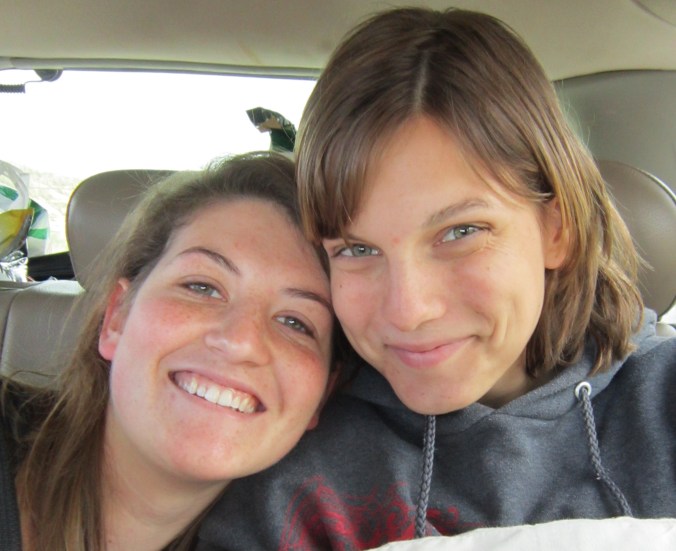
 l be over one day and we will finally be with the Lord. Live life full of thanks and joy will bubble up. It may sputter up slowly, but slowly it WILL come. Start now.


 lection in life; including gratitude and thanks; benefit, favor, gift, grace, liberality, joy, pleasure.”
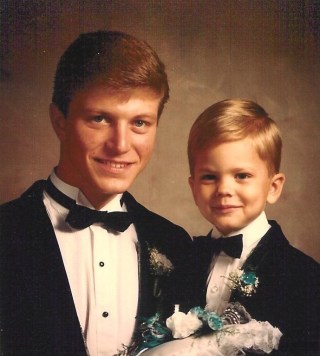 Dan Haines, a dear friend of ours, has encouraged David and me so many times. This photo is from his wedding in which our oldest son Joshua was a ring-bearer.


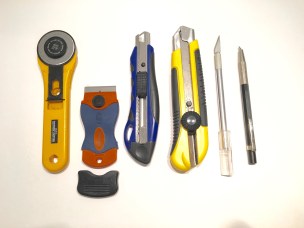 There are ways to build thought patterns within our minds to always be on the lookout for what we can think thanks about in every situation – I’ll call them “carving tools.” Carving a groove – creating a mental preoccupation with thankfulness – is a safeguard that can keep our hearts and souls from destruction. There are times when it is easy to identify what to be thankful for, and there are times when being thankful is the last thing you want to be. A cool side benefit of this groove is that as you carve out the brain pattern, it becomes easier and easier to “get in the groove” – to spontaneously recognize the things to be thankful for.
 se the tool of choosing to think thanks and then express that thanks orally or in a written form. I put on the “glasses of gratitude” and look at everything around me and in me through those lenses. God has promised that He is sovereign and is going to give me all I need to do His will if I will appropriate that grace (I Cor.10:13).
 th(i)nkful