Who Gets the Credit?
Have you ever noticed how many people get up and leave when it’s time for the credits at the end of a movie? Here you have enjoyed a great story representing countless hours of work that a huge team has slaved over, but you don’t really care who all gets the credit. I wonder if we do that in real life.
Thanksgiving is an act of humility. Expressing thanks is saying that credit or praise belongs to someone else; to God or to other people. Arrogant pride says I’m not sufficiently served by others; I did it by myself. I am self sufficient. I don’t want to owe anyone anything. I internalize the credit and externalize the blame.
But life with Jesus Christ is so different. He designs things so I can’t do it by myself. On purpose! He wants me to see that I need Him. Desperately. And then when I succeed, or maybe just survive an ordeal, I must give Him the credit. He is to be thanked!
When you take the time to shake someone’s hand and say “thank you,” you are giving that person credit. You acknowledge that they did something that was beyond your control or ability.
“A good leader takes a little more than his share of the blame, a little less than his share of the credit.” Arnold H. Glasow
Are there people in your life that need to receive credit from you? What about your God? Do you thank Him for who He is and what He has done?
Thanksgiving is giving the credit to someone else
 Giving flowers at the end of a concert, or a conductor pointing his finger to orchestra members in gratitude, are gestures of someone giving credit to another. Speeches given by award recipients typically deflect praise and thanks to parents and friends. Christian coaches and quarterbacks throw their thanks to teammates and to Jesus Christ.
We give thanks when we release the credit from ourselves and give that credit to another. When God exhorts us to give thanks in every circumstance, He knows that is for our own good. It is a self-sufficient and thankless society that will call a day dedicated to giving thanks to God “turkey day.”

A family “saying grace” before a meal
We receive a blessing, something the Bible calls “grace,” when we release the credit. This is why a family holding hands around the table and giving thanks to the One who provided the food they are about to receive calls it “saying grace.” It’s profound, just like our amazing Lord Jesus said in Acts 20:35: “It is more blessed to give than to receive.”
So, resolve this week to pass along credit to three people in your life, thanking them for who they are to you or what they’ve done for you. And then also talk to your Father, and the Son, and the Spirit about the credit they immensely deserve for all that they have done in you and for you.
“Feeling gratitude and not expressing it is like wrapping a present and not giving it.” William Arthur Ward

 The second category is known as Development – helping the needy by working with them to improve their general living conditions, developing their skills, giving them a hand up and not a hand out. Think of Israel leaving part of the harvest for widows like Ruth in Deuteronomy 24:19-22.
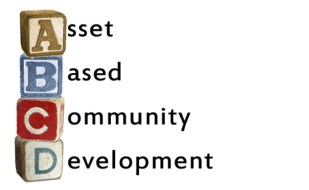 Asset-Based Community Development – is helping a struggling community improve itself by sitting down with residents and inquiring about what they already have.😊 When Moses resisted getting involved with God’s plan, God asked him, “What is that in your hand?” (Exodus 4:2). That’s where we begin. We look at what is, not at what is missing.
 This approach promotes a philosophy of thankfulness and a “can do” spirit. In other words, a community looks to its own members to identify what assets are already present around them.

 This is a visual of what happens when we constantly complain.
 Jane Gibb, a dear co-worker of mine, shared with me how she was struggling with some stress at a particular time. She decided to engage thinking thanks about that situation, and as she cultivated the thought pattern of looking for things to give thanks for in her situation and started writing things down, the stress lessened. She benefited. She was putting God’s Word into practice by renewing her mind.


 Truth has no elements or shades of unreality. Something that is true is not a lie. It has fidelity (loyalty) to the standard. It is true to the original.
 Where I grew up in Norway, snowstorms at times would bring “whiteout” conditions where you couldn’t see a few feet in front of you. If a building near town was 20-50 yards away, a whiteout was dangerous. Some people got lost and their frozen bodies weren’t found until spring. So the town put up a rope fence tying the buildings together.

 let me instead be th(i)nkful for my car, for my ability to drive to the shop, push a cart, have the funds, make decisions from often hundreds of choices … and so on. As the familiar meme says, “what if we had tomorrow only what we thanked God for today?”
 Whether you imagine Iguazu Falls in South America, Victoria Falls in Zambia, Niagara Falls in New York, or the Laguna hot springs in the Philippines, each gives us a strong image of abounding water that can’t be stopped. Strong, smooth, steady, and striking in their beauty, the abounding flow cannot be held back and rushes over the edge.
 The word translated “abounding” from the Greek unfortunately has no English equivalent. It means “to super-abound, to be excessive, to go way beyond.”
 You need hope and a powerful weapon! Heath Lambert, author of Finally Free: Fighting for Purity with the Power of Grace, said something in a lecture that grabbed my attention. He said that “gratitude is the opposite to every sin we commit.”



 Those two things are 1) our relationship with God and 2) our commitment to do His will for our lives.
 I remember when David was practicing law as a young new lawyer in south-eastern Pennsylvania that I prayed earnestly that we would be able to buy a large white historic house on the outskirts of town. I even made a name for it and dreamed about how we would raise our family there and use it for hospitality. It was a great dream, just not the Lord’s will for us.
 Nurturing my relationship with God and earnestly renewing my thoughts so I can discover His good, acceptable and perfect will for my life (Romans 12:2) can bring simple joy and contentment.
